JUCONI Mexico, Puebla: Working Through Emotions to Make State Schools Safer

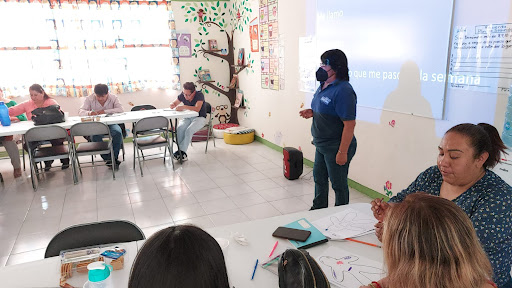
This workshop programme has evolved with an emphasis on the importance of emotions and the way in which both students and staff manage them in order to promote learning. It is very hard for children to focus or connect with classroom content if they feel worried, sad or over-excited. The same is true for teachers, and their management of their classroom can dictate how effectively they are able to teach their students. 

For this reason, the workshops implemented by JUCONI in preschools and primary schools have continued to provide children and teachers with the tools to manage their emotions and to make schools safe spaces to learn and work. 
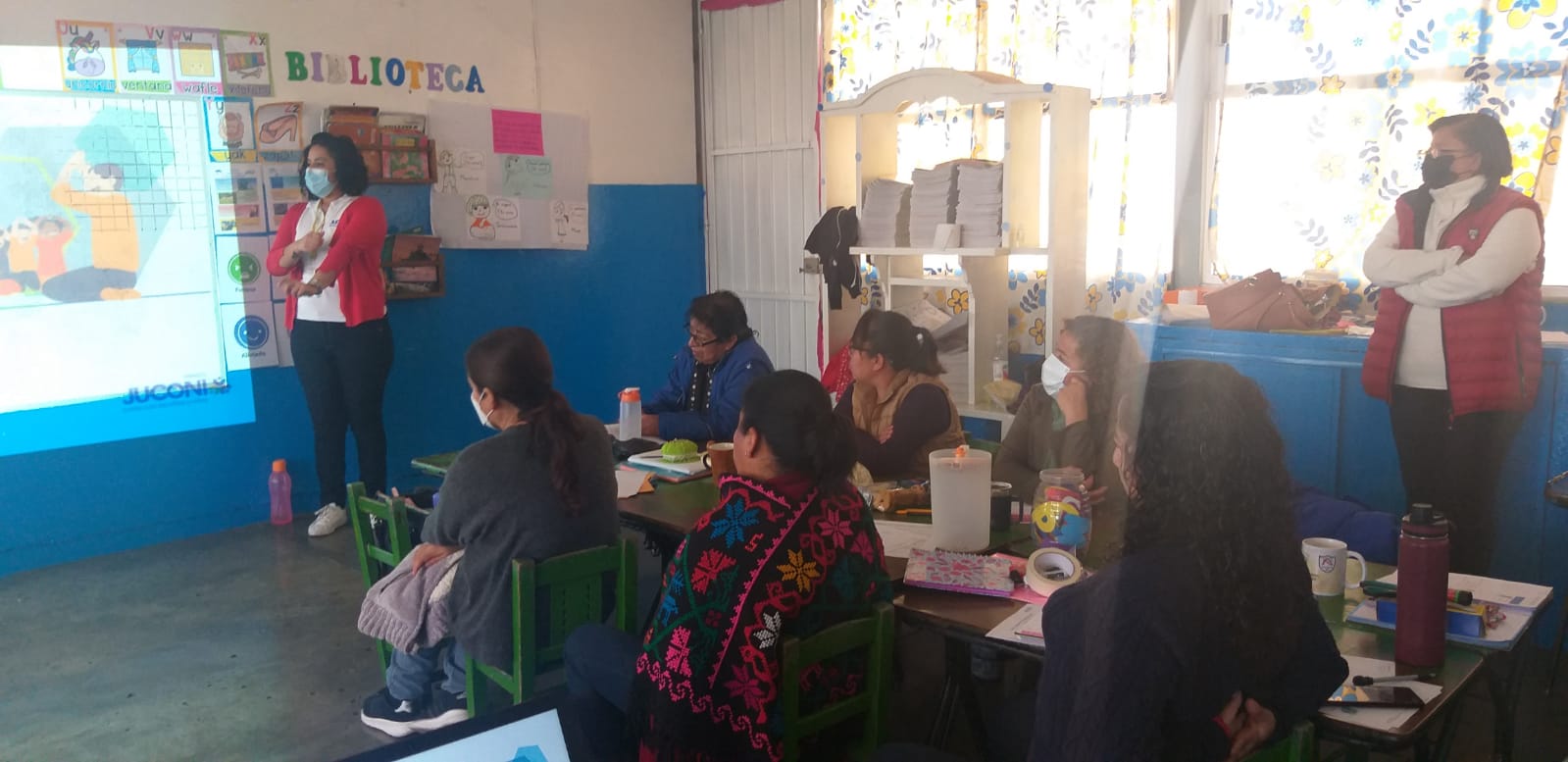

The teachers who have attended the workshops are making use of the ‘emotion’s thermometer’, which is a visual tool for helping young children put a name to their feelings and their emotional intensity. Teachers have also participated in developing a ‘personal security plan’ for their schools.

During feedback, a teacher mentioned that “The workshops really make me think about my students and reflect on how their emotions might affect their academic performance.” Another teacher said “I have found the topics covered by the workshops to be very appropriate and I think that these tools will help us and our students greatly.” 

All participants would like to have more workshop sessions because they believe it is important to explore the tools for managing emotions in greater depth due to the responsibilities that they have in their roles. A teacher concluded that “This kind of workshop contributes to the security of not only teachers and students, but of all members of the school community.” 

During the past few months, JUCONI has worked with four schools resulting in sixty-six teachers attending our workshops. As a result, approximately 1041 children have directly benefitted from them.
JUCONI Ecuador, Guayaquil: Achieving Against the Odds

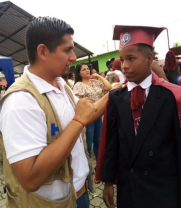
We are happy to report that several boys and girls who are part of our family psychotherapeutic intervention programme have now completed their primary education. It was a great pleasure to accompany them to their graduation ceremony because we believe that it is important to show unconditional support for these children’s achievements by praising their academic progress and encouraging them to remain in the education system. Furthermore, a number of families have achieved more stable home environments through the programme and are being advised to carry on attending our community spaces. At the same time, new families are joining JUCONI.

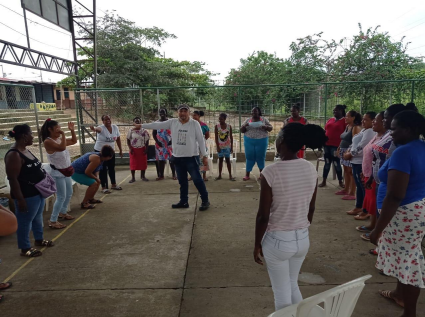
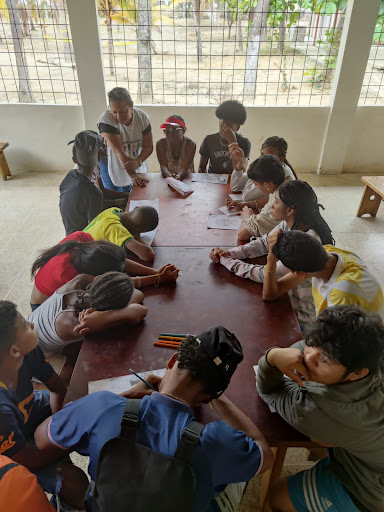
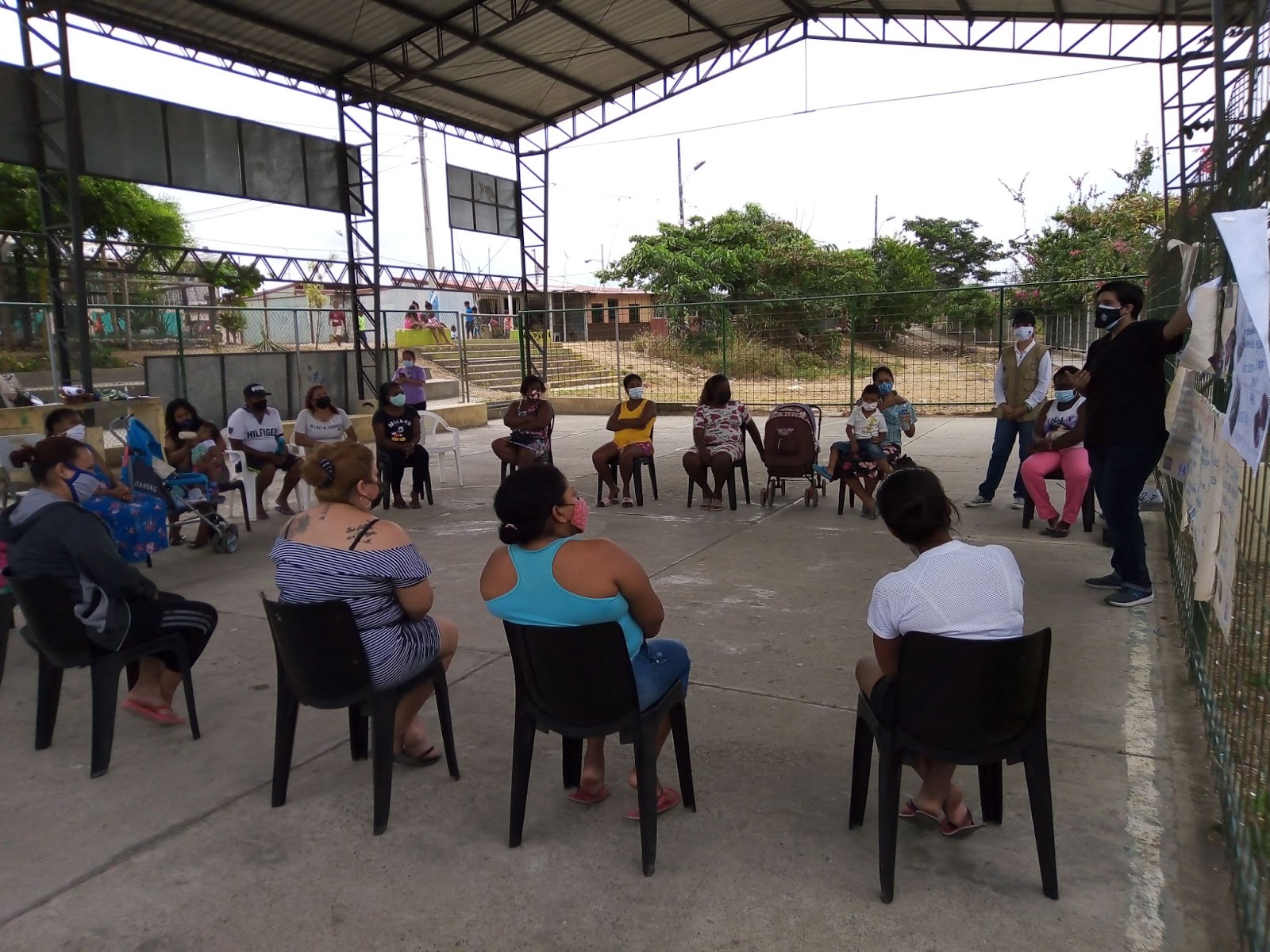
Our community workshops to prevent violence continue to take place on a daily basis in the Socio Vivienda II and San Francisco districts. The children really enjoy participating in these spaces, as do their caregivers. In comparison to last year, we are pleased to have enrolled more caregivers into our workshops. They are all committed to bettering  themselves in order to become positive role models in their homes  with their families, as well as within their communities.

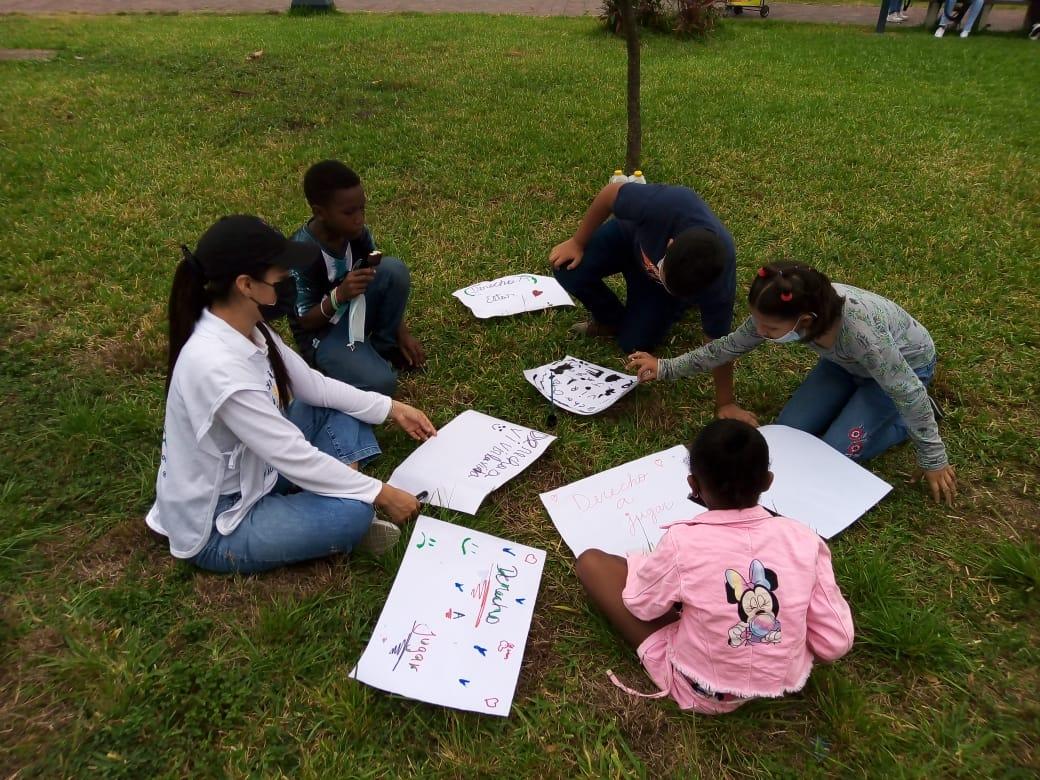
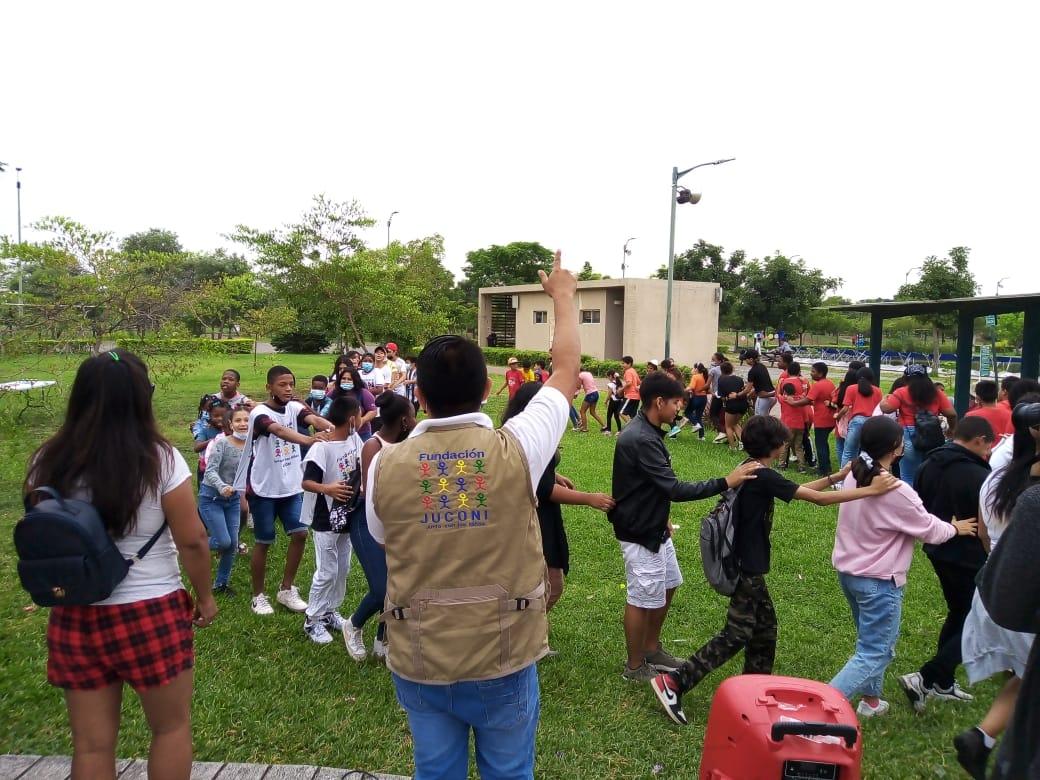
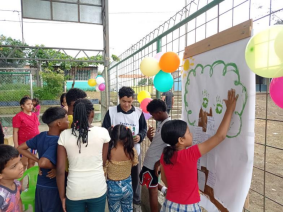
During these workshops, both adults and children perform different dynamic activities that facilitate a better understanding of the topics that are being taught within the framework of children’s rights.  

The security crisis in Ecuador has continued, but children need to attend school. Consequently, we have developed a plan to promote safer school environments in certain schools in Guayaquil because they are in high-risk areas where organised crime takes place. To achieve our objectives for the academic year 2023-24, we are working closely with the Northwest Network and other social organisations as well as local and national government groups as part of a political advocacy initiative.


JUCONI Ecuador: Dealing With a Surge in Violence and Increased Insecurity.

Unfortunately, the insecurity in Guayaquil has continued and deteriorated. Consequently, many schools located in the peripheral area of the city have returned to online classes in order to avoid children being exposed to this danger. Those who have no access to the Internet, often go to their neighbour’s homes and do classes with their school friends or collect worksheets from their school and return them for marking. Most of the time we continue with our planned activities as normal and try to operate the safe play spaces on a weekly basis. They are still the only places where the children enjoy a positive outdoor experience free from violence.

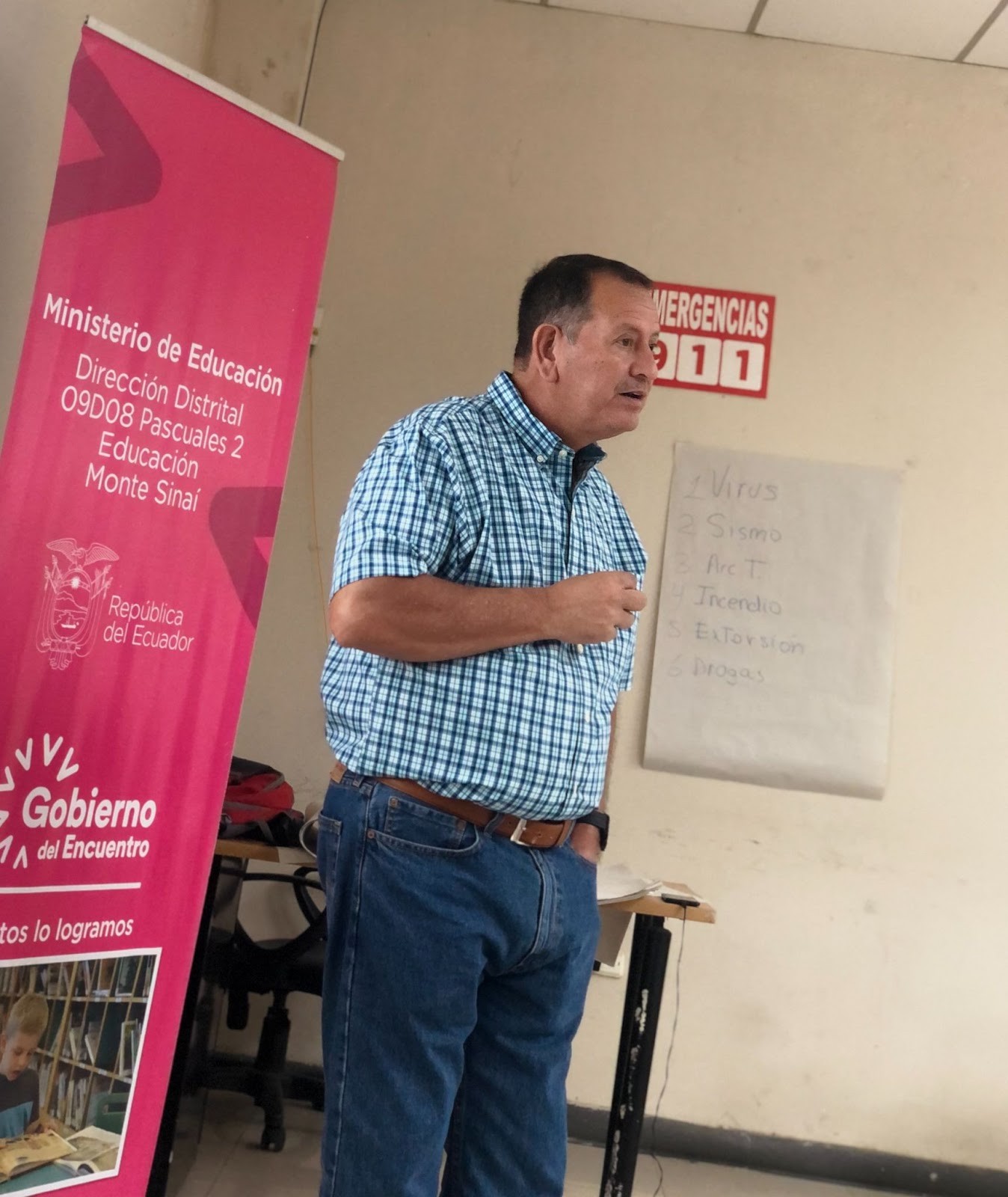
As part of the community, we at JUCONI Ecuador, see it as our job to support all the schools attended by 3,500 students in Socio Vivienda II and so we applied for permission from the Sub-Secretary for Education to hold a five day workshop that focused on creating and reinforcing security measures for the protection of children in schools. Thirty five teachers, who are also the risk assessment managers in their schools, participated in this five day workshop led by an expert in risk assessment and by the executive director of JUCONI. 

Those who attended, reported that not only had they gained knowledge on the most effective ways to address unexpected situations with their students but also how to offer them physical and emotional support. As a result of this workshop, a new  security protocol has been created for teachers to apply when there is an emergency or a disaster. This information has also been shared with caregivers by the JUCONI team.

Despite the complicated security situation, the children on the JUCONI programme  were recently taken on a two day camping trip and stayed in a Salesian hostel in General Villamil Playas. The objective was to encourage those present to reflect on how their own behaviour impacts on others and themselves, but through small actions, they can generate positive change. Some of the group activities that took place involved building a wood fire, having a mini football tournament and holding a talent night. All the children enjoyed sharing these experiences with each other. 

JUCONI Mexico: Upgrading Education Facilities to Provide Safe and Non-violent Learning Environments in Puebla.

JUCONI’s workshop programme has been successfully implemented and is now being rolled out and welcomed by teachers in other primary and nursery schools in Puebla, Mexico. The utmost importance of working with teachers in the first instance has been recognised by school principals and encouraged them to seek guidance from JUCONI. Throughout the workshops, JUCONI has helped teachers to understand what safe spaces are, the requirements for them to exist and to reflect on how change and security start with themselves. 

During one of the workshops, a participant commented that the content of the course was really focusing on teachers and helping to develop self-care tools that made them feel safe, so that they are able to replicate similar behaviour and conditions with their students. 

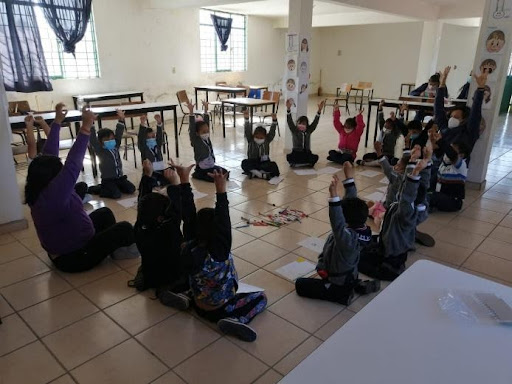
Each workshop includes five base sessions, with two additional sessions for case studies, which are optional. They occur on a weekly basis or once every two weeks and have a duration of 1hr. 40 mins – 2 hours. They usually take place in the mornings/early afternoons or at a time suited to school timetables and teacher availability. During the pandemic, the workshops were online, but since the beginning of 2022 JUCONI has been able to have in-person meetings. A trainer from the JUCONI team runs the sessions and is sometimes helped by a college student doing community service. 

The content of the workshops includes explanations and elements of a safe environment and a set of tools for teachers to implement in terms of their personal safety both inside and outside the classroom, alone and with their students. In addition, teachers learn that a safe school environment does not only involve physical safety, but also psychological, moral and social. Some of the tools that teachers are introduced to are; the ‘emotions thermometer’ with illustrations of emotions, a ‘safety plan’, gaining access to the community + community activities and specific plans of action. 

Five schools will have received the workshops by the end of the second semester of 2022, amounting  to a total of nine schools for the year. This includes three primary schools, with thirty five teachers undertaking the training and approximately 1064 children benefitting. The workshop has already been implemented in one nursery school, with nine teachers doing the training, and 177 children benefitting. The other nursery school will implement the workshop starting in mid-November and finishing in January 2023. 

The response from the schools has been great and the reputation of the workshops is spreading. JUCONI also provides smaller workshops for caregivers, which consist of three sessions where topics such as emotions, positive parenting, and effective communication are included. These in-person workshops aim to be dynamic and show caregivers the importance that the first years of life have on a child’s development so as to raise awareness and promote a loving, caring upbringing. In the second semester, JUCONI carried out workshops in three primary schools and one preschool, impacting a total of 352 caregivers. 

JUCONI ECUADOR: Our Psychosocial Programme Continues Despite Security Issues.

In April and May, the city of Guayaquil in Ecuador continued to experience extremely violent events making the peripheral areas where JUCONI operates, even more unsafe. Despite these obstacles, the process of intervention and prevention was maintained and intensified even though there were times when the team had to evacuate an area due to a lack of security.

In April, members of the JUCONI team were able to provide an integrated service to accompany and assist families enrolled on the programme to receive their COVID-19 vaccinations.

As a result, the number of infections decreased, as well as their severity. In addition, JUCONI helped these families to receive small kits of vitamins and medicines, especially those who remain particularly vulnerable due to a medical condition. 

In May, when schools reopened, the children and adolescents on the programme were reintegrated into the education system. This was carried out through intensive monitoring by our key workers and resulted in the vast majority enrolling  and attending classes. A kit containing school equipment and a uniform was also delivered to each family to encourage and promote a positive commitment by the children and their caregivers to education.

In addition, in order to strengthen a sense of well-being in the children and their caregivers, the JUCONI team organised a number of excursions and walks in safer areas away from their communities.

The adults and children on the programme have said that these ‘away days’ have provided a place of refuge for listening, understanding and support. Consequently, we have decided to prioritise the implementation of a variety of these excursions to continue to enhance our work.

JUCONI Mexico: Planning Safer Classroom Environments in Nursery and Primary Schools.

Following on from the success of this project in three schools in Puebla, we are planning to work with 12 teachers in four nursery schools and 48 teachers in four primary schools this year. This could involve 144 nursery aged children, 1,200 primary aged children and approx. 256 caregivers.

After a number of COVID-19 lockdowns, the objective continues to be to reduce the potential for violence in schools by promoting the development of safer classroom environments in order to strengthen attendance and reduce the possibility of children dropping out. Through a series of workshops, training and guidance will be provided for both teachers and caregivers that will focus on nurturing the healthy development of the girls and boys in their care.

For teachers, innovative training activities will aim to develop and strengthen their skills so that the potential for disruptive behaviour in their lessons is reduced. Furthermore, they will be given specific guidance on identifying and supporting the most vulnerable children in their classes. Workshops for caregivers will include topics such as child development and positive parenting.

JUCONI Ecuador: Increased Use of Safe Play Spaces by the Community in Guayaquil.

During January 2022, the new strain of COVID-19, Omicron, meant that most of the population in Guayaquil became infected, including some of the team at JUCONI Ecuador. As a result, we were forced to do our work online but managed to carry out the usual psychosocial interventions for the families that we work with.

In February, once the infection curve had decreased, the team were able to return to their normal activities with the children and their families. When the community workshops reopened, it was a real pleasure to welcome back a large number of children and caregivers to the community spaces.

During these sessions, we used specific workshops to continue to discuss the prevention of violence in families, the community and schools. This year, it has been gratifying to receive many more caregivers to our community workshops in addition to those who we are already working with. 

The new participants have responded well to the sessions and have become more optimistic about the fact that they can offer their own children a present and future free of violence. This year, thirty one ICT sponsored children graduated from the programme and new children and their families have been enrolled.

JUCONI Mexico: Exploring New Opportunities to Reduce the Potential for Violence in Schools in Puebla.

In 2021 we ran a series of workshops for teachers of children in three primary schools titled ‘Developing Safer Classroom Environments’ as there was concern that the children’s behaviour would be different due to school closures and  the impact of the COVID-19 pandemic. As a result of the success of these workshops, JUCONI is exploring the possibility of rolling out more workshops for staff in a number of nursery and primary schools in 2022.

JUCONI Mexico: Teachers are Better Prepared to Deal with Challenging Behaviour

Staff at JUCONI Mexico are currently in the second stage of working with teachers from three schools to strengthen the knowledge and skills they acquired and developed while participating in our series of JUCONI training workshops in May. Everyone is keen to reduce the potential for violence in schools now that they have reopened and we are monitoring the ways in which teachers have been able to use what they have learned. Within their own work spaces, teachers have been sharing ideas and reported that they have become more aware of their own emotions and those of their students. Many of the children have been particularly affected by the consequences of the Covid-19 pandemic, such as the loss of a caregiver, increased domestic violence and a reduction in economic stability.

Teachers have begun to use a variety of teaching and learning strategies and often change the layout of their classrooms to help to encourage a positive learning environment. Many teachers continue to use the relaxation exercises that they learned during the workshops and these have helped them to develop effective coping strategies when responding to difficult situations with the children. 

Furthermore, school managers and teachers have become more aware of the physical, emotional and social consequences of the pandemic on the children and have acknowledged the role of the school environment and staff in supporting them. This has resulted in more time being allocated for meetings to discuss and address complex emotional situations with the aim of developing strategies and establishing support-networks to manage them better. 

Focus group meetings that aim to strengthen collaboration between the school and the community have also been integrated into the academic year. At the same time, school managers and teachers have shown an increased interest and sensitivity in seeking external support networks to refer children who have developed mental health issues as a result of the pandemic.

JUCONI Ecuador: Work Continues Despite an Increase in Safety Concerns

Thanks to the vaccination programme, the team has been able to resume their work in the communities of Socio Vivienda 2 and San Francisco. The recent riots in a prison in Guayaquil have occurred close to where we operate and this has increased concern for the safety of staff. Nevertheless, we have been conscious not to reduce our work with the most vulnerable group in our society – the children.

During this semester, JUCONI educators have been working tirelessly. The usual interventions have taken place in the mornings so that time can be spent with the children and their caregivers in order to analyse how family life has improved and what other strategies could be applied. 

In addition, the team includes a number of weekly activities which aim to strengthen the bonds between caregivers and children to help them to overcome  negative experiences from the past. They include baking biscuits, making candles, going on recreational trips and celebrating birthdays.

In the afternoons, JUCONI educators have focused on community workshops for caregivers, teachers and children that are also based on the prevention process. Topics include, children’s rights, staying safe, drug prevention and building positive social skills. In their meetings, both caregivers and teachers are encouraged to learn to teach with discipline but also with kindness.

This year, about 40 families have continued to receive psychotherapeutic intervention and more than 150 caregivers and teachers have attended the workshops in community prevention.