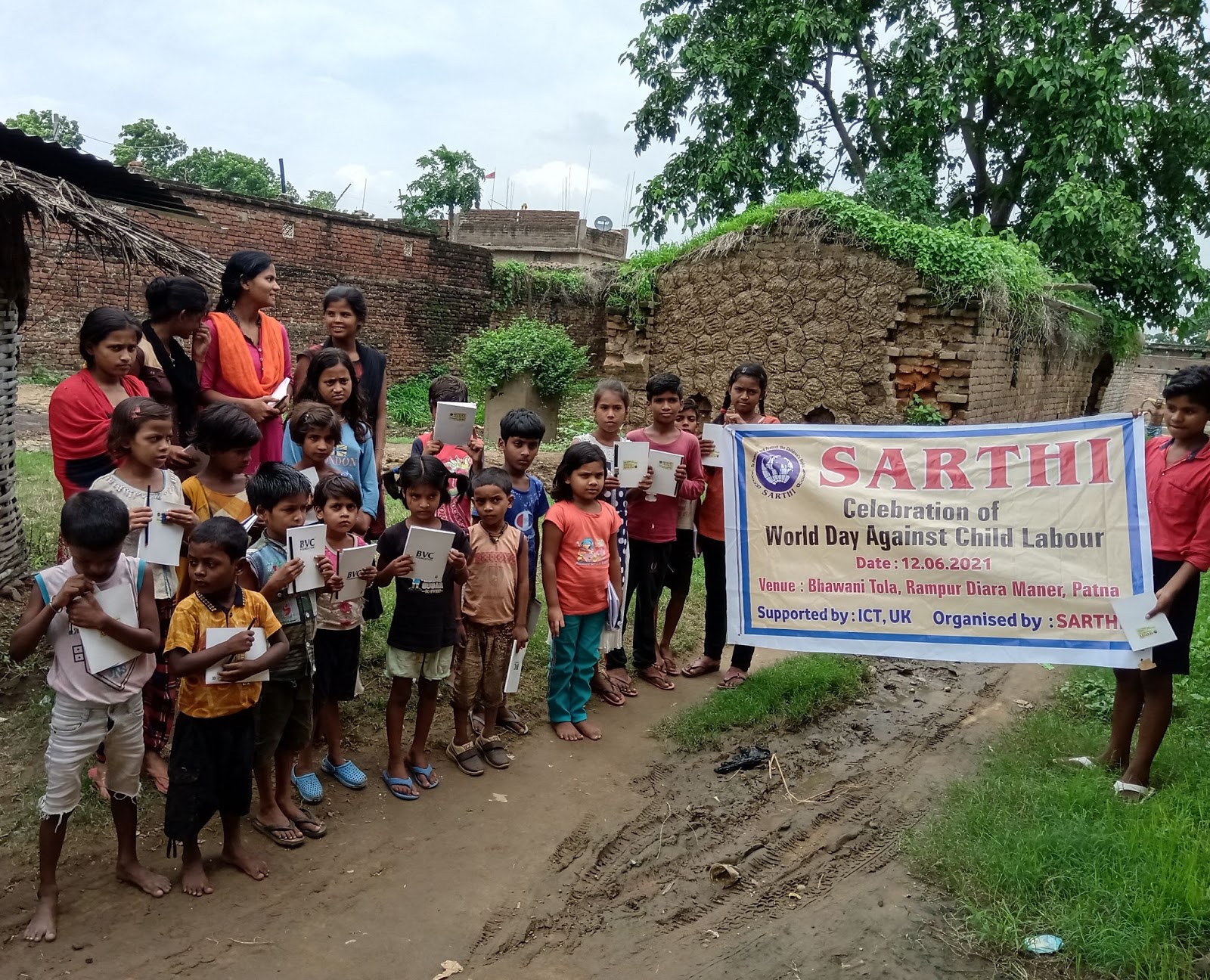
The team at SARTHI has continued to work with the children of migrant workers in Patna. Originally, eleven girls and nine boys aged six to sixteen were targeted for readmission to Bhawani Tola school but eventually thirty-six children were enrolled. Schools are currently closed again but lockdown is easing week by week. Schools may reopen in mid-July but this has yet to be confirmed.
Staff from SARTHI asked the children and their teachers to give feedback about the impact of the project on their life and work.
Puja (16 years of age) says that before Covid-19 she was going to school regularly but due to the pandemic her father lost his job in Delhi and returned to their village. After a while, her family had financial problems and she stopped going to school and had to work to help sustain the family. Later on, Puja’s father was offered the opportunity for her to have an arranged marriage and this is when she came into contact with SARTHI because she was being put under a lot of pressure from her parents to accept the proposal. “I am very thankful to the team at SARTHI because after several meetings with them as well as further counselling and support for our family, my marriage did not go ahead. Family life has improved considerably and I am much happier both at home and at school.”
Sunny (15 years of age) was studying in the 9th Grade at school but due to lockdown, schools had to close and there was a financial crisis in the family. His father suggested that he could help by leaving school and looking for casual work. Sunny felt under pressure and it was during this period that he came into contact with the team from SARTHI, who then assessed the situation on his behalf. “After some family counselling sessions, my father agreed that I could continue my studies as soon as schools reopen.”
Raju K. (Teacher) “SARTHI has helped to protect these children by strengthening family relationships and encouraging parents to send them back to our school.”
Usha K. (Teacher) “Without the support of the team at SARTHI, we could not have got these children readmitted to our school and their parents would have sent them out to work at a young age. Many of the girls would have got married too. I heartily appreciate the work of SARTHI because they have been able to minimise the level of exploitation within families.”
