JUCONI Ecuador: A new club for girls

Earlier in the year, the need to provide a club for female adolescents was identified by the team, since they are at a high risk of being influenced, abused or recruited by the drug gangs operating in Guayaquil.

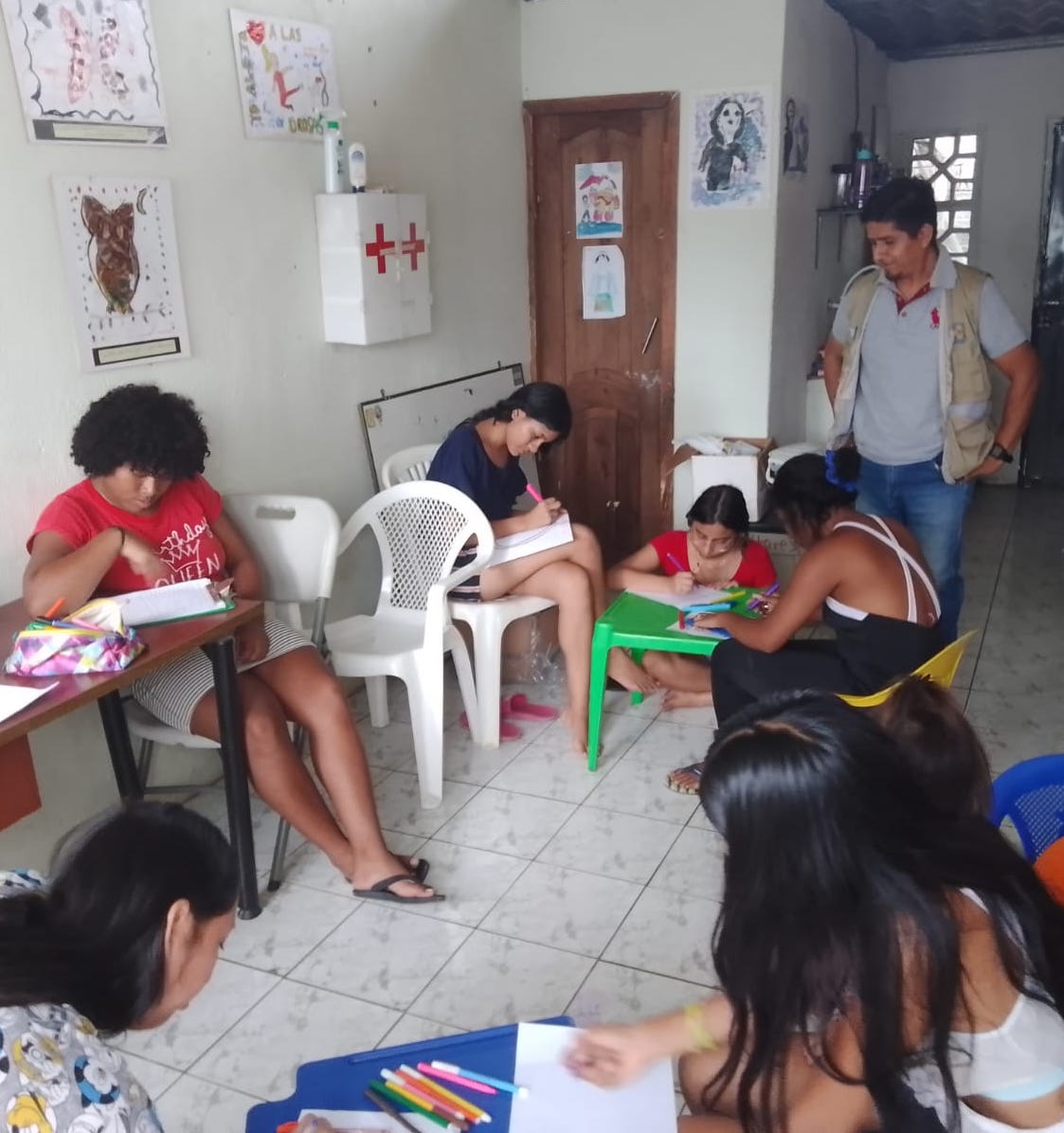
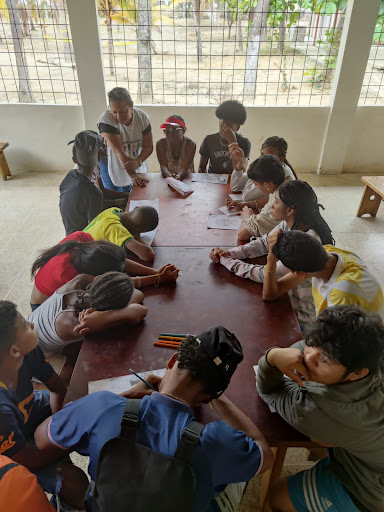
The club has been meeting once a week since March and is located in Socio Vivienda in a small house that JUCONI uses for a range of activities. The girls are aged from 12-20 years old and are worried about their future because of the insecurity in the area where they are growing up. They are open to receiving advice because they do not want to end up in early marriages/pregnancies, at risk of abuse and/or being drawn into activities linked to drugs or criminal gangs. In response to this, the team at JUCONI has drawn up a ‘life plan’ programme  to guide the girls towards recognising that there are gaps in their academic and social learning and that many of them suffer from low self-esteem and have difficulties in expressing their thoughts clearly. 

Thus far, the girls have attended a number of workshops led by an educational psychologist from JUCONI, as well as a community coordinator and an intern. They have covered the topic of ‘improving communication skills’ and are currently working on ‘building self-esteem’. This will be followed by ‘planning for the future’ where the girls will be given the opportunity to discuss their hopes and dreams, for example, if they want to study, work, marry or live alone, etc. and how they plan to achieve this. After that, the girls will consider improving their ‘leadership skills’ and also learn about having a voice in political advocacy about children‘s rights. Finally, the girls will discuss ‘personal relationships’ and consider how their lives will change if they decide to get married or have babies soon.

Ultimately, the club provides a safe space and an opportunity for the girls to talk about whatever they want.

Security at community football games and music programmes

Due to the security crisis, many organisations that were working in Socio Vivienda have left the sector (and the country), as in the case of the ‘Fútbol Más Organisation’. Other organisations have maintained restrictions and have asked JUCONI to run workshops about strategies to maintain security within football teams. In addition, there are other NGOs like ‘Fundación Huancavilca’ running music programmes, and when they were considering leaving the community, we shared our security protocols and this has helped them to continue with their activities.

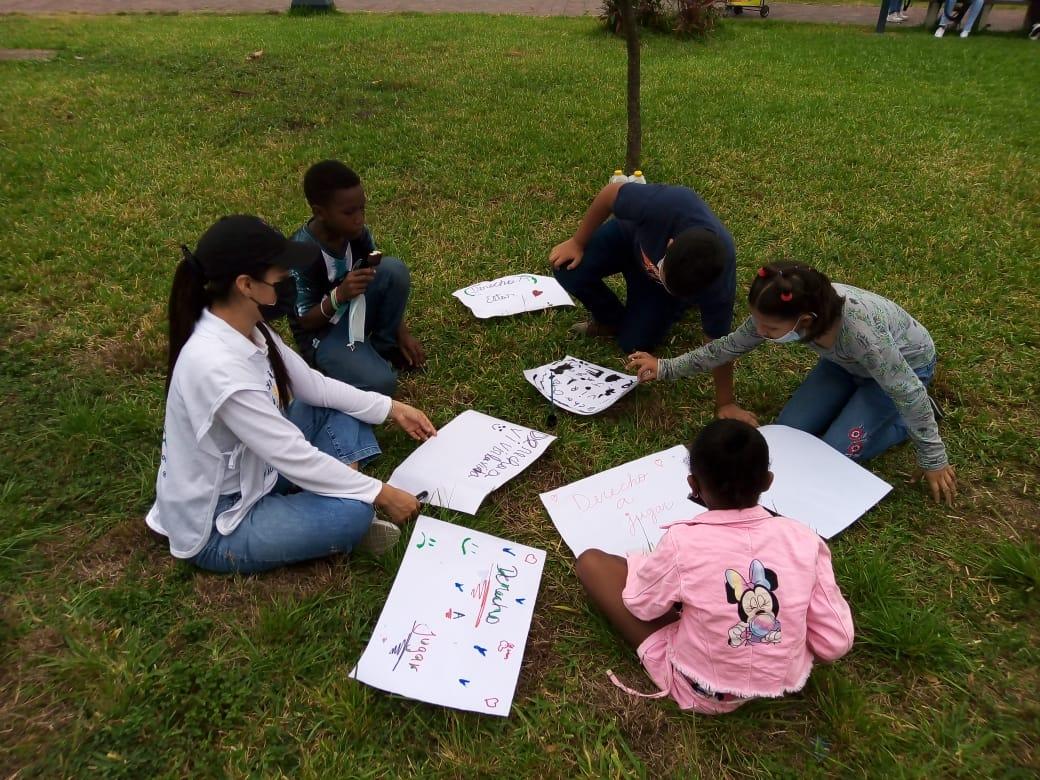
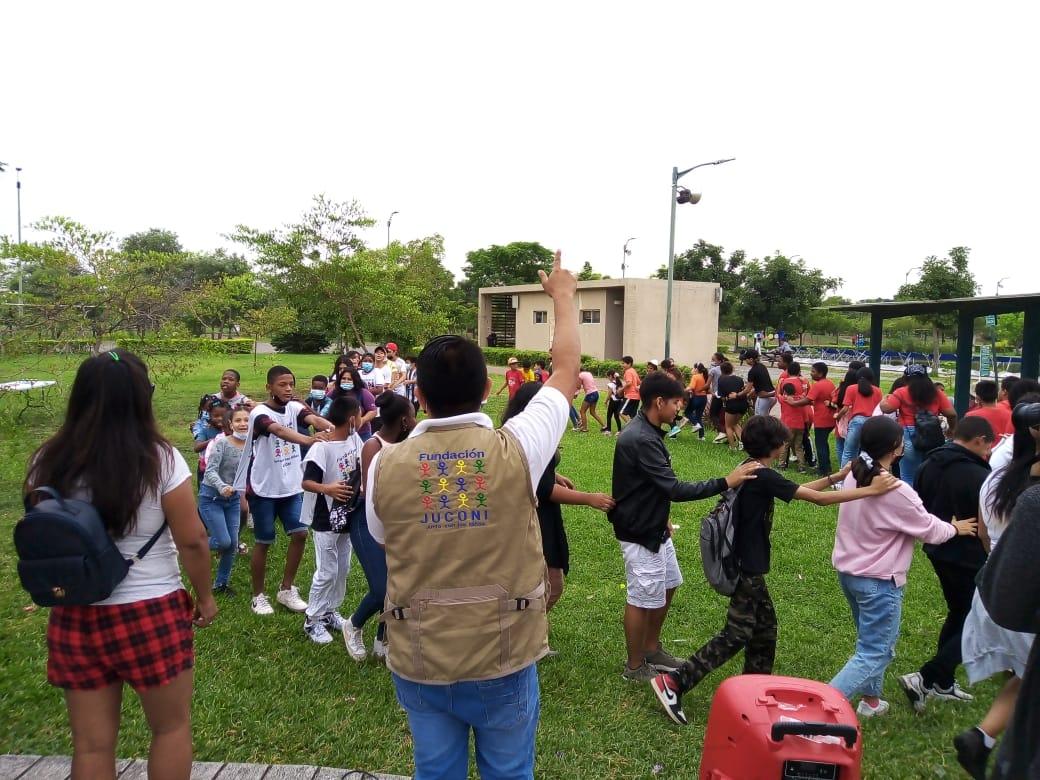
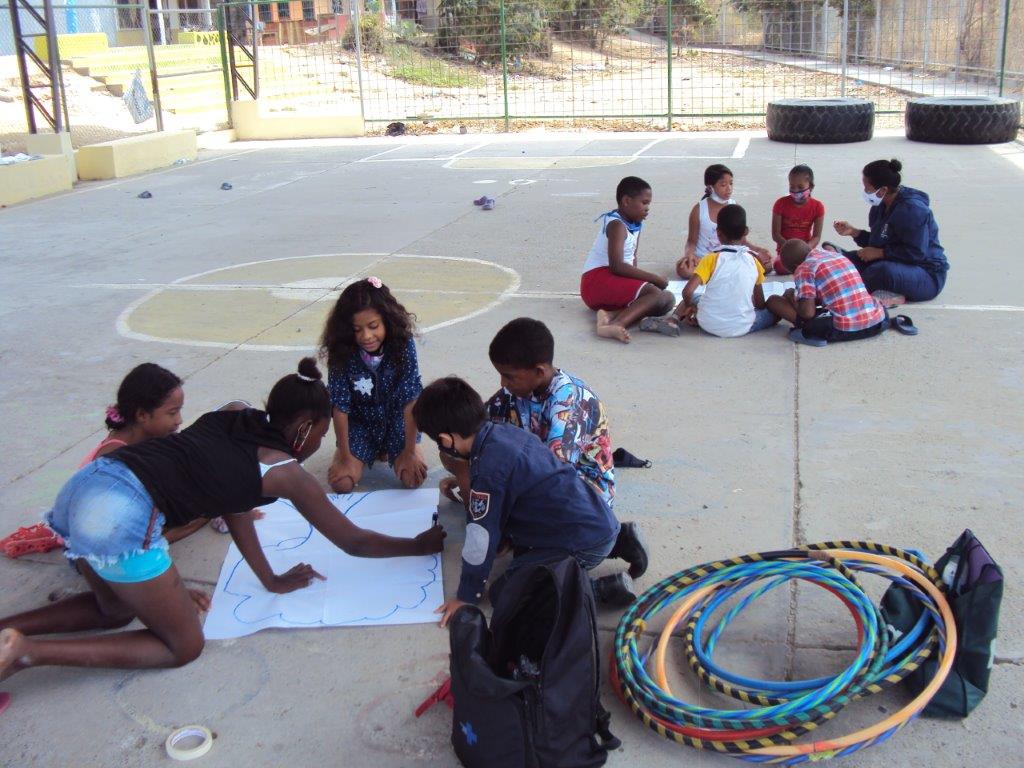
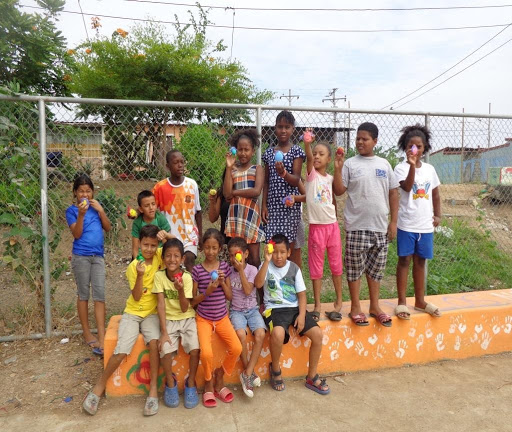
The ‘safe play spaces’ organised by JUCONI, remain the only places where children can participate in a number of group activities, including sport. They are open every week but close temporarily when the situation is seen as too dangerous for the team to run them.

Supporting Educational Psychologists

Together with the Undersecretary for Education from Guayaquil (District 8), the organisations of the Northwest Network (Misión Alianza, Human Rights Committee, Universidad Casa Grande and JUCONI), have created the ‘Governance Board for Safe Schools’, in order to provide support to the schools that are extremely vulnerable to high levels of violence in the city and their communities. The concrete action so far has been the emotional support of one hundred and thirty educational psychologists who work in the peripheral areas of the northwest of Guayaquil (District 8).   

Every week, JUCONI also now works with a school in Socio Vivienda 2, which includes three educational psychologists, one hundred and ten teachers and thirty care givers.
JUCONI Ecuador: Dealing With a Surge in Violence and Increased Insecurity.

Unfortunately, the insecurity in Guayaquil has continued and deteriorated. Consequently, many schools located in the peripheral area of the city have returned to online classes in order to avoid children being exposed to this danger. Those who have no access to the Internet, often go to their neighbour’s homes and do classes with their school friends or collect worksheets from their school and return them for marking. Most of the time we continue with our planned activities as normal and try to operate the safe play spaces on a weekly basis. They are still the only places where the children enjoy a positive outdoor experience free from violence.

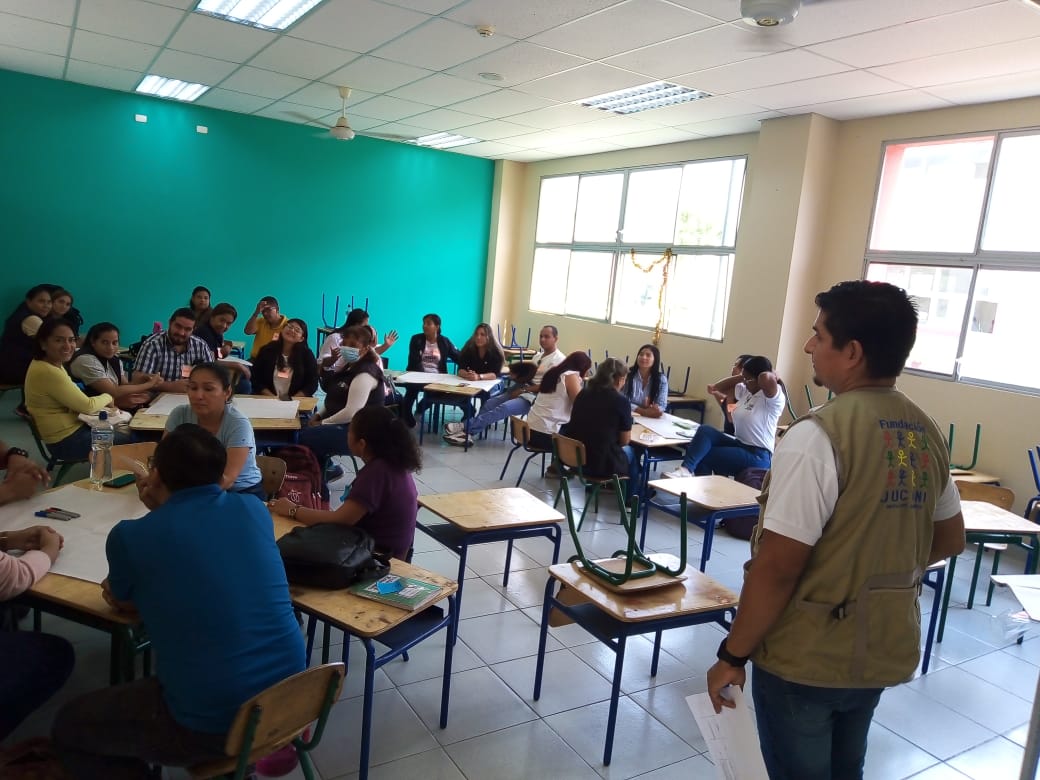
As part of the community, we at JUCONI Ecuador, see it as our job to support all the schools attended by 3,500 students in Socio Vivienda II and so we applied for permission from the Sub-Secretary for Education to hold a five day workshop that focused on creating and reinforcing security measures for the protection of children in schools. Thirty five teachers, who are also the risk assessment managers in their schools, participated in this five day workshop led by an expert in risk assessment and by the executive director of JUCONI. 

Those who attended, reported that not only had they gained knowledge on the most effective ways to address unexpected situations with their students but also how to offer them physical and emotional support. As a result of this workshop, a new  security protocol has been created for teachers to apply when there is an emergency or a disaster. This information has also been shared with caregivers by the JUCONI team.

Despite the complicated security situation, the children on the JUCONI programme  were recently taken on a two day camping trip and stayed in a Salesian hostel in General Villamil Playas. The objective was to encourage those present to reflect on how their own behaviour impacts on others and themselves, but through small actions, they can generate positive change. Some of the group activities that took place involved building a wood fire, having a mini football tournament and holding a talent night. All the children enjoyed sharing these experiences with each other. 

JUCONI ECUADOR: Our Psychosocial Programme Continues Despite Security Issues.

In April and May, the city of Guayaquil in Ecuador continued to experience extremely violent events making the peripheral areas where JUCONI operates, even more unsafe. Despite these obstacles, the process of intervention and prevention was maintained and intensified even though there were times when the team had to evacuate an area due to a lack of security.

In April, members of the JUCONI team were able to provide an integrated service to accompany and assist families enrolled on the programme to receive their COVID-19 vaccinations.

As a result, the number of infections decreased, as well as their severity. In addition, JUCONI helped these families to receive small kits of vitamins and medicines, especially those who remain particularly vulnerable due to a medical condition. 

In May, when schools reopened, the children and adolescents on the programme were reintegrated into the education system. This was carried out through intensive monitoring by our key workers and resulted in the vast majority enrolling  and attending classes. A kit containing school equipment and a uniform was also delivered to each family to encourage and promote a positive commitment by the children and their caregivers to education.

In addition, in order to strengthen a sense of well-being in the children and their caregivers, the JUCONI team organised a number of excursions and walks in safer areas away from their communities.

The adults and children on the programme have said that these ‘away days’ have provided a place of refuge for listening, understanding and support. Consequently, we have decided to prioritise the implementation of a variety of these excursions to continue to enhance our work.

JUCONI Ecuador: Increased Use of Safe Play Spaces by the Community in Guayaquil.

During January 2022, the new strain of COVID-19, Omicron, meant that most of the population in Guayaquil became infected, including some of the team at JUCONI Ecuador. As a result, we were forced to do our work online but managed to carry out the usual psychosocial interventions for the families that we work with.

In February, once the infection curve had decreased, the team were able to return to their normal activities with the children and their families. When the community workshops reopened, it was a real pleasure to welcome back a large number of children and caregivers to the community spaces.

During these sessions, we used specific workshops to continue to discuss the prevention of violence in families, the community and schools. This year, it has been gratifying to receive many more caregivers to our community workshops in addition to those who we are already working with. 

The new participants have responded well to the sessions and have become more optimistic about the fact that they can offer their own children a present and future free of violence. This year, thirty one ICT sponsored children graduated from the programme and new children and their families have been enrolled.

JUCONI Ecuador: Work Continues Despite an Increase in Safety Concerns

Thanks to the vaccination programme, the team has been able to resume their work in the communities of Socio Vivienda 2 and San Francisco. The recent riots in a prison in Guayaquil have occurred close to where we operate and this has increased concern for the safety of staff. Nevertheless, we have been conscious not to reduce our work with the most vulnerable group in our society – the children.

During this semester, JUCONI educators have been working tirelessly. The usual interventions have taken place in the mornings so that time can be spent with the children and their caregivers in order to analyse how family life has improved and what other strategies could be applied. 

In addition, the team includes a number of weekly activities which aim to strengthen the bonds between caregivers and children to help them to overcome  negative experiences from the past. They include baking biscuits, making candles, going on recreational trips and celebrating birthdays.

In the afternoons, JUCONI educators have focused on community workshops for caregivers, teachers and children that are also based on the prevention process. Topics include, children’s rights, staying safe, drug prevention and building positive social skills. In their meetings, both caregivers and teachers are encouraged to learn to teach with discipline but also with kindness.

This year, about 40 families have continued to receive psychotherapeutic intervention and more than 150 caregivers and teachers have attended the workshops in community prevention.

JUCONI Ecuador: Work continues and new families join the programme in Guayaquil

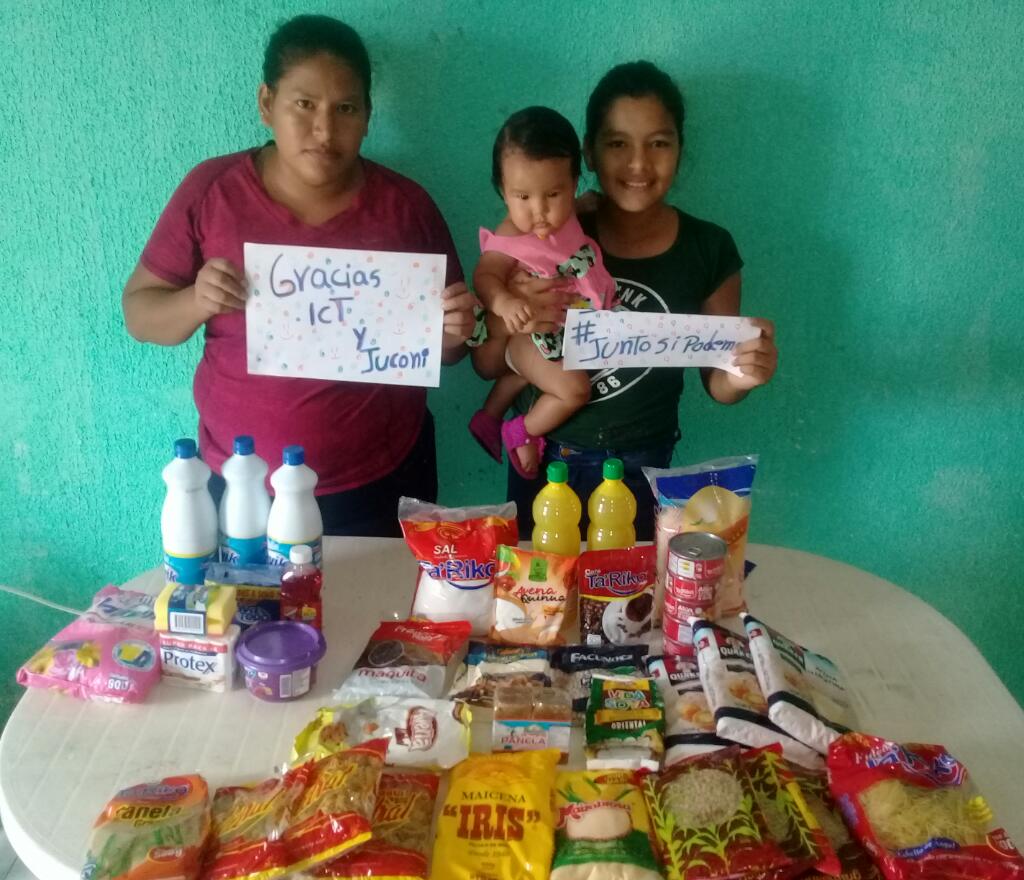
During the Covid-19 pandemic, the team at JUCONI Ecuador has been able to stay in contact with the children and families on their psychosocial programme. In order to continue to give emotional support and monitor progress, communication has been maintained via the telephone, online or in person. When they visit families, JUCONI workers always wear PPE and also take masks and antiseptic gel for the families. The contents of the monthly food baskets for families have increased to include tinned tuna, oil, milk, masks and antiseptic hand wash. 

In March 2021 there was another lockdown that was lifted in June. Currently the organisation is doing all it can to get the team vaccinated. 

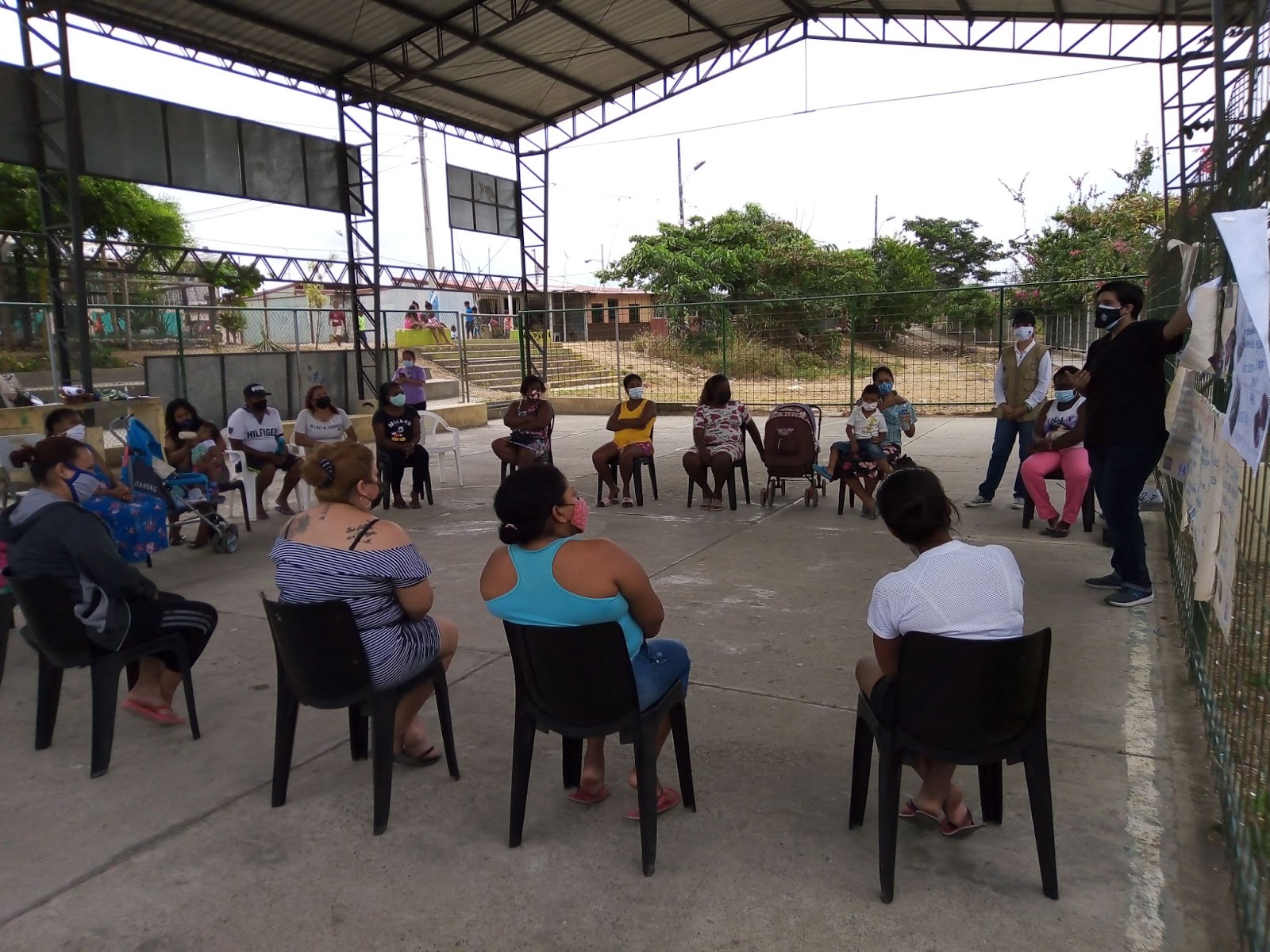
The community safe space continues to be used for meetings and workshops with both children and/or parents. The team is now working with smaller groups of children but has increased the number of sessions that they hold each week. This community safe space was built by JUCONI staff and continues to have the support of local people, the children and their families, who have organised themselves so it is kept clean and is not vandalised. 

In May 2021, JUCONI’s family psychosocial programme restarted with twenty new families and their children becoming part of the ‘family visits’ process.

JUCONI Ecuador: Adapting community safe spaces for children to play and learn

After full lockdown in 2020, the community intervention work carried out by the team at JUCONI Ecuador, in both Socio Vivienda 2 and San Francisco, has resumed at different times of the day. Initially, groups of ten, then fifteen children, were able to attend meetings outside that gave them the opportunity to express the emotions that they had experienced during the months of confinement. This feedback also helped staff to identify protection strategies in cases where the children felt that they remained in danger due to COVID-19. 

The children were very happy when they returned to their community ‘safe space’ for these meetings, because until then, it was the only place where they had been allowed to go outside their homes. In total, one hundred and eighty-eight boys and girls attended meetings and activities with their peers, as well as thirty two parents at community level and fifty teachers.

In the past, there were no community safe spaces in Socio Vivienda 2 and San Francisco, so JUCONI staff have had to find and adapt available land. In Socio Vivienda 2 for example, a field has gradually been adapted that now includes a roof to protect the children from the sun and wash basins to promote hand washing hygiene. Post lockdown, parents were also committed to helping to clean up this space and to make small changes so that their children could attend the workshops again.

JUCONI Ecuador: Together with children in the time of Covid-19 in Guayaquil

The Government of Ecuador introduced lockdown measures in March due to the Covid-19 pandemic. Staff at JUCONI took a number of steps to adapt its model of psycho-social care in order to support children during a period when they could be dealing with a fear of death and the loss of family members. A protocol was developed that allowed communication to continue via phone calls, WhatsApp and Zoom. This enabled the team to remain in contact with  the children and families on the programme and to continue to carry out a variety of  care activities.

The suspension of income-generating activities as a protection against Covid-19, impacted strongly on these families, as many heads of households are mothers and senior citizens who are employed in informal work. We continued to provide humanitarian assistance and food baskets to them which made an important contribution in ensuring that the children living in these households were fed.
After the confinement measures were suspended, face-to-face activities in our sectors in northwestern Guayaquil resumed on July 16th. These included  home visits for psycho-social and therapeutic intervention sessions, as well as the use of safe spaces for discussions about the prevention of domestic violence and drug abuse.

Access to food and essential supplies during the Covid-19 pandemic.

Ecuador

The city of Guayaquil in Ecuador is one of the worst hit areas in the southern part of the Americas. Official figures suggest that thousands have died mainly due to an overwhelmed and ill-equipped health care system, in addition to the challenges that poor and crowded communities face in respect to social distancing.

To help with the Covid-19 response, staff at JUCONI Ecuador continue to deliver our programme via telephone calls to the children and families who we are supporting. We have also been able to transport food, hygiene kits and medicines to these families as their income largely depends on an informal economy. 

To date, only one case of Covid-19 has been reported among the seventy two families who we help. This is a very good outcome considering the level of poverty and the challenging socio-economic environments in which these families live. This result was achieved because we were able to run a comprehensive hygiene promotion programme at the beginning of March.

Mexico

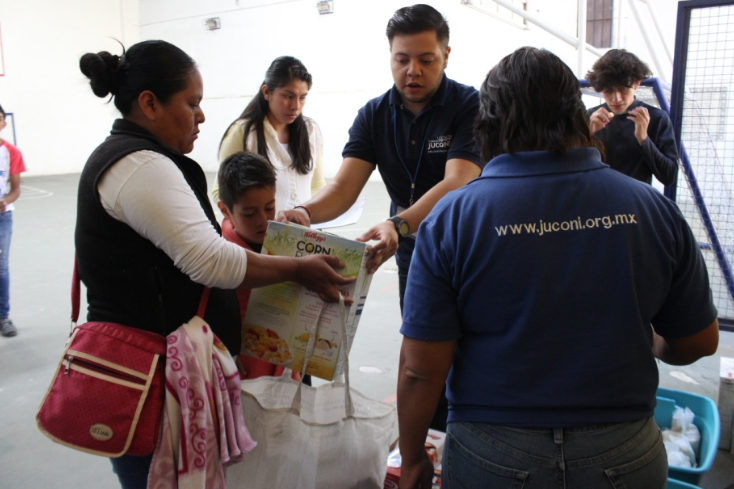
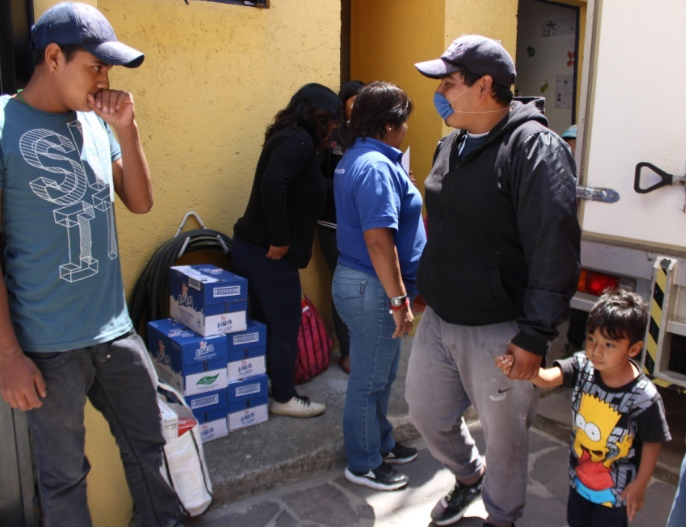
The current health crisis has also put the poor communities that we serve in Puebla, under economic pressure. For this reason, and as part of the care provided by JUCONI, we have distributed food to help families cope with the situation.

A Success Story from our Sponsorship Programme at JUCONI Ecuador

Antonio was contacted by JUCONI four years ago when he was nine years old and was working on a bus. He lived with his parents and five brothers in a small house located in one of the neighbourhoods with the highest rate of violence in the city of Guayaquil.

Antonio had to work to contribute financially to the household, because his father did not have a regular job and his mother was unemployed. When JUCONI started working with Antonio’s parents, it became clear that his father was putting a lot of pressure on his son to help the family and to achieve good grades at school. When this did not happen, Antonio’s father resorted to physical punishment and his mother was not able to protect Antonio or her other children. This resulted in Antonio becoming defensive and more aggressive towards his classmates and friends in the neighbourhood. 

It took a little more than three years for the family to progress through the JUCONI intervention programme. Antonio stopped working and his attendance and progression at school improved considerably. The violence at home has ceased and his parents have become more affectionate towards their children. They now also monitor their progress more closely at school.

As part of being on the programme, Antonio was encouraged to participate in the activities taking place in the shared play spaces set up by JUCONI. In these spaces he learned to play a variety of games that encouraged him to reflect on his behaviour by respecting rules and showing more consideration for others. The relationship between him and his father has improved and they spend more time together at weekends.