Keoogo: Adapting to new measures at the Keoogo village during the Covid-19 pandemic

In March, as part of the special measures introduced to reduce the spread of Covid-19, the Government of Burkina Faso issued a temporary law that restricted public freedom. These restrictions hindered the continuity of several of Keoogo’s activities and in order to overcome these barriers the team drew up a plan to adapt to the new regulations. Prevention measures have been implemented for the children and young mothers living in the village that include the use of hand wash, gel and soap and the wearing of masks for all visitors. Other measures have resulted in the reorganisation of work via staff rotas, a new teleworking system, modification of working hours and the provision of additional water points.

Before the reopening of the ‘Beoogo Tienbo’ nursery school in October, the school was equipped with protective equipment. Furthermore, all parents were briefed on the health measures to follow to ensure the safety of their children if a child or family member falls ill,  as well as maintaining social distancing when dropping off and picking up children from the school.

Basic needs support for street children in the prevention of Covid-19.

Burkina Faso 

The number of people with Covid-19 in Burkina Faso has evolved since the first cases were registered on the 9th of March. On the 6th of June, the last assessment highlighted that eight hundred and ninety people had tested positive, seven hundred and seventy five people had recovered and fifty three had passed away. Despite these figures, the Government has eased the preventive measures taken against the spread of the virus by allowing the re-opening of markets, places of worship, bars and restaurants, the lifting of the quarantine and the authorisation of the use of public transport.

At the start of the pandemic, Keoogo put in place a number of preventative measures such as cancelling group activities, banning visitors from going to the Keoogo shelter in Ouagadougou and telling the young mothers and children living there not to go out. The mothers also attended health awareness programmes on how to protect themselves and others from Covid-19. The organisation arranged for the provision of  hydro-alcoholic hand sanitiser at the entrance to its offices as well as masks for the field team and medical staff at the Keoogo Medical Centre. 

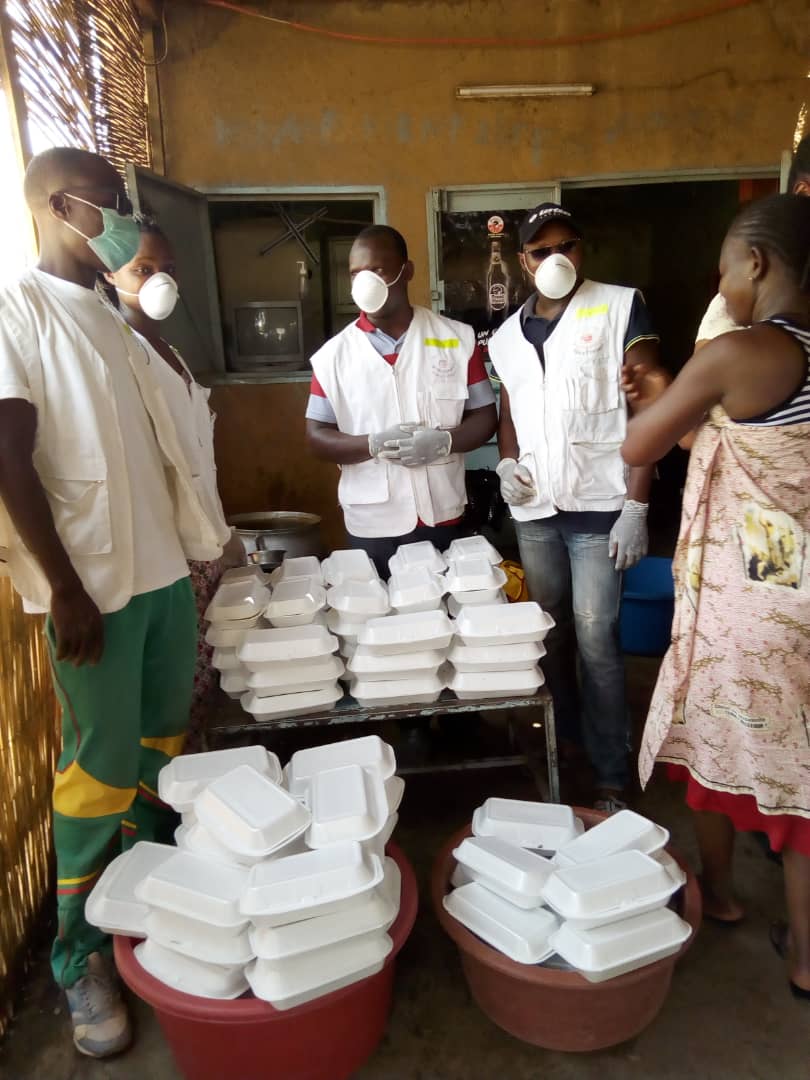
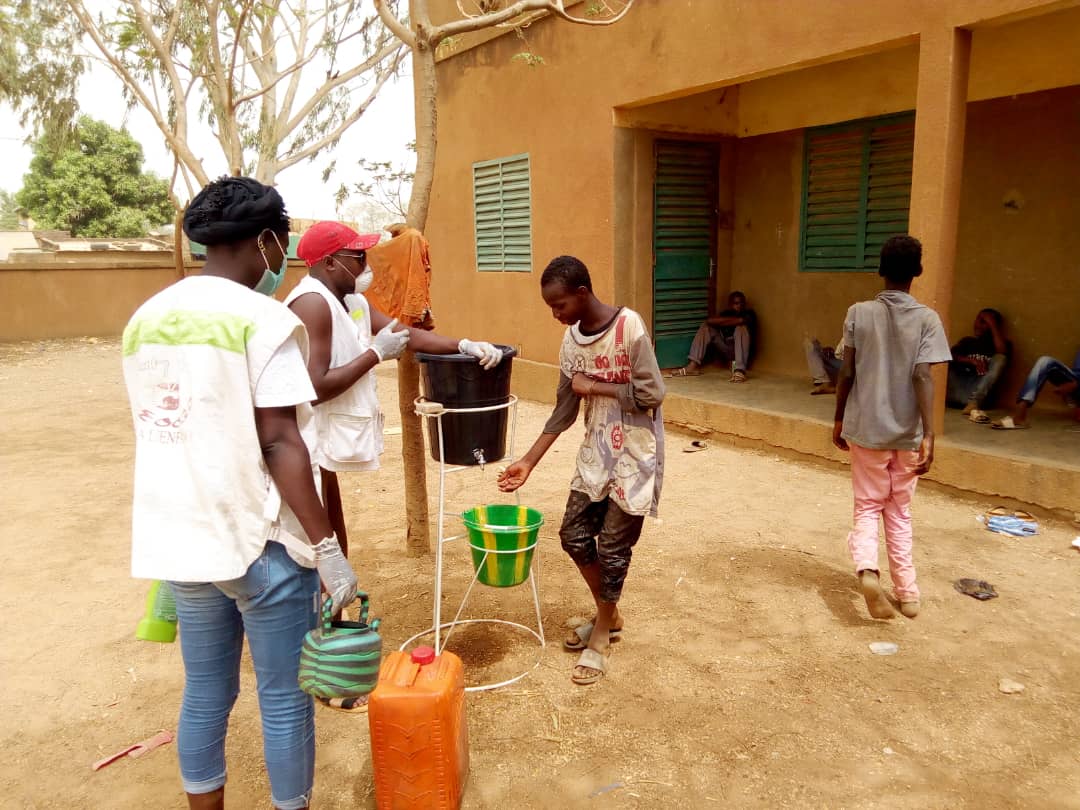
The prevention of Covid-19 is particularly challenging for children and young people who live on the streets and rely on the informal economy for their livelihoods. Since the spread of the virus, some of them have decided to join community drop-in centres, and this has put more pressure on these facilities in terms of availability of basic supplies. Keoogo is aware that three hundred and seventy four children are living on the streets in our area and they are currently taking action to protect these children. They have strengthened the capacity of the drop-in centres by providing food, water, medicines, masks and hygiene kits that include hand sanitiser, soap and gloves for the street children and the community.

Update on the ‘Beoogo Tienbo’ Nursery School in Burkina Faso

Beoogo Tienbo is a walled village developed as a shelter for young women and children by our partner Keoogo. It is situated in an area 17km north of the capital Ouagadougou in District 9. The project offers a nursery school which is open to children living in the shelter with their mothers, as well as to children from the surrounding community.

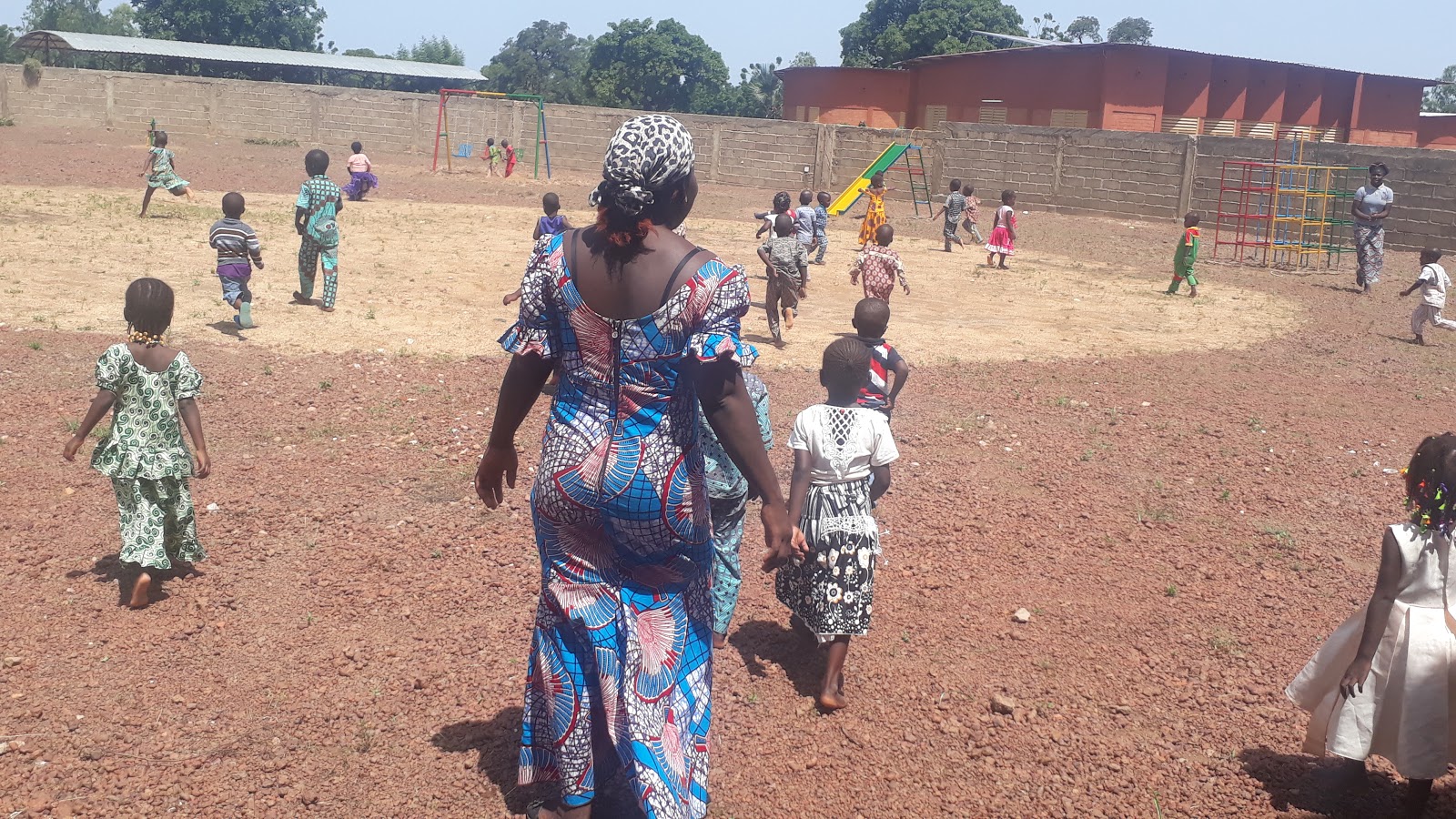
The school is equipped with three large classrooms, a hall for afternoon snacks, a toilet block, a sports field, a sand pit, two swings, a slide, a climbing frame and two climbing horses. The kitchen of the shelter provides afternoon snacks for the children. The school is currently run by a trained nursery nurse and a nursery assistant.

The school welcomes children from 3 to 6 years of age and follows the French education system. The children are divided into ‘petite section’ (PS: 3-year-olds), ‘moyenne section’ (MS: 4-year-olds) and ‘grande section’ (GS: 5-year-olds). For the academic year 2019-2020, two levels are functioning: The ‘petite section’ and the ‘moyenne section’. The ‘grande section’ will open for the academic year 2020-2021. 

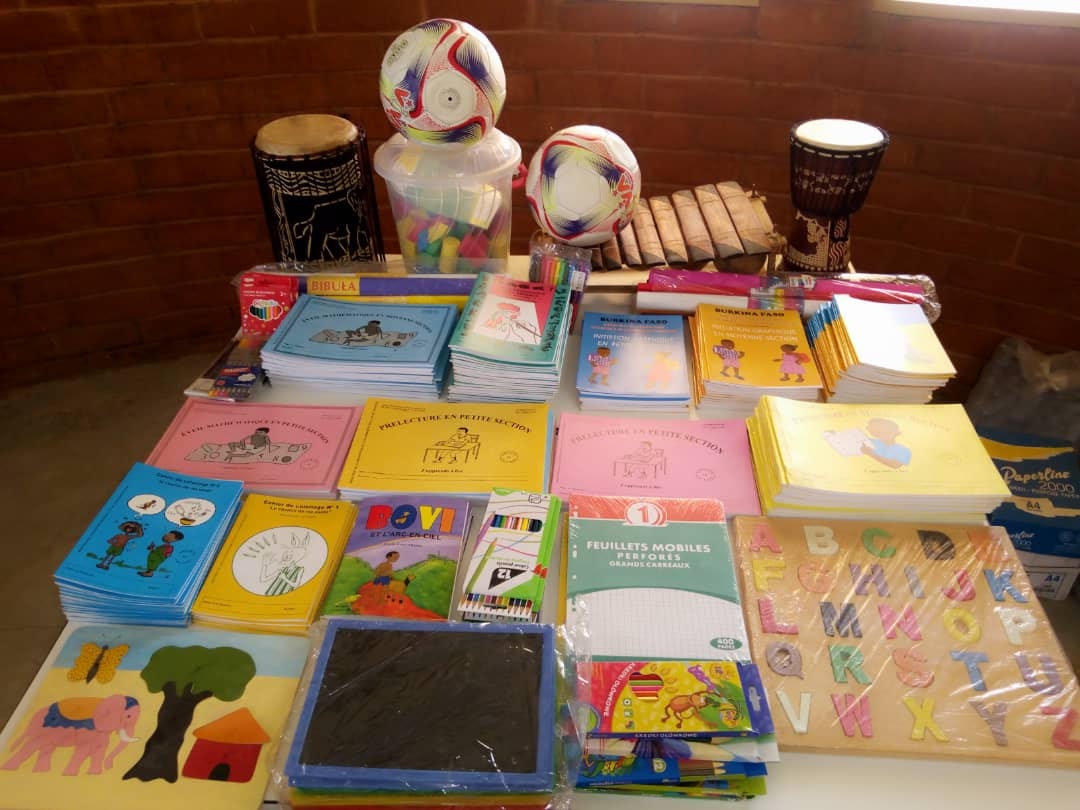
Thanks to the kind support of the Austin Bailey Foundation and other donors, we have purchased materials for the ‘petite section’ and the ‘moyenne section’ – which include 305 educational booklets for reading, maths, handwriting, drawing and painting; sixteen art kits and games, three musical instruments and two footballs.

The school has now been officially authorised by the Burkinabe Governor of the Centre Region. In addition, in January 2020, it was examined and approved by the Basic Education School Board of Ouagadougou.

Of the 52 children currently attending the school, 30 of them are street children now living in the shelter with their mothers. 

Three testimonies from parents of children enrolled at the nursery school

“My two boys are enrolled at the Keoogo nursery school in the ‘petite’ and ‘moyenne’ sections and I am very happy that they are there. In this school the teachers are friendly and professional. They are very attentive to the children and provide a family-friendly and warm welcome every day. It has met my expectations and since my boys have been going to this school, I have noticed changes in their behaviour. For example, they are more careful about the rules of personal hygiene and are more polite in their speech- saying “please dad” and “please mum” more often. I’m very proud of them.”

“Our daughter joined the nursery school in October 2019. To be honest, we have never seen her so motivated to go to school. She runs there every morning and is happy to see her friends and teachers. We have noticed that our daughter enjoys making things through play and learning to read. We really appreciate the teachers at the school as they are very good with all the children. We are truly very happy to have enrolled our daughter at the Keoogo nursery.”

“Following the closure of failing schools by the Burkinabè government, our daughter’s school was closed down. However, we were fortunate enough to find her a place at the Keoogo nursery school. Our daughter had spent a whole academic year at her previous school and having had that experience, we can clearly see that the Keoogo nursery school is very good and has exceeded our expectations. Everything that is done in this school contributes to the development of the child. The teachers are professional and in tune with the needs of each child. I also like the fact that the school has a place for singing and my daughter happily hums the songs she has learned at school, at home. She is well integrated and expresses herself well. She loves drawing and colouring and even questions people about the hygiene rules she has learned at school. I think that  Keoogo should open a primary school.”

Keoogo Village for Street Girls and their Children in Burkina Faso.

In Burkina Faso we partner with a local organisation called Keoogo, which offers protection and rehabilitation services to children living on the streets. In Burkina Faso, poverty, intrafamily violence and early pregnancy can force girls aged between 12 to 18 years old to run away from home and end up living on the streets, where they can be exposed to further exploitation and violence.

Keoogo has recently built a community-led, walled village 17 km north of the capital Ouagadougou, to provide food, protection, health care, education and vocational training for girls living on the streets with their children. The village’s name is ‘Beoogo Tienbo’, which means ‘Hope for the Future’ in Moore, the main spoken language of Burkina Faso. 

The main objectives of the project are as follows: to improve the well-being and life-prospects of these girls and their children; to provide a 12 month programme of vocational training and skills development to increase the girls’ chances of integration into the local labour market; to introduce income-generating ‘micro-activities’ to ensure a reliable source of income for the girls and their children in the long-term. 

The village will also offer access to a nursery school, a playground, a food bank and other facilities to 6000 members of the surrounding community. To ensure post-funding sustainability and viability of the village, the project aims to develop agro-ecological activities through vocational training such as market gardening, bee-keeping and small-sized breeding as well as food service activities such as a bakery and a restaurant.

Providing an opportunity for these girls has already had an impact.

Quote from an 18 year old girl living in the village: “The Keoogo village allows me to live a family life. It gives meaning to my life.”

Quote from the mother of a 5 year old boy “Since we came to the village, my son has become more and more fulfilled. He has fun with others, eats well and has toys at his disposal. I am looking forward to seeing him go to the village nursery school in September.”

Due to the urgent need to provide these girls with the means to provide for themselves, the village has been open for a few months providing psychosocial counselling to the young mothers. However there is still a need for additional staff and more equipment to deliver the training component, as the current challenges for the project are in acquiring the equipment for the bakery, catering, weaving and sewing workshops. Increasing the food budget for the girls and their children is also another priority.

The Importance of a Biscuit

Photo of boys making biscuits in the JUCONI workshop

What impact can a small shortbread or an oat biscuit have on a child? He does not eat it. He does not sell it. But, in these biscuits, he is receiving skills that will help him forge a career for himself in the future.

In a small workshop a short walk away from the JUCONI Youth House in Puebla, Mexico, the youth have the opportunity to make biscuits that are sold to a local company. Vocational and skills training has become an important part of many international development initiatives, but JUCONI continues to set itself apart.

The boys are not part of a new generation of bakers. In fact, the baked biscuit is barely important. It is the process that is important, not the product.  The boys are being encouraged to develop strong work ethics, to understand employee-employer relationships, to have the ability to create a CV, and to have a strong attention to detail in all of their work.  The boys’ participation is not automatic, but must be earned through good behaviour and positive development.

In this environment, the boys are setting their own paths in careers that they are interested in and passionate about. They are developing the tools that will set them apart for employers.

27 Years on at JUCONI Mexico

A photo of a mother reading with her son at JUCONI House

In 1989, Fundaciόn JUCONI was founded in Puebla, Mexico with the support of the International Children’s Trust. Working with homeless children, this new professional organisation started operating a small centre that was both a day and residential centre.

Fast forward 27 years and JUCONI is a very different organisation, but one that has remained rooted in addressing the needs to vulnerable children and continues to be supported by the International Children’s Trust.  Over 27 years, JUCONI have recognised the importance of working with marginalised children subject to family violence. By working with the entire family, JUCONI are breaking the cycle of physical violence, reintegrating children and families into their communities, and developing a family’s ability access to education, health care and employment.

And it is clear that this vision works. Each year, JUCONI is working with 350 children and 120 families. Working through 3 different programmes, JUCONI are improving the lives of children by tackling the family violence that heavily influence children living on the streets, working on the streets, or working in the street-markets often with their families.

In 2016, we are beginning to see new exciting steps forward for JUCONI as they take their approach beyond the borders of Mexico.  JUCONI have been working with 160 organisations, primarily in 9 of the 31 states in Mexico. But the JUCONI model and their understanding of family violence, is also influencing organisations in Ghana, Guyana, India, Kenya, Tanzania, Rwanda, Guatemala and El Salvador. They do not look to replicate JUCONI in countries throughout the world, but they look to strengthen work with children by imparting the principles guiding their work on other organisations. By focusing on the principles instead of the tools, organisations can focus on appropriate solutions that are suitable for their own local context.

While JUCONI have now worked directly with over 3,000 children, your support is allowing JUCONI to reach children globally. As they move forward with a new General Director, we look forward to being a part of their continued progress.

Through Joe’s Eyes: JUCONI Ecuador

Photo of Joe playing football with some boys at JUCONI Ecuador

In December, Nicola (one of our team members) was visiting our project with JUCONI Ecuador in Guayaquil.  Supporting street children and their families, she had the opportunity to witness therapeutic sessions with parents and children in their homes, visit the schools that JUCONI works with, and to share in the fun and games of the children’s Christmas party. At the party, she had a chance to catch up with Joe Amiri who is currently working with JUCONI and ask him a few questions…


What inspired you to work with children?

I am a volunteer with the Peace Corps who send volunteers to various organisations around Ecuador to serve for two years. My time with JUCONI has been one of the most incredible experiences for any volunteer. I wanted to work with disadvantaged children and their families to help those who need it most but to also establish a good support system for them in the future.

What is so unique about JUCONI is that the work we do is sustainable. One of my first friends in Guayaquil was a kid in the community. While many of the adolescents were timid and shy around the bearded gringo, he always wanted to talk to me and was curious about my life. Months later I discovered that he had actually been part of the JUCONI therapy process with his family when he was four. That early intervention by JUCONI brought him through college and he is a role model in the community.

What aspects of your work do you enjoy most?

The work JUCONI does is so different from many organisations that I have come across in my life. Many have a centre for people to receive services, but JUCONI actually visits each family in their homes to provide therapy each week. Going to each family and getting to know their community shows us more about the reality these families live in. I joke with a co-worker that we are unofficial mayors of Socio Vivienda, one of the communities we work in, because we cannot walk one block without hearing our names.

What do you enjoy least?

The hardest part of my work is saying goodbye at the end of each day. As a member of the community development team, we are spread thin so we only visit each of the four communities once per week. It is hard giving that last high-five to a child in Socio Vivienda and having to wait seven days to see them again.

What have you learnt during your time with JUCONI so far?

I have grown so much professionally and personally. When working in the communities, I can see what a bright future the world has.  Seeing how much positive change can come from small actions like youth groups, art clubs or sports club, I am looking forward to seeing what is next for these kids. Each kid really needs a space where they can be themselves and grow as individuals.

When I am not in the communities, I help with the development side of the organisation by promoting corporate social responsibility. It is wonderful to see how much people, such as those who donate through the International Children’s Trust, really care about the world and want to make it a better place. People love to help, they just sometimes don´t know how.

New Horizons: Reaching Out To Street Girls In Burkina Faso

Photo of a group of girls in Burkina Faso

Keoogo is the only organisation in Ouagadougou, (the capital of Burkina Faso) that works with street girls as well as boys, and with children who are vulnerable to sexual abuse, violence and exploitation.

Given the International Children’s Trust’s experience in supporting programmes that significantly change the lives of children who have been involved in and harmed by their often violent experiences – we are delighted to reveal our new collaborative venture studying just what street girls are experiencing in Burkina Faso’s second city Bobo – Dilousi, with Keoogo.

Through this study, we will reveal what the immediate needs of street boys and girls are as well as the more complex background factors that have led them to surviving on the streets. This research will enable the International Children’s Trust and Keoogo to develop effective ways of getting girls and boys back to school (many have never attended in their lives) and give them access to vital services including for girls sexual, maternal and reproductive health so essential for them and those already in young motherhood. With our help, Keoogo will also be able to expand their capacity in delivering psycho-social support, which is so important in achieving family reintegration wherever possible.

The International Children’s Trust will help Keoogo fill a real gap in the support available for all street children in the region. Most services address physical needs, but do not tackle the more complex, emotional and psychological support needs of children who have experienced violence or other abuses on the streets and, for very young children who have nothing and nobody to rely on, this is an important step forward in Burkina Faso.

We are grateful to Comic Relief for providing funds for this initial research phase.


Tim, a girl found by Keoogo staff in the suburbs of Ouagadougou under the influence of drugs and clearly not accepted by her peers, who saw her as a troublemaker, is one example of Keoogo’s good social work with these exceptionally fragile and vulnerable children. 6 months after her initial contact with staff, Tim felt able to tell them about what had happened to her. At just 4 years, because she was born out of wedlock, she was given to her grandmother to be raised. At 11 years she had her first sexual encounter and tried to leave her home. The men in her grandmother’s house tied her up and severely beat her to stop her leaving. She nevertheless continued to escape and make sexual contact with older men until at 13 she was given to another relative to deal with her challenging behaviour. This younger grandmother sent Tim to work in the market and there she was initiated into prostitution by a girlfriend. Her relatives dealt with this by tying her up and beating her, but after 2 months she left to join her market friends and lived off prostitution for a year. Her village threatened to kill Tim if she tried to return and her father’s family disowned her. However Keoogo staff helped Tim rehabilitate within a residential care home and traced her mother, and helped mother and daughter re-establish contact. With care and professional counselling she has turned her life around and is now training to be a seamstress and is looking forward to practicing her skills.