JUCONI Ecuador: Work Continues Despite an Increase in Safety Concerns

Thanks to the vaccination programme, the team has been able to resume their work in the communities of Socio Vivienda 2 and San Francisco. The recent riots in a prison in Guayaquil have occurred close to where we operate and this has increased concern for the safety of staff. Nevertheless, we have been conscious not to reduce our work with the most vulnerable group in our society – the children.

During this semester, JUCONI educators have been working tirelessly. The usual interventions have taken place in the mornings so that time can be spent with the children and their caregivers in order to analyse how family life has improved and what other strategies could be applied. 

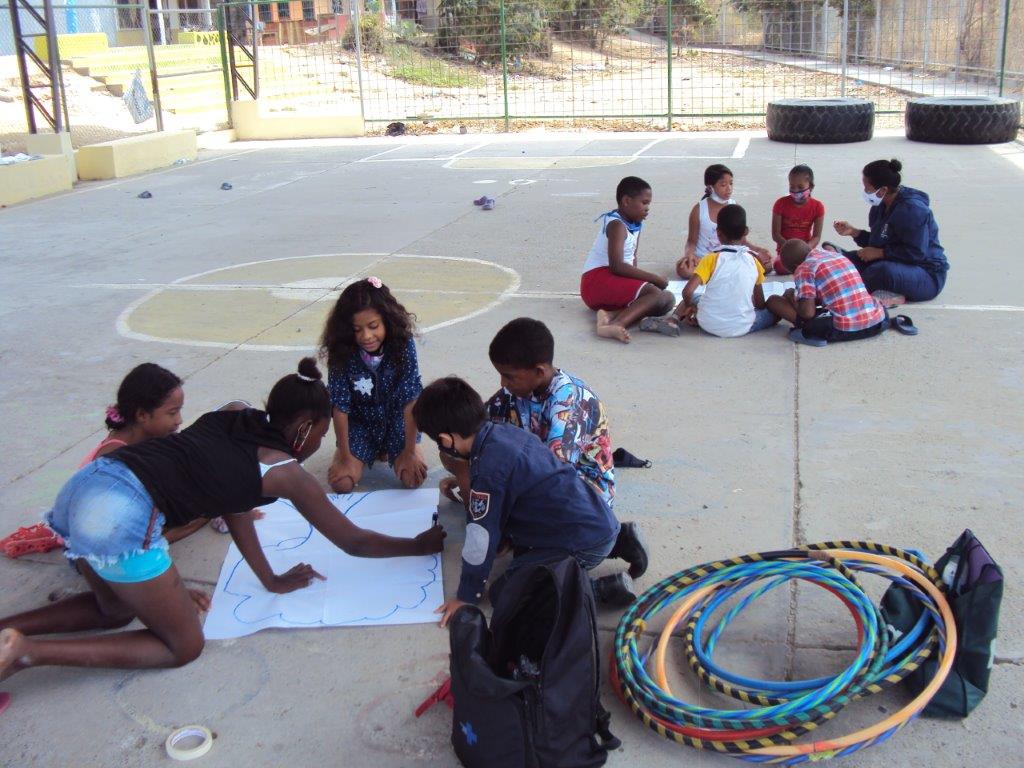
In addition, the team includes a number of weekly activities which aim to strengthen the bonds between caregivers and children to help them to overcome  negative experiences from the past. They include baking biscuits, making candles, going on recreational trips and celebrating birthdays.

In the afternoons, JUCONI educators have focused on community workshops for caregivers, teachers and children that are also based on the prevention process. Topics include, children’s rights, staying safe, drug prevention and building positive social skills. In their meetings, both caregivers and teachers are encouraged to learn to teach with discipline but also with kindness.

This year, about 40 families have continued to receive psychotherapeutic intervention and more than 150 caregivers and teachers have attended the workshops in community prevention.

Rotary Club of Madras Boys Town Project: Progression News

India Madras Boy School

It is our pleasure to announce that at the end of the academic year 2020-2021, eleven students  of the Rotary Club of Madras Boys Town Project progressed to university and college, some with support from the Rotary Club of Madras for their initial admission and tuition fees.

The subjects that they are studying are as follows: BSc in Computer Science (3), BSc in Computing (1), B.Commerce (2), BE in Agricultural Engineering (1), BE in Engineering (1), BE in Mechanical Engineering (1), Diploma in Mechanical Engineering (2nd Year) (1) and BSc in Chemistry (1).

After studying from home with support from their teachers for much of 2020-2021, all the remaining boys at Boys Town were able to progress to the next level for the academic year 2021-2022. 

This was scheduled to start in July 2021 but due to the pandemic was postponed until 15th September for boys in the IXth – XIIth Stds. Subsequently, the government gave permission for those in the VIth – VIIIth Stds. to return on November 1st. In total, 46 students have remained at Boys Town from the VIth – XIIth Stds and we are waiting approval from the government to admit new students (especially in the VIth and VIIth Stds. ) as soon as possible.

In the past year, the overall structure and facilities at Boys Town have been renovated and the main building has been freshly painted. In addition, two technology-enhanced learning classrooms for online studying (especially for students in the Xth – XIIth Stds) are currently being installed.
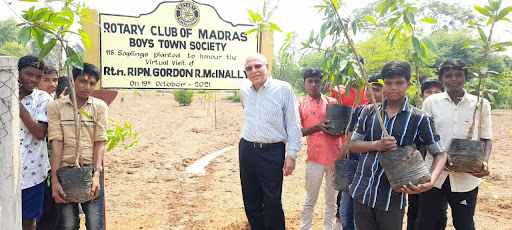
On the 19th October, a group of students planted 118 saplings in the grounds of Boys Town, in honour of the ‘virtual’ visit of the Rotary International President Nominee (RIPN) Rtn. Gordon R. McInally.

SARTHI: A Special Day Trip to Patna

India a special day trip to patna

In July 2021 schools had to close again due to Covid-19 and the children were once more supported at home by their teacher and staff from SARTHI. Twenty children remain involved in the reintegration into education project in Bihar. The three main subjects that they have been studying are Hindi, English and Maths and since schools re-opened on October 1st their progress over the previous three months has been assessed through the use of comprehension exercises and quizzes. The children should be ready to move to the next academic level in January 2022.

On October 24th, a long awaited programme for the children turned into a reality when we combined our orientation programme with a special excursion for them over the weekend. They visited Patna to see the famous Golghar and the Srikrishna Science Centre. The children enjoyed the day a lot as well as the lunch that was provided.

Finally, in the late afternoon, the children also participated in a discussion with a Child Protection Officer and a social activist, who had both been invited to speak to them on the subject of ‘Children’s Rights and Education’. The children enjoyed participating in the discussion and then returned home safely.

Chiedza Child Care Centre: Term 3 Achievements for the Out of School Programme

Chiedza Child Care Centre continues to implement the ‘Out of School Programme’ in the third and final term for 2021. A total of 160 children are currently attending. 

Both primary and secondary students have carried on utilising the resource centre where they can access the learning materials that they require for the Continuous Assessment Learning Activities (CALA). They are helped to do this by a learning assistant. The students also continue to get support from their teachers and their parents. In addition, Chieza also provides two hot meals for the children for six days a week. This has improved concentration, attendance and retention as the children come from families that struggle to provide more than one meal a day. Girls are also able to access health services linked to personal hygiene.

We are very pleased to share the news that seven learners have successfully progressed to  university. They are now studying for degrees in the following subjects: Development Studies, Community Development and Social Innovation, Zimbabwean History and International Affairs (2), Population Science and Applied Demography, Peace and Governance, and Medical Analytics and Informatics.

Keoogo: Vocational Training for Young Mothers in the Beoogo Tienbo Village

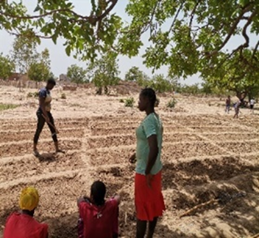
The Beoogo Tienbo Village for young mothers has continued to build on the number of vocational training activities available to them. Since July, two important new courses have been introduced. These are training in market gardening using an agro-ecological approach and training in baking skills.

After a geophysical study, Keoogo started to prepare the land for planting. In addition, an analysis of the food needs of the young mothers and their children was carried out. This assessment allowed us to collect data around the varieties of vegetables consumed by the families over a two-week period. This will then be used to select the vegetables to be grown in the market garden. 

The agro-ecological training took place in several phases. Phase 1 involved meetings between the agro-ecological consultant and the young mothers to discuss the ecosystem. Phase 2 involved the girls setting up a site for the agro-ecology garden under the guidance of a trainer and a number of the women teachers who have experience in market gardening. Other phases will be carried out from December 2021 onwards.

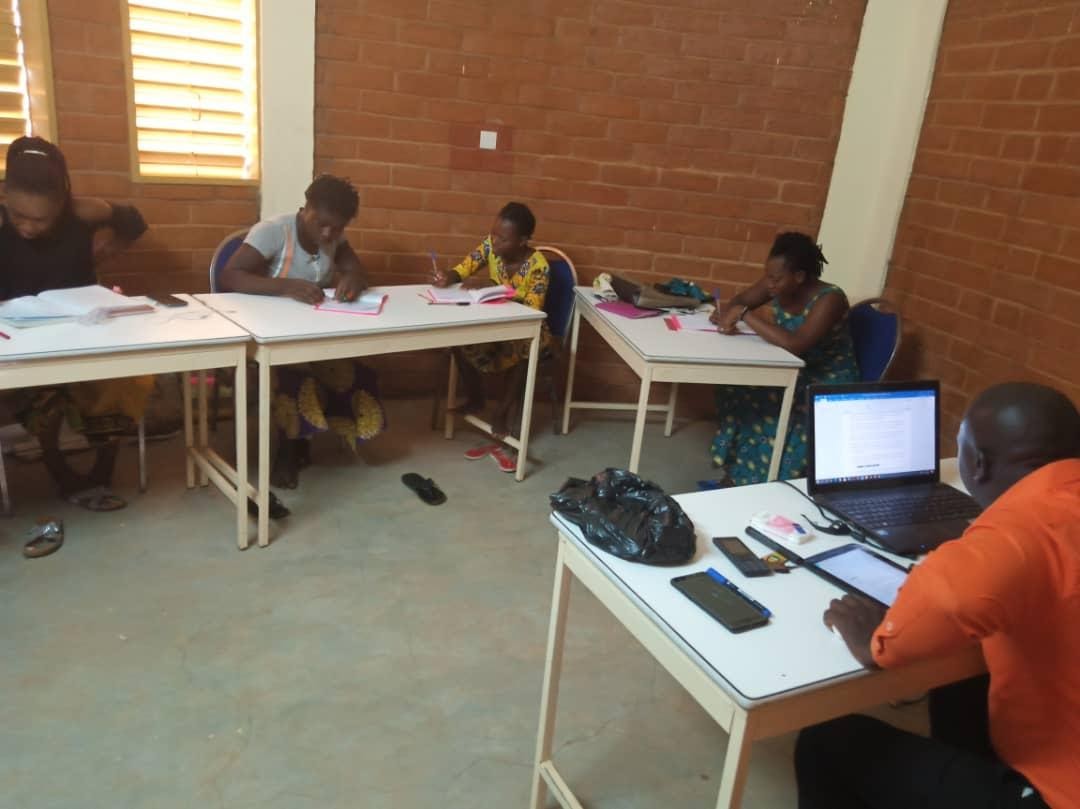
The training in baking involved 36 young mothers learning to prepare several types of pastries including Christmas logs, milk cake, shortbread biscuits, pancakes and churros. 

This created a new dynamic within the groups and helped the young mothers to get to know each other better and to strengthen their trust in each other. It has also encouraged them to develop their self-esteem, self-confidence and sense of purpose. For this course, the acquisition of baking kits will enable the girls to continue baking as an income-generating activity when they have reintegrated back into their communities. On completing the course, a young mother shared her feedback with us “This course has been a chance for me to learn how to make cakes and biscuits myself and it is as if a door to something brighter has opened for me.”

Keoogo: Therapy and training for young mothers in the Beoogo-Tienbo village in Burkina Faso

One of the initiatives developed this year by Keoogo concerns the capacity building of the village team in the psychotherapeutic management of the young mothers in  the 16-22 age group, who live in the Beoogo-Tienbo village. The team has been working with a therapist to learn more about trauma management, good parenting and art therapy. This training is supporting them in their work to enable the mothers to build on their maternal skills in order to better care for their children. Art therapy is being used as a way of helping them to express their feelings.

In addition, eleven young mothers living in the village have had access to vocational training in different fields: three pharmacy assistants, two community health assistants and six early childhood education instructors. This training was implemented in collaboration with three private vocational training institutes; ‘Institut Privé de Formation Wend-Lamita’ offers six month pharmacy assistants courses and two year community health assistants courses and ‘Institut Privé de Formation La Plume’ offers six month pharmacy assistants courses. The partnership between Keoogo and the third training group, ‘Centre de Formation Professionnel Source de Vie’, has permitted the opening of a training course for early childhood education instructors within the Beoogo-Tienbo Village since October 2020.

Rosa (19 years of age) –  a story of successful reintegration

Rosa became pregnant several years ago and as a result was rejected by her family. She then dropped out of school because she was left with no one to support her or pay for her education. It was at this time that a trained female community worker from Keoogo met Rosa and after hearing her story, offered her a place in the Beoogo-Tienbo village.

After Rosa gave birth, Keoogo undertook mediation with her family which led to the legal recognition of a birth certificate being issued for her baby. This was an important step in moving towards a reunion between Rosa and her family. Their relationship was later fully restored and her mother helped to care for her grandchild while Rosa trained to become a community health assistant. Her parents are very proud of her.

With the support of Keoogo and the Beoogo-Tienbo village, Rosa received a second chance –  “I always dreamed of working in a hospital and wearing a uniform and today I wear it with pride.” Rosa is the first girl to have graduated from her training course and to leave the village.

Chiedza: ‘New normal’ learning at the out-of-school programme in Harare

In Zimbabwe, schools were set to reopen on 4th January 2021, after remaining open for only four and a half months in 2020 due to the Covid-19 pandemic. When the number of cases escalated in December 2020 and January 2021, the Government of Zimbabwe announced another lockdown.

When the lockdown was lifted, a phased return to school was introduced with learners in exam classes starting on 15th March and the remainder returning on 22nd March. At the Chiedza Child Care Centre, it was a great relief for children and teachers to be together again, as the aim of this out-of-school programme for accelerated learning is to support orphans and vulnerable children in their return to mainstream education.

During the academic year 2020-21 sixty primary level learners were retained, of whom forty per cent were girls. Of these, sixteen girls and thirteen boys were integrated into government/public schools on 15th March. For the academic year 2021, when the programme closed for the holidays on 4th June, ninety-one primary learners were enrolled, of whom forty- one per cent are girls.

For 2020-21, forty-one secondary school level learners were retained on the programme, of whom fifty-six per cent were girls. All students moved up to the next learning level in this group, with six boys and seven girls progressing as follows: three have enrolled for ‘A’ levels at school, one is undergoing vocational training in motor mechanics, five are awaiting vocational training placements and four are retaking subjects at the centre. In addition, four learners sat for their ‘A’ level examinations and three will be progressing to university, with one learner awaiting a vocational skills placement as he did not get the required grades. 

For the academic year 2021, sixty-two secondary learners were enrolled on the programme, of whom sixty-one per cent are girls. 

As learning continues, all students and staff are following Covid-19 health and safety guidelines as set out by the Ministry of Health and Child Care. It has been noted that learning has been greatly disrupted by the emergency situations that have arisen due to the pandemic and Chiedza is continuing in its efforts to mobilise resources to facilitate online learning for learners.

JUCONI Mexico: Follow-up from teacher training workshops in Puebla

The workshops run by JUCONI Mexico ended in May 2021 and the team is in the process of analysing and reflecting on the experience in order to provide constructive feedback and maintain continuity for the further training and support of those who attended.

During the online Zoom sessions, teachers and managers from three schools shared their concerns about the emotional and psychological needs of students on their return to school when the current lockdown ends. They also recognised the importance of their own physical, moral and social needs as relevant to their roles as empathetic adults on their return to  a ‘new normal’ environment at school. Furthermore, they recognised their important role in the holistic care of the children with whom they work. 

The feedback from the workshops reflected a positive attitude on the part of the teachers and managers to strengthen their professional development and the need for a whole-school approach to continuous training. Those who participated expressed a desire to reduce the potential for violence in the classroom and to work together to establish the development of ‘safe school environments’ for the benefit of all students. At the same time, they mentioned the need to continue to be supported by JUCONI in their endeavours.

In the future, the team at JUCONI is planning to monitor these three schools through the delivery of workshops on a range of topics such as; managing emotions; strategies for coping with complex situations; student participation etc. The workshops are designed to be carried out with the cooperation of teachers, managers, parents and students, so that the approach is systematic and has a greater possibility of having a positive impact on the population served by the schools.

“These workshops should be offered to all schools because they provide teachers with tools that you can use in your professional and personal life.” J Vasconcelos. Teacher.

“I integrated easily into the online group and appreciated your guidance because who knows how the children will behave on their return to school?” J C Bonilla. Teacher.

JUCONI Ecuador: Work continues and new families join the programme in Guayaquil

During the Covid-19 pandemic, the team at JUCONI Ecuador has been able to stay in contact with the children and families on their psychosocial programme. In order to continue to give emotional support and monitor progress, communication has been maintained via the telephone, online or in person. When they visit families, JUCONI workers always wear PPE and also take masks and antiseptic gel for the families. The contents of the monthly food baskets for families have increased to include tinned tuna, oil, milk, masks and antiseptic hand wash. 

In March 2021 there was another lockdown that was lifted in June. Currently the organisation is doing all it can to get the team vaccinated. 

The community safe space continues to be used for meetings and workshops with both children and/or parents. The team is now working with smaller groups of children but has increased the number of sessions that they hold each week. This community safe space was built by JUCONI staff and continues to have the support of local people, the children and their families, who have organised themselves so it is kept clean and is not vandalised. 

In May 2021, JUCONI’s family psychosocial programme restarted with twenty new families and their children becoming part of the ‘family visits’ process.

SERVE: Continuing to support Saplings preschool pupils in Colombo

Since May of this year, SERVE has faced the difficulties of a third wave of Covid-19 in Sri Lanka and only essential services have been allowed to operate as per the Government’s regulations. The lockdown was due to be lifted on 14th June but was postponed.

During this period, teachers kept in regular contact by phone with the families of children enrolled at Saplings. They provided advice and support in order to give parents the best possible assistance and guidance as they were also finding it hard to feed their families without an income. In addition, these low-income families do not have computers or access to remote learning. The team at SERVE therefore sent out educational workbooks for children to complete with the guidance of their parents. On 21st June the travel restrictions were lifted so a teacher from Saplings visited the families and gave the children additional materials for them to work with such as colour pencils, workbooks, pencil cases, pencils, chalk and face masks.