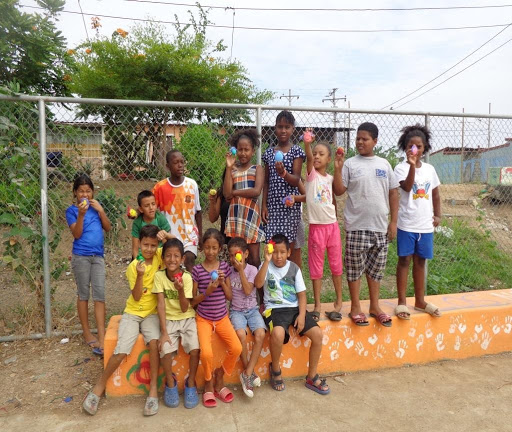
Keoogo: Adapting to new measures at the Keoogo village during the Covid-19 pandemic

In March, as part of the special measures introduced to reduce the spread of Covid-19, the Government of Burkina Faso issued a temporary law that restricted public freedom. These restrictions hindered the continuity of several of Keoogo’s activities and in order to overcome these barriers the team drew up a plan to adapt to the new regulations. Prevention measures have been implemented for the children and young mothers living in the village that include the use of hand wash, gel and soap and the wearing of masks for all visitors. Other measures have resulted in the reorganisation of work via staff rotas, a new teleworking system, modification of working hours and the provision of additional water points.

Before the reopening of the ‘Beoogo Tienbo’ nursery school in October, the school was equipped with protective equipment. Furthermore, all parents were briefed on the health measures to follow to ensure the safety of their children if a child or family member falls ill,  as well as maintaining social distancing when dropping off and picking up children from the school.

Rotary Club of Madras Boys Town Gummidipoondi: Coordinated efforts to ensure continuity of learning during school closures in India

Since schools were closed due to the Covid-19 pandemic in March, all boys have been staying at their respective homes. The team has been able to remain in contact with them by phone on a fortnightly basis and everyone remains in good health. During this time, books from the school have also been couriered to students to allow them to continue studying. As and when the Government of Tamil Nadu gives permission for schools to reopen, students will be readmitted to Boys Town.

It is expected that in the first instance, schools might reopen for the XIth and XIIth Standards which will involve twenty six students for the academic year 2020-21 at Boys Town. The remaining students will have a phased return as per Government rules.

Students from the IXth and Xth Standards are also under tremendous pressure to cover the academic syllabus and they will be the next group to return as they too need a significant amount of guidance and support. In the meantime, students in all four groups are expected to receive a tablet with sim card and wifi to enable them to attend online classes and tutorials from their respective homes. This initiative was launched by our partner and will target 40 students.

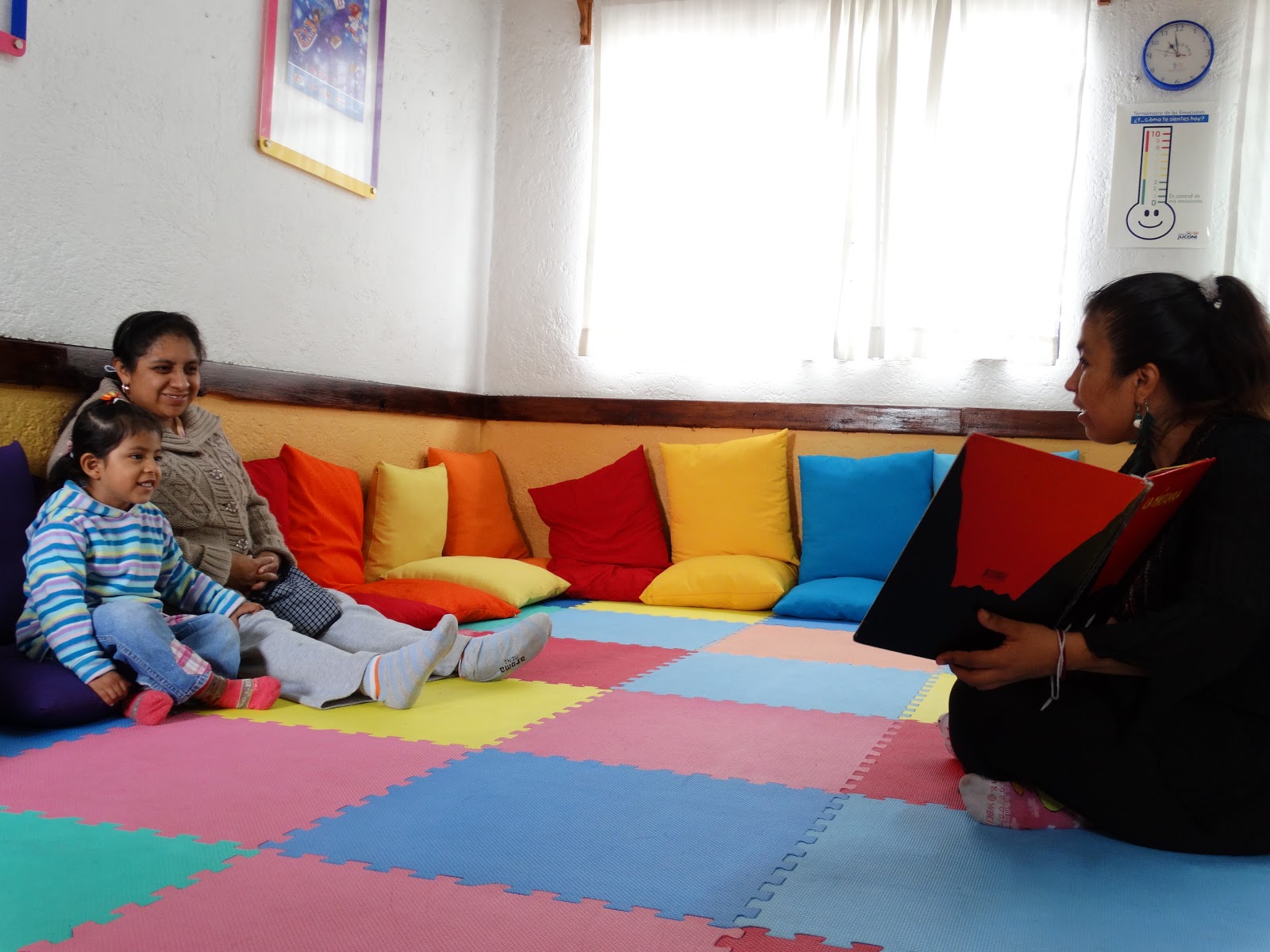
JUCONI Ecuador: Together with children in the time of Covid-19 in Guayaquil

The Government of Ecuador introduced lockdown measures in March due to the Covid-19 pandemic. Staff at JUCONI took a number of steps to adapt its model of psycho-social care in order to support children during a period when they could be dealing with a fear of death and the loss of family members. A protocol was developed that allowed communication to continue via phone calls, WhatsApp and Zoom. This enabled the team to remain in contact with  the children and families on the programme and to continue to carry out a variety of  care activities.

The suspension of income-generating activities as a protection against Covid-19, impacted strongly on these families, as many heads of households are mothers and senior citizens who are employed in informal work. We continued to provide humanitarian assistance and food baskets to them which made an important contribution in ensuring that the children living in these households were fed.
After the confinement measures were suspended, face-to-face activities in our sectors in northwestern Guayaquil resumed on July 16th. These included  home visits for psycho-social and therapeutic intervention sessions, as well as the use of safe spaces for discussions about the prevention of domestic violence and drug abuse.

A Success Story from the Chiedza Out of School Programme in Zimbabwe

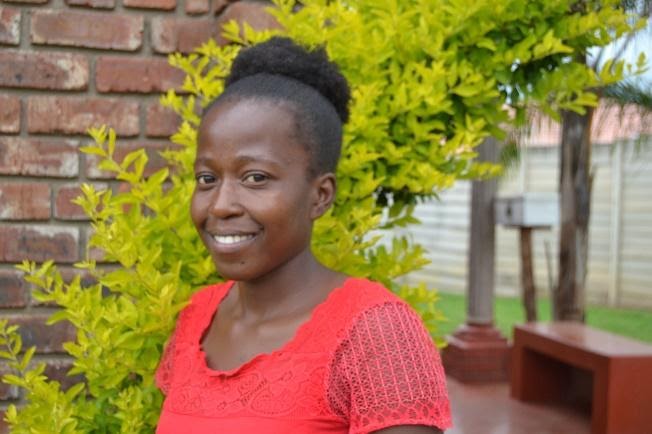
Nina’s parents separated when she was still a child. She continued living with her mother who struggled to pay for her school fees. When she was in Year 6 her mother remarried and her stepfather forbade her from working. Sending Nina to school became more and more difficult as her mother had to keep her work a secret when she did several part-time jobs. She could only afford to pay for her to attend school for two days a week so Nina spent the other days helping her mother at work. In 2015, the financial struggles became too burdensome for her mother and when she was in Year 11 at school, Nina dropped out before she could sit for her final examinations. After a year of no schooling, she was identified by a Chiedza Community Volunteer in her area, who referred her to the organisation. Their volunteers and officers made home visits to assess Nina’s level of need and she was given the chance to return to school through the Chiedza Out of School Programme.

Nina describes how Chiedza helped her:

“The organisation supported my studies and I sat for the Ordinary Level examinations and did well. I was then helped to progress to Advanced Level studies at a High School. Chiedza continued to pay for my examination fees and school fees and I was provided with free stationery. Via the Resource Centre, I was able to access  school text books and had free internet access, which helped me to do a lot of research for my studies. I also had access to a digital learning platform from which I was able to practise exercises, tests and notes. At the same time, I gained basic computer skills through the structured computer lessons offered by the Resource Centre Intern. In addition, I benefited from free counselling services from the Child Protection Department, as well as career guidance, which helped me to think about my future career interests and to build goals and set targets for myself. Every weekday, I received two nutritious meals from the food programme. I also received clothes donated by well-wishers. 

The English Access Programme run by the American Embassy at Chiedza Child Care Centre boosted my English communication skills as well as my leadership skills, which Chiedza had nurtured through the Child Advisory Board in 2016. Recreational activities organised by the Centre also helped me to develop my social skills. Having passed my Advanced level exams with 8 points in History, Sociology and Shona, I am waiting to go to university in August of this year. It is my desire to be a social worker and to help other children access basic services that they may not be able to access without the assistance of other people. I want to be able to help other children in the way that Chiedza has helped me and to contribute towards the happiness of less privileged children and to create a prosperous Zimbabwe. I envisage a Zimbabwe where all children are happy, empowered and can fully enjoy their rights without the limitations of being less privileged.”

Update on the ‘Beoogo Tienbo’ Nursery School in Burkina Faso

Beoogo Tienbo is a walled village developed as a shelter for young women and children by our partner Keoogo. It is situated in an area 17km north of the capital Ouagadougou in District 9. The project offers a nursery school which is open to children living in the shelter with their mothers, as well as to children from the surrounding community.

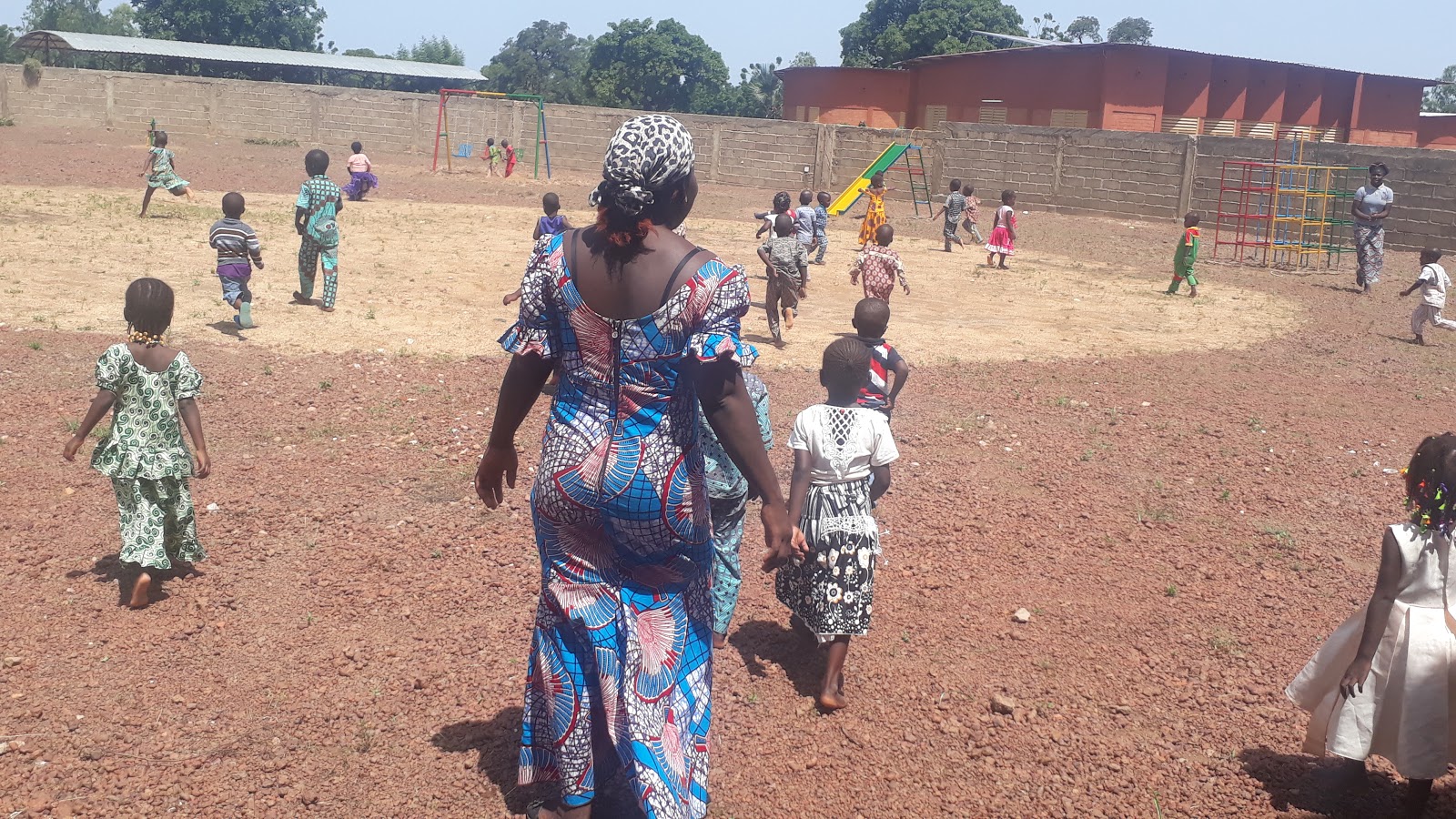
The school is equipped with three large classrooms, a hall for afternoon snacks, a toilet block, a sports field, a sand pit, two swings, a slide, a climbing frame and two climbing horses. The kitchen of the shelter provides afternoon snacks for the children. The school is currently run by a trained nursery nurse and a nursery assistant.

The school welcomes children from 3 to 6 years of age and follows the French education system. The children are divided into ‘petite section’ (PS: 3-year-olds), ‘moyenne section’ (MS: 4-year-olds) and ‘grande section’ (GS: 5-year-olds). For the academic year 2019-2020, two levels are functioning: The ‘petite section’ and the ‘moyenne section’. The ‘grande section’ will open for the academic year 2020-2021. 

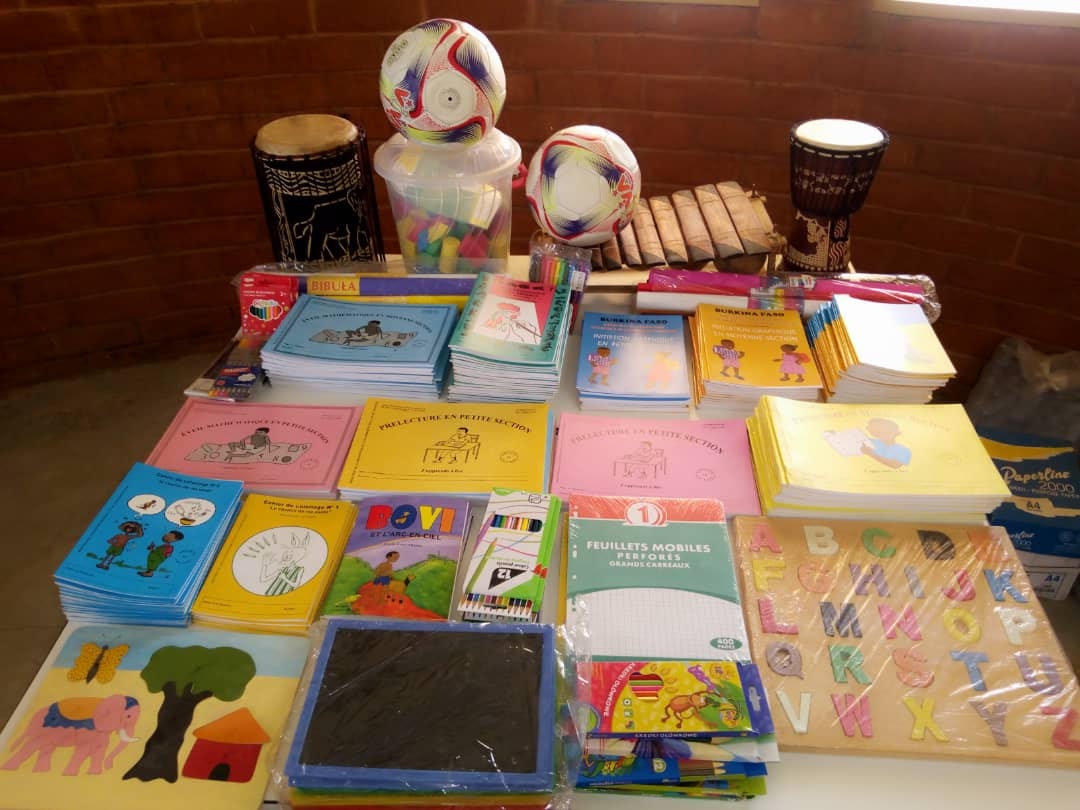
Thanks to the kind support of the Austin Bailey Foundation and other donors, we have purchased materials for the ‘petite section’ and the ‘moyenne section’ – which include 305 educational booklets for reading, maths, handwriting, drawing and painting; sixteen art kits and games, three musical instruments and two footballs.

The school has now been officially authorised by the Burkinabe Governor of the Centre Region. In addition, in January 2020, it was examined and approved by the Basic Education School Board of Ouagadougou.

Of the 52 children currently attending the school, 30 of them are street children now living in the shelter with their mothers. 

Three testimonies from parents of children enrolled at the nursery school

“My two boys are enrolled at the Keoogo nursery school in the ‘petite’ and ‘moyenne’ sections and I am very happy that they are there. In this school the teachers are friendly and professional. They are very attentive to the children and provide a family-friendly and warm welcome every day. It has met my expectations and since my boys have been going to this school, I have noticed changes in their behaviour. For example, they are more careful about the rules of personal hygiene and are more polite in their speech- saying “please dad” and “please mum” more often. I’m very proud of them.”

“Our daughter joined the nursery school in October 2019. To be honest, we have never seen her so motivated to go to school. She runs there every morning and is happy to see her friends and teachers. We have noticed that our daughter enjoys making things through play and learning to read. We really appreciate the teachers at the school as they are very good with all the children. We are truly very happy to have enrolled our daughter at the Keoogo nursery.”

“Following the closure of failing schools by the Burkinabè government, our daughter’s school was closed down. However, we were fortunate enough to find her a place at the Keoogo nursery school. Our daughter had spent a whole academic year at her previous school and having had that experience, we can clearly see that the Keoogo nursery school is very good and has exceeded our expectations. Everything that is done in this school contributes to the development of the child. The teachers are professional and in tune with the needs of each child. I also like the fact that the school has a place for singing and my daughter happily hums the songs she has learned at school, at home. She is well integrated and expresses herself well. She loves drawing and colouring and even questions people about the hygiene rules she has learned at school. I think that  Keoogo should open a primary school.”

A Success Story from our Sponsorship Programme at JUCONI Ecuador

Antonio was contacted by JUCONI four years ago when he was nine years old and was working on a bus. He lived with his parents and five brothers in a small house located in one of the neighbourhoods with the highest rate of violence in the city of Guayaquil.

Antonio had to work to contribute financially to the household, because his father did not have a regular job and his mother was unemployed. When JUCONI started working with Antonio’s parents, it became clear that his father was putting a lot of pressure on his son to help the family and to achieve good grades at school. When this did not happen, Antonio’s father resorted to physical punishment and his mother was not able to protect Antonio or her other children. This resulted in Antonio becoming defensive and more aggressive towards his classmates and friends in the neighbourhood. 

It took a little more than three years for the family to progress through the JUCONI intervention programme. Antonio stopped working and his attendance and progression at school improved considerably. The violence at home has ceased and his parents have become more affectionate towards their children. They now also monitor their progress more closely at school.

As part of being on the programme, Antonio was encouraged to participate in the activities taking place in the shared play spaces set up by JUCONI. In these spaces he learned to play a variety of games that encouraged him to reflect on his behaviour by respecting rules and showing more consideration for others. The relationship between him and his father has improved and they spend more time together at weekends.

News of a Former Sponsored Student at the Boys Town Project in India

We were delighted to hear more about how our sponsorship scheme with the Rotary Club of Madras has enabled children to gain access to education and achieve a great deal as a result.

Aariv was sponsored through ICT and studied at Boys Town from 2002-2012. During his first year at the school, his father passed away, leaving his mother to care for him and his two siblings. Thanks to his sponsorship and free access to education, Aariv became the first student to graduate in Electrical Engineering from Boys Town. After that he was employed as an Instructor on vocational training courses. Currently he is working as an Assistant Electrical Engineer for an electrical contracting company in Dubai and is earning a good salary. He also continues to support students at Boys Town by paying their Higher Education fees. On February 10th 2020 Aariv got married, and he and his family are very happy and grateful for the support that they received in helping him to have access to an education and a career. 

Improving Health Services for Street Children and their Families in Mexico

JUCONI Mexico is refurbishing two rooms to improve the services delivered by their health clinic located at the JUCONI Youth House. Children of  between 6-18 years of age and their families will benefit from access to better medical care, including those from the Street-Children Sub-Programme in Puebla. From January to June 2019, the programme took care of approx. 140 people, including children, teenagers and their families. 

The refurbishment is expected to be completed by the end of May 2020.

JUCONI Mexico Early Childhood Development and Parent Attunement Programme.

JUCONI Mexico is located in the state of Puebla, two hours away from Mexico City. For more than 30 years, JUCONI Mexico has been working with children who drop out of, or who are not spotted by, existing government and NGO service provision. Our experience shows that a violent family environment contributes to children being on the streets and if it continues, is transferred from one generation to another.

In order to address this situation, JUCONI Mexico delivers a 12 month ‘Early Childhood Development and Parent Attunement Programme’, for 170 street market children aged between 0 to 5 years old. These children spend a lot of time alone, with no supervision, in the markets where their parents work, and this also puts them at risk of abuse and exploitation. The programme uses innovative therapeutic techniques to strengthen parents and care-givers skills by getting them to observe and reflect on their child’s early stage of development through the use of free play and video sessions. 

ICT started to give additional support to this programme in April 2019 and it now involves older siblings, family visits to museums and the use of  a ‘HOME’ inventory by JUCONI family educators to help them to assess the family life of the children and parenting. This is done through a series of interviews with the families in their homes. 

Ana and her daughter María have benefitted from the free play and video sessions and Ana says, “Video changed my life (…) I saw how María looked at me and how important I was to her and that she wanted to be with me. I saw that I can be a good mum.” Ana is now part of a mother’s group and María attends a day centre on a regular basis.

Ana’s husband Luis was also encouraged to participate in some of  the sessions, in order to address and prevent the use of violence within the home. Recently Ana told us that when her in-laws disapprove of the way in which she is bringing up María, Luis now supports her. This is the first time that Ana has had the courage to stand up for what she thinks is right. “I used to think that it was all down to JUCONI, but now I know that it is me. I have changed.”

Keoogo Village for Street Girls and their Children in Burkina Faso.

In Burkina Faso we partner with a local organisation called Keoogo, which offers protection and rehabilitation services to children living on the streets. In Burkina Faso, poverty, intrafamily violence and early pregnancy can force girls aged between 12 to 18 years old to run away from home and end up living on the streets, where they can be exposed to further exploitation and violence.

Keoogo has recently built a community-led, walled village 17 km north of the capital Ouagadougou, to provide food, protection, health care, education and vocational training for girls living on the streets with their children. The village’s name is ‘Beoogo Tienbo’, which means ‘Hope for the Future’ in Moore, the main spoken language of Burkina Faso. 

The main objectives of the project are as follows: to improve the well-being and life-prospects of these girls and their children; to provide a 12 month programme of vocational training and skills development to increase the girls’ chances of integration into the local labour market; to introduce income-generating ‘micro-activities’ to ensure a reliable source of income for the girls and their children in the long-term. 

The village will also offer access to a nursery school, a playground, a food bank and other facilities to 6000 members of the surrounding community. To ensure post-funding sustainability and viability of the village, the project aims to develop agro-ecological activities through vocational training such as market gardening, bee-keeping and small-sized breeding as well as food service activities such as a bakery and a restaurant.

Providing an opportunity for these girls has already had an impact.

Quote from an 18 year old girl living in the village: “The Keoogo village allows me to live a family life. It gives meaning to my life.”

Quote from the mother of a 5 year old boy “Since we came to the village, my son has become more and more fulfilled. He has fun with others, eats well and has toys at his disposal. I am looking forward to seeing him go to the village nursery school in September.”

Due to the urgent need to provide these girls with the means to provide for themselves, the village has been open for a few months providing psychosocial counselling to the young mothers. However there is still a need for additional staff and more equipment to deliver the training component, as the current challenges for the project are in acquiring the equipment for the bakery, catering, weaving and sewing workshops. Increasing the food budget for the girls and their children is also another priority.