SERVE is a Sri Lankan non-profit organisation working for the empowerment of the disadvantaged, especially children. SERVE has been in partnership with ICT for more than ten years. The project continues to support and empower children from poor, marginalised communities living in shanty towns and low-income housing schemes.
At our children’s community centres we help children to complete their education successfully through bursarial support. In addition, our social workers also provide these children with guidance and counselling for the day to day psychosocial problems/abuse they may face at home, in the community and at school. We have also educated our community facilitators to create awareness among mothers about safeguarding their children from all forms of abuse, including sexual abuse. Two hundred families have taken part in this project so far.
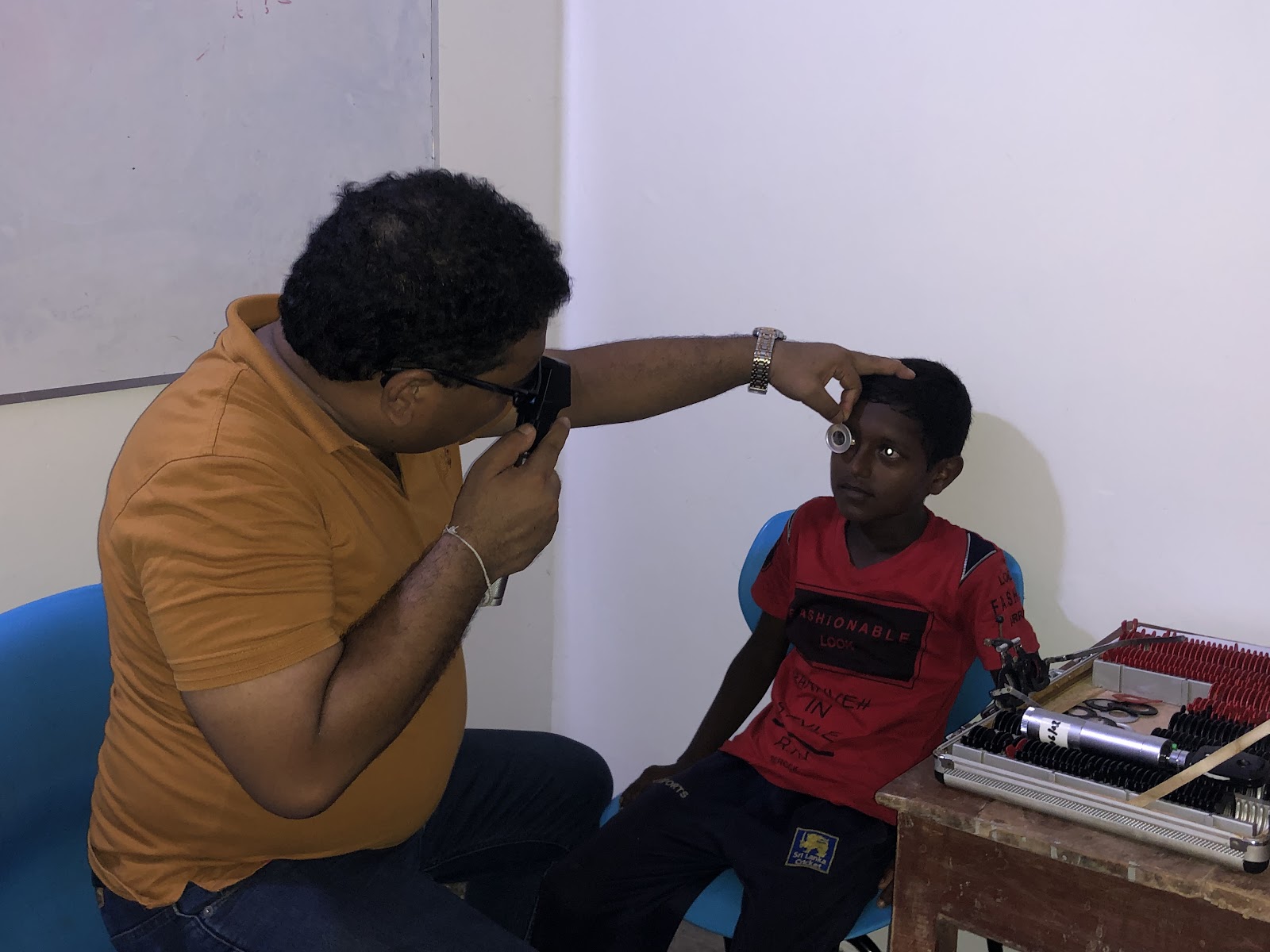
In May 2019 our community eye care centre was opened in Moratuwa and can be accessed on Tuesdays and Saturdays from 9am – 4pm by the public. The project aims to help 500 children to receive free eye tests and spectacles in the coming year.
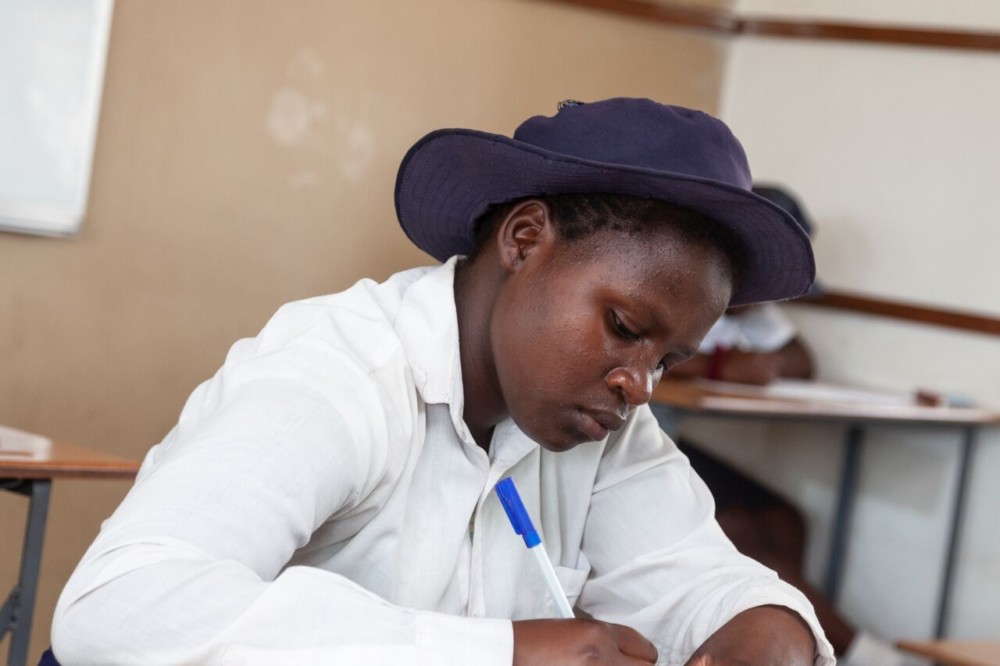
Milli is fourteen years old and a third year student at junior high school in the rural Upper East Region of Northern Ghana. She is the fifth of six siblings and the only girl in the family. Milli is a bright girl who started school at the age of three. The fact that her older brothers did not perform well at school and dropped out before completing their studies did not motivate Milli’s father to invest time and resources in her education. As he explained, “her older siblings were sent to school and did not prove that formal education was the best way to go” and so he was going to take her out of the education system once she finished primary school. He was also considering arranging an early marriage for her.
While she was at primary school, Milli’s family became reluctant to pay for school books and supplies and this started to have an impact on her performance. However, when she was nine years old, Youth Alive initiated a programme to improve enrolment, retention and performance in local schools and Milli’s community and school both benefitted from this project. The project also provided books and other learning materials to participating schools and to under-resourced children like Milli. Through this project, she was encouraged to join her school club and was selected to become a peer educator benefitting from attending a series of workshops which included ‘Assertiveness Training’, ‘Persuasive Communication Skills’, ‘Rights and Responsibilities of the Child’, ‘Responsibilities of Parents’ and ‘Child Protection and Safeguarding Procedures’.
This period marked a turning point in Milli’s life. She started to feel more confident, increased her participation in class and her academic performance began to improve. Milli was made the leader of her school club; sharing her learning with her peers during school assemblies. She was also made head girl of her school. During this time her academic performance improved remarkably and she became one of the five best students in her class.
Milli continued to perform well and progress with the same level of confidence during her years at junior high school and represented the school during inter-school debates and quiz competitions. She is currently considered a model student in her school and is studying hard to sit for her Basic Education Certificate exams (BECE) so that she can progress to secondary school.
Milli says: “I underrated myself but the training workshops built up my confidence and helped me to realise that I can excel. I want to prove my parents wrong. I am determined to demonstrate to them that I am different from my older brothers and that one day I will change the status of my family. I want to be a nurse in the future so that I can take care of my family’s health needs and also help my community.”
The aim of this programme is to help 120 children – 70 boys and 50 girls – from under-resourced communities in Guayaquil to live happier, healthier and safer lives.
The level of violence within these communities continues to be a challenge as well as the use of psychoactive drugs by children as young as 6, 7 and 8 years of age. In these neighbourhoods, children are used to wandering the streets at different times of the day and night and can also be tempted into micro-trafficking as a way to earn “easy” money. These issues often lead to more crime, robberies, gang activity etc. and children, families and communities live in constant fear for their safety.
There is a lack of sheltered playgrounds within these communities and the JUCONI Ecuador programme has developed child-friendly safe areas where children are able to take part in sport, games, have fun and develop healthy relationships with their peers. Trained JUCONI youth workers promote the practice of sport at it is seen as contributing to improving self-control and strengthening positive values such as solidarity, tolerance, discipline, teamwork, self-confidence and personal development.
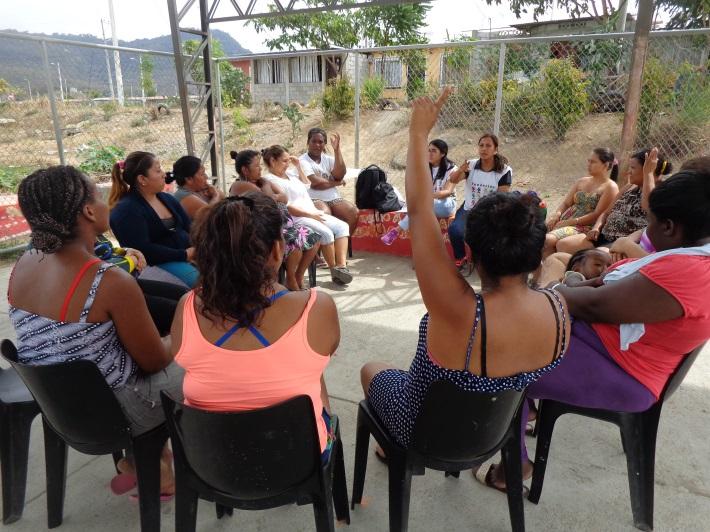
At the same time, supporting parents is also seen as essential in preventing children from being at risk, so trained JUCONI counsellors offer guidance and support to a total of 104 parents and guardians. Weekly meetings are held to build on their knowledge about individual health and well-being, parenting and to help strengthen their social skills.
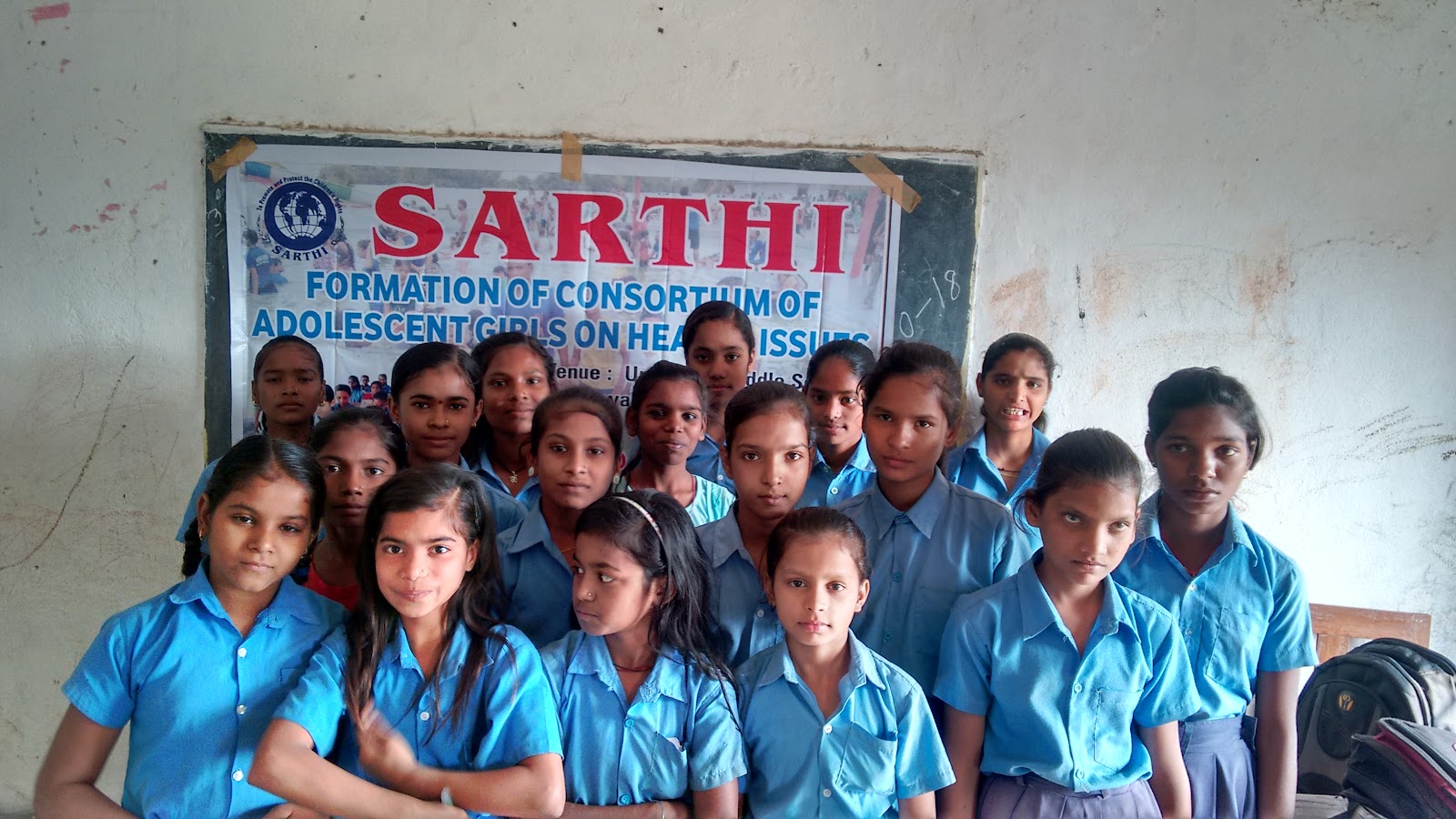
The aim of this project is to provide education and support for adolescent girls as many are missing school every month or dropping out, due to menstruation and associated health problems. These topics are often seen as a social taboo in communities and there is a lack of information and little access to sanitary products.
Middle School Maner Block, Patna District of Bihar State, India.
A young peer mentor and college student facilitated the first SARTHI pilot programme and the session provided a safe, friendly space for 28 adolescent girls to discuss the topic and related challenges. Based on the success of this first session and the positive feedback, the SARTHI programme has been replicated in four schools, benefitting 144 girls.
The girls reported that their main challenges were inadequate toilet and washing facilities so that they either stayed at home or went home early from school; the cost of sanitary pads; the problem of not having a healthy diet. Other subjects discussed included sex and gender discrimination and child marriage.
In the four schools, girls’ consortiums are now running composed of eighteen girls between the ages of 12 and 15 years of age, who act as peer mentors and receive training to become school health advisors. These girls talk not only to other girls in the same school, but also to their teachers, about the importance of maintaining good personal hygiene habits and eating healthier, affordable food by including seasonal fruit and vegetables in their diets.
At policy level, the SARTHI project is working with head teachers and school representatives in local Panchayat to advocate for comprehensive programmes on ‘Health and Hygiene’ for girls and also improving toilet and washing facilities and providing free sanitary pads with corresponding budgetary allocations.
At the age of eight, Carolina started begging on the streets of her neighbourhood in order to escape a hostile family environment. After a while, she was spending so much time on the streets that she almost ended up living there.
Workers from JUCONI Ecuador established their first contact with Carolina when she was ten years old. They rescued her from a group of child traffickers by getting her a place in a children’s home where she had regular sessions with a children’s counsellor employed by JUCONI. At the same time the team also worked towards putting Carolina in touch with her family again, in an attempt to restore the bond between them. After two years of intervention and support through JUCONI, Carolina finally returned to live with her family.
Carolina is currently attending a high school for children with special educational needs. She is a friendly, sociable girl who enjoys studying and is positive about what she has achieved, despite everything that has occurred in the past – “I am proud of myself as I am not the street child that I was before. I like the fact that I am studying.”
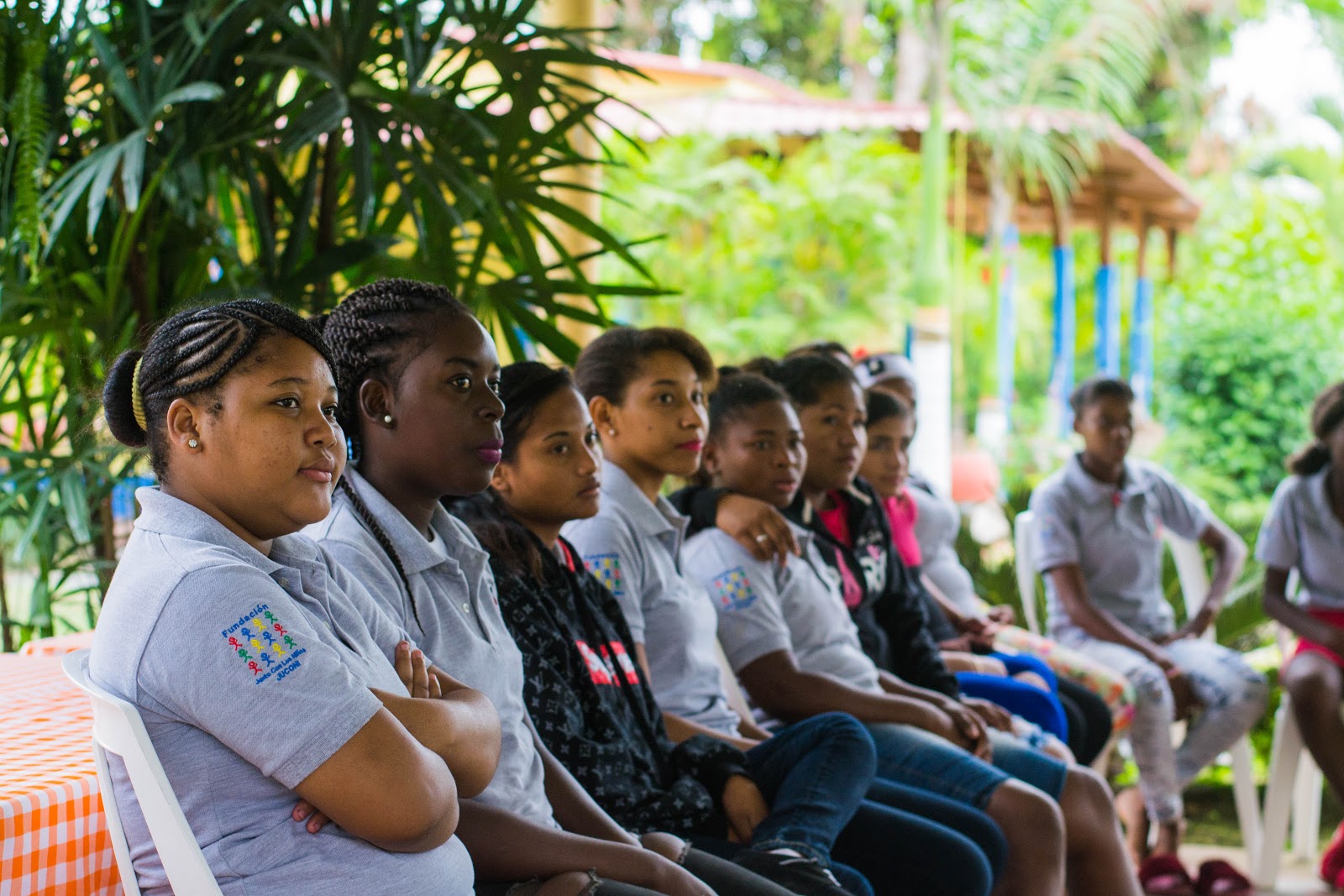
Carolina is also now part of a group of youth leaders within her community and loves to participate in events which focus on helping other children to overcome traumatic situations such as child labour, substance abuse and violence.
The Rotary Club of Madras Boys Town Project in Gummidipoondi.
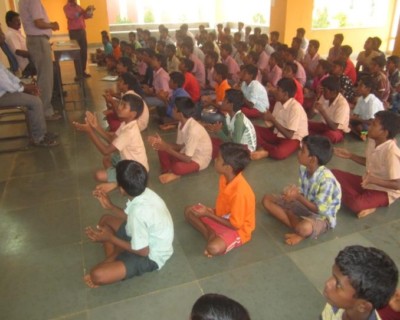
The aim of this project is to provide a home, food, education and health care to 100 boys from low income rural households. This involves secondary education from 6th to 12th Grade (12 – 18 years of age) and includes boarding during term time, eating nutritious food, receiving regular tuition from qualified teachers in general subjects, plus access to music classes, yoga and physical education.
The boys also receive careers guidance to help them to make choices about academic, technical and vocational courses as they progress through the school. The success rate of the children for the academic year 2017-2018 was a remarkable 97%.
In order to ensure the long term sustainability of the home and to ensure that healthy food is provided for the children, the home works with local providers and receives wheat flour, rice and soap on a monthly basis.
In 2018, the home was satisfactorily audited by the National Commission of Child Rights and District Child Protection Team.
A Success Story from Boys Town.
A former pupil at Boys Town now works in a private software company in Chennai and earns a good salary. In between his work schedule, he finds time to return to Boys Town and give tuition classes to some of the students.
The Rotary Club of Madras. New Initiative.
In 2018 we adopted three villages, namely Amarambedu, Panjalai and Kannankottai, and offer space for education in each village. Currently we provide classes to 28 out of 32 children – boys and girls – living in these villages. Classes take place in centres situated in teachers’ homes and these centres are visited twice a month to collect feedback from the children and then adjust the content of the programme as necessary. The visits are also useful to address any issues and to ensure the compliance by teachers to the safeguarding and operational policies of the Rotary Club of Madras.
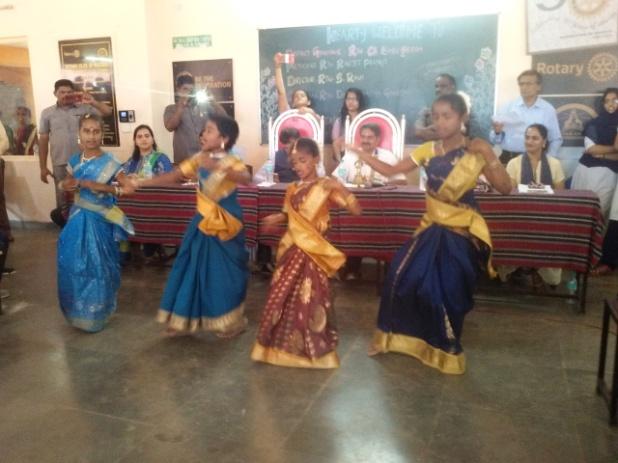
Last year the Rotary Club of Madras Boys Town Project invited children from the three villages to join them in celebrating the 72nd ‘Independence Day of India’ and this was accepted with great enthusiasm. A group of girls performed a traditional dance and gave a speech in English about the meaning of the celebration and a group of boys did a yoga demonstration. All those participating received a certificate of appreciation as a reward for their performances.
The aim of this project is to increase the level of income and security of 1,800 poor and vulnerable households in Harare, particularly those headed by widows, or single parents, those with orphaned or vulnerable children at risk of dropping out of school, those with a disability and those with one or more members living with HIV. Each targeted household has to have at least one child under the age of 18 years.
In general, participating households undergo training on ISALS and how to run viable income-generating activities. The main expected outcome of the project is to increase income and financial resilience for vulnerable households in Harare South District and to improve the health, school enrolment, attendance, retention and achievement of the orphaned and vulnerable children from these households. The project provides training in income saving and lending, project planning, financial planning, business management and micro-enterprise.
Since April 2015, the project has created 150 saving and lending groups and provides income benefits to participants (estimated as 1,800 of whom 10% are men and 90% are women). In addition, it supports 300 participants to jointly or individually establish an income-generating activity. Chiedza also aim to ensure that all wards with participating households are able to sustain and further develop the programme with the support of a community support structure and/or alternative government sources.
Two Success Stories from Harare.
Tammy’s mother attended the Chiedza project and Tammy says “I live with my mother and my younger sister. My mother works on a Chiedza project and now has a market stall at home where she sells her goods. Before she started this business, she had no income and I did not have school shoes, a school bag or books. Things changed when she started working with Chiedza and she has managed to buy me all these things for school. My primary school fees are also fully paid up and my mother recently bought some household furniture, including a wardrobe, a kitchen table and matching chairs.”
Jenny has just finished her exams and is waiting for her results. She says “throughout my schooling my mother was struggling to pay my fees but last year things improved after she started participating in the Chiedza project. I can tell you that mum’s business is running well. We used to go hungry for long periods but now we always have enough food in the house and we eat three meals a day. My father is not permanently employed so my mother’s business is certainly helping the family. I look forward to doing further exams in the future and then going to university to get a degree. The sky is the limit to my education, thanks to my mum.”
Lakshan is from Moratuwa in Sri Lanka. He lost his mother when he was seven years old and he and his four siblings were brought up by his father and grandmother. His father was an unskilled, casual worker and the family faced many economic difficulties.
Lakshan attended a small village school but also joined the local SERVE Angulana centre when he was 8 years old. He enjoyed reading newspapers and using the library there and with the help of the centre co-ordinator and social worker, Lakshan did his school homework plus studied independently. He also attended computing classes and took part in children’s rights training programmes, leadership training programmes and child abuse prevention programmes carried out by SERVE.
When he was 10 years old, Lakshan was entered for the sponsorship programme on the recommendation of a SERVE social worker. After successfully passing school examinations he entered Prince of Wales College, Moratuwa. In 2017 he sat his GCE Advanced level examinations in the Commerce stream and did well in Accounting, Business Studies and Economics. Lakshan mainly used his sponsorship money to pay for additional educational coaching classes and to buy educational equipment and school clothing.
After leaving school Lakshan attended a two month spoken English course at Cambridge College in Kandy. Since 2018 Lakshan has been working in a private bank as a Marketing Officer, and in order to further his career, he is currently following a certificate course in Marketing at the Sri Lanka Institute of Marketing. In the future, Lakshan hopes to complete his Marketing course and also follow additional courses in Banking.
Lakshan is very grateful that he has been able to overcome many challenges with the assistance of ICT and his sponsor through SERVE. He is proud of his academic achievements and the progression of his career until now.
What impact can a small shortbread or an oat biscuit have on a child? He does not eat it. He does not sell it. But, in these biscuits, he is receiving skills that will help him forge a career for himself in the future.
In a small workshop a short walk away from the JUCONI Youth House in Puebla, Mexico, the youth have the opportunity to make biscuits that are sold to a local company. Vocational and skills training has become an important part of many international development initiatives, but JUCONI continues to set itself apart.
The boys are not part of a new generation of bakers. In fact, the baked biscuit is barely important. It is the process that is important, not the product. The boys are being encouraged to develop strong work ethics, to understand employee-employer relationships, to have the ability to create a CV, and to have a strong attention to detail in all of their work. The boys’ participation is not automatic, but must be earned through good behaviour and positive development.
In this environment, the boys are setting their own paths in careers that they are interested in and passionate about. They are developing the tools that will set them apart for employers.
In 1989, Fundaciόn JUCONI was founded in Puebla, Mexico with the support of the International Children’s Trust. Working with homeless children, this new professional organisation started operating a small centre that was both a day and residential centre.
Fast forward 27 years and JUCONI is a very different organisation, but one that has remained rooted in addressing the needs to vulnerable children and continues to be supported by the International Children’s Trust. Over 27 years, JUCONI have recognised the importance of working with marginalised children subject to family violence. By working with the entire family, JUCONI are breaking the cycle of physical violence, reintegrating children and families into their communities, and developing a family’s ability access to education, health care and employment.
And it is clear that this vision works. Each year, JUCONI is working with 350 children and 120 families. Working through 3 different programmes, JUCONI are improving the lives of children by tackling the family violence that heavily influence children living on the streets, working on the streets, or working in the street-markets often with their families.
In 2016, we are beginning to see new exciting steps forward for JUCONI as they take their approach beyond the borders of Mexico. JUCONI have been working with 160 organisations, primarily in 9 of the 31 states in Mexico. But the JUCONI model and their understanding of family violence, is also influencing organisations in Ghana, Guyana, India, Kenya, Tanzania, Rwanda, Guatemala and El Salvador. They do not look to replicate JUCONI in countries throughout the world, but they look to strengthen work with children by imparting the principles guiding their work on other organisations. By focusing on the principles instead of the tools, organisations can focus on appropriate solutions that are suitable for their own local context.
While JUCONI have now worked directly with over 3,000 children, your support is allowing JUCONI to reach children globally. As they move forward with a new General Director, we look forward to being a part of their continued progress.