A role model on the streets

International Children's Trust
International Children's Trust


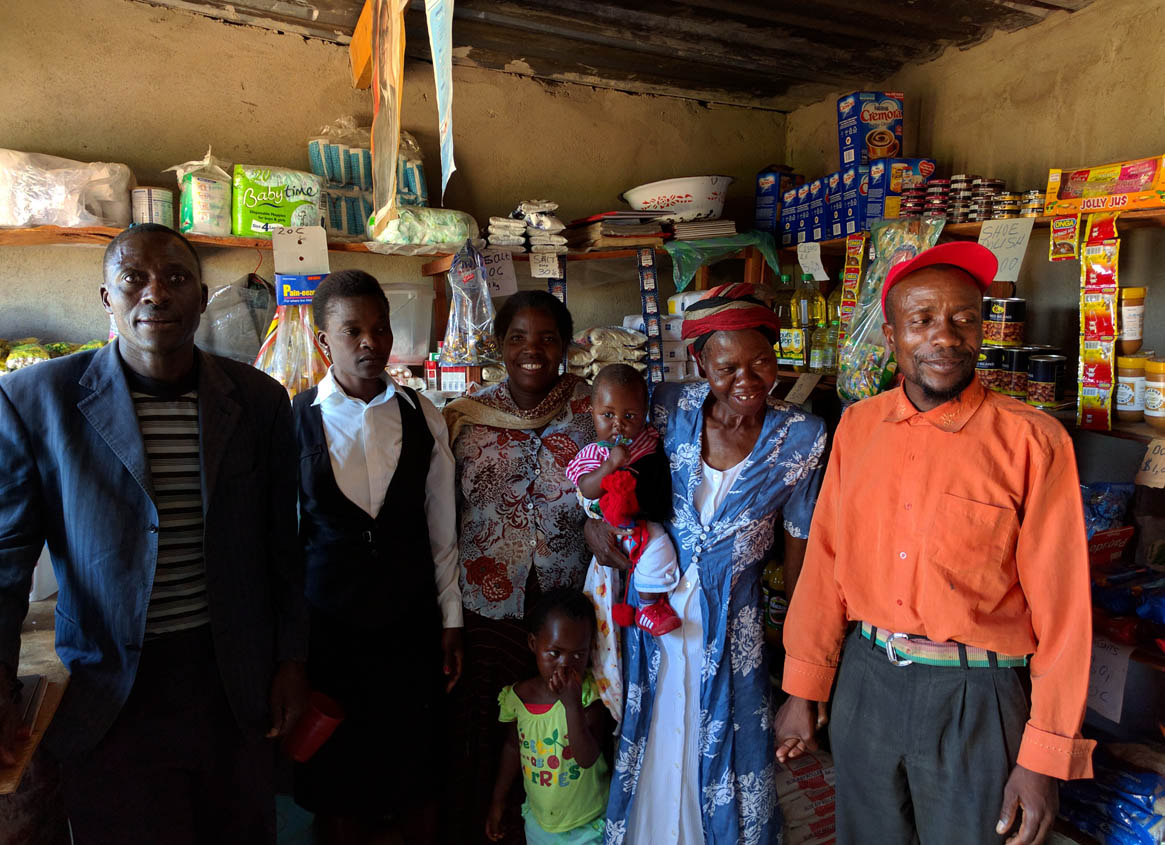
School attendance in the poorest areas of Harare is weak, with many children missing out on the education they need to gain even the most basic skills in order to grow into productive, independent adults. Collaborating with our local partner, the Chiedza Child Care Centre, our research found that money was the biggest single obstacle to a child’s education. In the areas where we work, the average household income is around US $123 per month, well below the national poverty line. The same households were spending an average of US $52 on education – an expense representing over 40% of an already hugely stretched budget. Even by making this huge commitment, many children were still being left uneducated with adults forced to prioritise one child’s schooling over another’s. Often in these situations girls and orphans are the first to miss out.
The International Children’s Trust and Chiedza developed a pioneering scheme to work in these communities to try and solve the problem at its source. Funded by the Department for International Development, we have been working for a year now on developing small savings and loan groups for participants to grow their own income. Most participants are women who are all responsible for the care of particularly vulnerable children. By tackling the problem this way, we hope to help children back to school. This programme will not simply make funds available in the short term, but will fundamentally transform the homes and communities the children live into more stable environments where children will be supported in the long term by a sustainable income.
Ben, our Senior Programmes Manager, recently visited Harare to monitor the progress of the project and to see for himself the transformative impact it is having on the community. Already, we have trained 900 caregivers. They have not simply been taught about how to work together to access small amounts of credit, but also basic skills of business and marketing. This has come with hugely positive results with small businesses being started covering a range of activities from raising chickens to making shoe polish. As a result many more children are now able to attend school and we plan to work hard to make sure we keep achieving that kind of progress through the next 3 years of the project and beyond.
Despite these successes, the situation in Zimbabwe remains difficult and this was evident throughout Ben’s trip. Political turmoil and economic mismanagement hit the headlines, but it’s the poorest who suffer most with rates of unemployment soaring past 85% in recent times. We continue to work to try and offer the children of Zimbabwe a path out of the poverty that this creates and ensure that this change is positive and long-lasting.

In December, Nicola (one of our team members) was visiting our project with JUCONI Ecuador in Guayaquil. Supporting street children and their families, she had the opportunity to witness therapeutic sessions with parents and children in their homes, visit the schools that JUCONI works with, and to share in the fun and games of the children’s Christmas party. At the party, she had a chance to catch up with Joe Amiri who is currently working with JUCONI and ask him a few questions…
What inspired you to work with children?
I am a volunteer with the Peace Corps who send volunteers to various organisations around Ecuador to serve for two years. My time with JUCONI has been one of the most incredible experiences for any volunteer. I wanted to work with disadvantaged children and their families to help those who need it most but to also establish a good support system for them in the future.
What is so unique about JUCONI is that the work we do is sustainable. One of my first friends in Guayaquil was a kid in the community. While many of the adolescents were timid and shy around the bearded gringo, he always wanted to talk to me and was curious about my life. Months later I discovered that he had actually been part of the JUCONI therapy process with his family when he was four. That early intervention by JUCONI brought him through college and he is a role model in the community.
What aspects of your work do you enjoy most?
The work JUCONI does is so different from many organisations that I have come across in my life. Many have a centre for people to receive services, but JUCONI actually visits each family in their homes to provide therapy each week. Going to each family and getting to know their community shows us more about the reality these families live in. I joke with a co-worker that we are unofficial mayors of Socio Vivienda, one of the communities we work in, because we cannot walk one block without hearing our names.
What do you enjoy least?
The hardest part of my work is saying goodbye at the end of each day. As a member of the community development team, we are spread thin so we only visit each of the four communities once per week. It is hard giving that last high-five to a child in Socio Vivienda and having to wait seven days to see them again.
What have you learnt during your time with JUCONI so far?
I have grown so much professionally and personally. When working in the communities, I can see what a bright future the world has. Seeing how much positive change can come from small actions like youth groups, art clubs or sports club, I am looking forward to seeing what is next for these kids. Each kid really needs a space where they can be themselves and grow as individuals.
When I am not in the communities, I help with the development side of the organisation by promoting corporate social responsibility. It is wonderful to see how much people, such as those who donate through the International Children’s Trust, really care about the world and want to make it a better place. People love to help, they just sometimes don´t know how.

Uitsig sits in the Cape Flats, a short drive from Stellenbosch – South Africa’s premier wine region and home to a world-renowned university. And yet life is very different for the children growing up in this community. HIV has taken a terrible toll over the last 30 years in South Africa – still holding the unenviable record of the most number of people living with HIV in the world. Poverty is rife with people finding any way possible to survive. This leads to sex work and high rates of theft. Drugs and alcohol are frequently abused – in fact, the drug dealers make no secret of their trade and the availability of drugs. The frustrations of daily living often manifests itself into domestic violence against partners but also the abuse of children.
Faced with these problems, many children lack the positive family environment and will often not have the opportunity to receive a good education. For many children, solace has been found in a different ‘family’. Gangs have offered the children a sense of belonging and given many of them a purpose. Uitsig is notorious for its gang crime and violence and children who are not provided an education and end up hanging around the streets becomes the perfect recruit. Ultimately, a nurturing and caring environment that we would expect from family and school, does not exist.
Working with the International Children’s Trust, New Life Community Projects is offering a different reality. It is a reality where a child has their education kick-started by providing them with a strong base of learning and warm encouragement. It is a reality where the factors that damage a child’s development (whether it be abuse, neglect or illness) is identified and steps taken to end it. It is a reality where the family are encouraged to be part of the child’s development. Perhaps more importantly, it is a reality where parenting skills are taught and not just assumed to exist. While it can often be easier just to work with a child, this can be worthless if they are simply returning home to the same old problems.
But what is it that really makes New Life different? Their approach is informed by a strong understanding of a child’s psychology and the importance of early childhood development. It is an understanding that all staff learn how to apply to their work. It is an approach that goes beyond the child’s immediate needs and looks to their long term development. While recognising the importance of education for a child (after all, the children are attending an informal school), the project takes (what we call in the development sector) a holistic approach – reflecting the fact that a child’s development is built on physical, social, educational and emotional needs.
But there is also something much simpler that sets New Life apart. Over the years, I have walked into many schools in sub-Saharan Africa and been saddened. Children may want to learn, but with 60 students in a class, no resources and poor teaching methods, the incredible potential of EVERY child is often lost. Walking into the compound that is home to New Life’s container school, you enter a completely different environment. Suddenly you have teachers who actually want to be there. They bring passion, love and dedication to the children. They genuinely care – not only for their children but for the community that they live and work in.
Each year, around 45 children between 4 and 5 years old begin their journey with New Life. For the first year, they will arrive each morning at the ‘Container School’ (old shipping containers that have become a community hub) for their breakfast and some group fun, before walking to their teacher’s home. Within each home, the teacher has created a space for a group of around 7 children who she will work and play with every weekday morning for the next year. Returning to the Container School at lunchtime, the children have the opportunity to have a hot, nutritional meal. Beyond this daily activity, the teachers and key staff will work with family members during visits to family homes and workshop sessions. Families are encouraged to participate in community events, to spend quality time with their children at family outings and events, and to work together as a family to cultivate part of the New Life garden where their efforts are rewarded with produce to take home.
At the end of that year, the intention is for all 45 children to be able to enter into a mainstream school (something that we cannot assume would happen otherwise), while the relationships between the children and their caregivers (whether parents, grandparents, extended family or siblings) will have improved. New Life are achieving these results. But achieving this success does not mean that support can end there. This is still just the start of a child’s journey.
Working with children at an early age provides for a key intervention at a crucial stage of their development, but that needs to be backed up with continual support structures and reinforcement of needs. To that end, the Out of School Club operates in the afternoons at the Container School. This provides a safe environment for children who have previously been through the project to do their homework, learn and play – an inspiring and supportive environment that they often cannot find in their own home. Ultimately, this keeps the child from finding an alternative on the streets and in the gangs. It is this long term approach that is vital in ensuring that the short term gains when a child is 5 years old can be sustained.
Without the International Children’s Trust and New Life, the alternative is disheartening. Today’s children need the opportunity to escape the cycle of poverty that their families and community have found themselves in. There is no quick fix and we cannot guarantee a solution. Ensuring the child can enter into school will mean that they will have better opportunities in the future for employment. They will have the ability to support themselves. Working with the child on their health and general well-being will help to prevent them from dropping out of school in the future and to avoid becoming involved in the gangs and street life that many in their community participate in. By working with families, we are looking to ensure that we are all encouraging the child in the same direction so that all of the children are provided with opportunities that their parents did not receive.
Every child has so much potential within them. It is easy for this potential never to be realised. In Uitsig, you can sense that we are giving them a fighting chance.

The impact on communication is not an outcome of poverty that is regularly reported. Even in the UK, it is estimated that poorer children are a year behind in terms of language skills than those from wealthier backgrounds.
While limited or aggressive communication at home means that children don’t learn enough oral communication skills and do not develop cognitive skills easily, relationships and behaviour also quickly suffer with the long-term effects clear.
Because of this, our partner in South Africa, New Life, looked to begin a new programme helping improve parent-child communications through the development of a brain game to stimulate intellectual activity, as well as encourage fun and positive conversations.
The basis of the strategy is for the parent and children to play a pick-up-sticks game, with four main outcomes:
The scoring of the game is based on eight basic principles of positive communication. The higher the level and number of types of interaction, the better the score.
The games are also videoed and then watched by the parents, children and the therapist who helps the parents and children learn further from the activity. This guidance in turn strengthens the level of sensitivity shown and the mentalising abilities of the parents so that they can better understand their state of mind and control their own behaviour.
And all these positives are marked on a diagrammatic brain of the child to motivate the parent to add more positive notes during future play and at home.
The International Children’s Trust and New Life have been delighted by the extraordinary success of the programme, and more work is being done to encompass more families and assess whether this initiative can help other programmes we deliver.

We do not have control over everything that happens. That certainly seems true with our partners Youth Alive in Ghana. One of the schools that they work with through our DFID-funded project is Balobia Special School. Through the support of the Ashworth Trust, the school were able to build a chicken coup to purchase and raise guinea fowl and chickens. The initial purchase of 150 guinea fowl and 150 chickens was providing some excellent nutrition for the children in the school and was part of a programme to encourage their understanding about animal welfare and farming.
Sadly at the beginning of September, we heard that all of the chickens and guinea fowl have died after an outbreak of bird flu that has devastated Ghana. Families and groups rearing birds is a common enterprise in many African countries, providing a much needed income and as an important source of food. With bird flu so prevalent in Ghana at the moment, the government have launched a compensation – sadly only for the regions in the south. With Balobia Special School in the north, it is not eligible for government compensation and so it will take time and, sadly, money to replace the chickens and guinea fowl.

I have just returned from the North West region of Ghana, where I have seen first-hand how wonderful supporters like you are changing the lives of some of the most vulnerable children in West Africa.
As always, I return from my field visit with mixed feelings. The work undertaken by our partner Youth Alive is really making a difference in the lives of children. These children continue to be an inspiration to me and reminds us all at the International Children’s Trust why we feel so passionately about our work. Sadly, this inspiration is married with feelings of dismay at the poverty I witnessed, and the heart-breaking stories that many people shared with me on my journey. My hope does remain knowing that our loyal supporters will continue to feel passionately about helping us to change the lives of impoverished families, and give thousands of innocent children the chance to go to school, stay in school, and enjoy their childhood for as long as possible.
Your Support of Youth Alive
Our close partnership with Youth Alive has allowed them to work across 4 districts and 22 communities of Northern Ghana. They are working to remove obstacles to primary and junior high school attendance. Due to high levels of poverty and hardship in these areas, many parents are simply unaware of the importance of supporting their children in their education.
In this region, one of the main obstacles to attending and performing well at school is a high level of violence at home, in the community and in schools. Children are regularly subjected to beatings, verbal abuse and forced marriage. They are expected to stay away from school to perform tasks at home or to earn income for the family. This is not deliberate cruelty, but a symptom of the lack of education amongst families and the community. You can help us to change that.
Mary’s Story
Amongst all of the stories that I heard in Ghana, one that I will not forget was told by Mary*. She was in the first years of junior school when, tragically, her mother died. When her father married again, Mary’s new stepmother put her to work running the house, fetching the family’s water and looking after the small crop of vegetables that supported the family. Mary told me how hard her chores were every day. She was unable to manage them as well as going to school – but she desperately wanted an education.
Eventually, the situation came to a head. Mary and her stepmother argued and her stepmother punished her by refusing to give her any food. Eventually, unable to cope, Mary ran away. Like so many children, she became extremely vulnerable and at serious risk of ending up permanently on the streets, with nothing to call her own and nobody to turn to.
Fortunately, one of Mary’s friends was working with Youth Alive as a peer educator. Mary confided in her friend, who immediately turned to Youth Alive to help. Their staff visited the family, spending time and care negotiating with her parents. They explained the importance of education to them and ensured that Mary could return to a safe and encouraging home.
The result of the work of Youth Alive with this family has been profound. Mary’s father and stepmother have become part of the project. They are learning about good parenting and how important it is for Mary to be supported in school. She now attends school every day. Thanks to the intervention of Youth Alive, Mary has the prospect of a bright future, and her parents now understand why education is so crucial for their daughter, and fully support her in pursuing her goals.
Mary’s story demonstrates what makes the approach of International Children’s Trust and all of our partners so unique. When we work with children in desperate situations of domestic violence, we address the root causes of the problem. In so many cases, parents resort to violence and abuse because they simply do not know any better. We support them and show them that there is another way. We highlight the importance of educating their children to break the poverty cycle, and give them practical help to overcome the barriers to achieve that.
We Need Your Support
This Easter, children throughout the UK enjoyed holidays, treats, gifts and celebrations. There are so many children out there, like Mary, who have nothing to look forward to except for another day of grinding poverty, achingly hard work and the threat of violence and abuse. Mary’s story shows us that it does not have to be this way. Every day, we are making a lasting change to the lives of children across the developing world.

Staff of the Social Development Education Trust support many children in school in the poor communities in the Taluk of Srivilliputhur where they work. Child Labour is one of the biggest, and most insidious, hurdles for them to overcome; families are so poor they cannot see their way to providing the next meal for the whole family. Children as young as 5 and 6 often find themselves having to stop school to go out into the fields for a day’s work, or to serve in a gas station or spend a week cleaning tables in a restaurant to help the family, only to find they can’t keep up when they go back to class, and the slippery slope to child labour is established. The social workers that form the SDET Child Labour Prevention team can relate many stories of situations in which they have intervened – almost always successfully in ensuring children go to school and families find ways of supporting their regular attendance. But child labour is not a simple problem and kidnapping children for transporting to other states for work is common.
This is Gopal’s story:
Gopal’s parents were approached by a broker who said that if Gopal came with him he would get him a good job in a nearby town and he would be able to earn money for the family. The broker offered an advance on Gopal’s earnings which convinced Gopal’s parents that this was genuine, and as they were desperate for money they allowed Gopal to be taken away. However soon after the parents lost contact with Gopal and became distraught. They contacted SDET and staff immediately informed the police who traced Gopal to Andhra Pradesh – one of many children taken to work in the cotton plantations and successfully returned Gopal to his parents. Now the family liaise regularly with SDET staff who make sure that they have learned of the predatory adults who seek children to exploit them, and that naivety will make their children doubly vulnerable. Gopal now is back in school and his parents are being helped to raise income through the SDET small income generation scheme.

Keoogo is the only organisation in Ouagadougou, (the capital of Burkina Faso) that works with street girls as well as boys, and with children who are vulnerable to sexual abuse, violence and exploitation.
Given the International Children’s Trust’s experience in supporting programmes that significantly change the lives of children who have been involved in and harmed by their often violent experiences – we are delighted to reveal our new collaborative venture studying just what street girls are experiencing in Burkina Faso’s second city Bobo – Dilousi, with Keoogo.
Through this study, we will reveal what the immediate needs of street boys and girls are as well as the more complex background factors that have led them to surviving on the streets. This research will enable the International Children’s Trust and Keoogo to develop effective ways of getting girls and boys back to school (many have never attended in their lives) and give them access to vital services including for girls sexual, maternal and reproductive health so essential for them and those already in young motherhood. With our help, Keoogo will also be able to expand their capacity in delivering psycho-social support, which is so important in achieving family reintegration wherever possible.
The International Children’s Trust will help Keoogo fill a real gap in the support available for all street children in the region. Most services address physical needs, but do not tackle the more complex, emotional and psychological support needs of children who have experienced violence or other abuses on the streets and, for very young children who have nothing and nobody to rely on, this is an important step forward in Burkina Faso.
We are grateful to Comic Relief for providing funds for this initial research phase.
Tim, a girl found by Keoogo staff in the suburbs of Ouagadougou under the influence of drugs and clearly not accepted by her peers, who saw her as a troublemaker, is one example of Keoogo’s good social work with these exceptionally fragile and vulnerable children. 6 months after her initial contact with staff, Tim felt able to tell them about what had happened to her. At just 4 years, because she was born out of wedlock, she was given to her grandmother to be raised. At 11 years she had her first sexual encounter and tried to leave her home. The men in her grandmother’s house tied her up and severely beat her to stop her leaving. She nevertheless continued to escape and make sexual contact with older men until at 13 she was given to another relative to deal with her challenging behaviour. This younger grandmother sent Tim to work in the market and there she was initiated into prostitution by a girlfriend. Her relatives dealt with this by tying her up and beating her, but after 2 months she left to join her market friends and lived off prostitution for a year. Her village threatened to kill Tim if she tried to return and her father’s family disowned her. However Keoogo staff helped Tim rehabilitate within a residential care home and traced her mother, and helped mother and daughter re-establish contact. With care and professional counselling she has turned her life around and is now training to be a seamstress and is looking forward to practicing her skills.