Rotary Club of Madras Boys Town Project: Academic progress of students

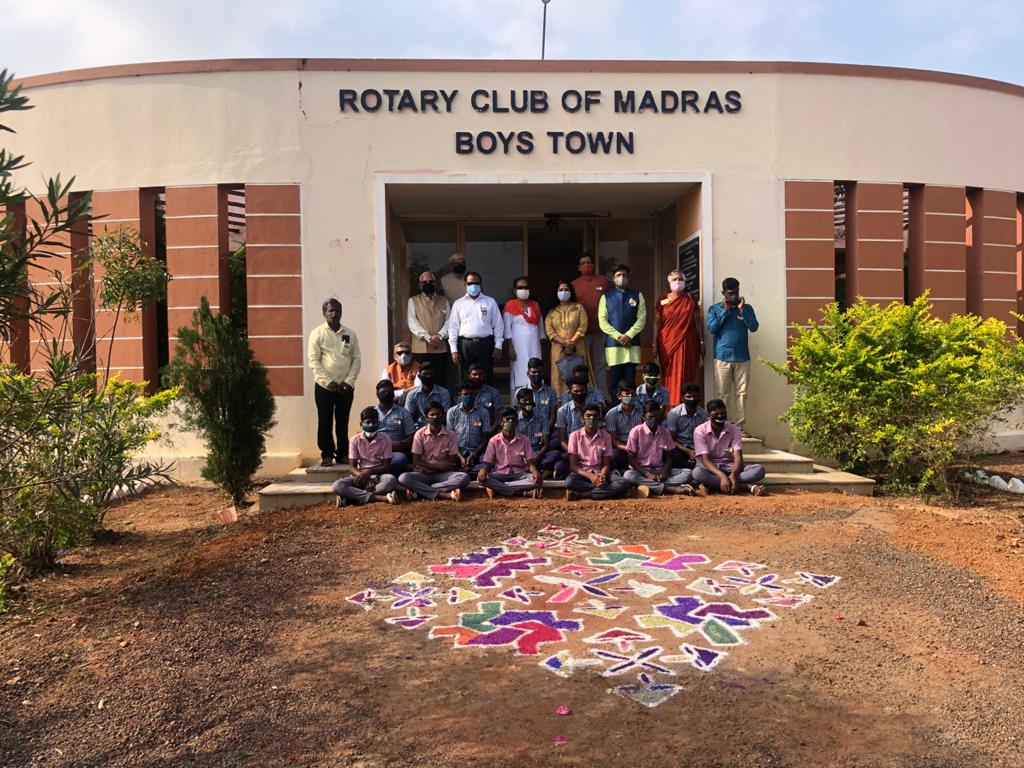
Eleven students from the XIIth Std. returned to Boys Town in Gummidipoondi in April as their examinations were scheduled to begin from 3rd May 2021. Due to the spread of Covid-19, the Government of Tamil Nadu then further postponed the examinations and instructed staff to send all the boys back to their respective homes. Two days ago, the State Government announced the cancellation of the XIIth Std. examinations and said that these students will graduate from school based on criteria which are yet to be confirmed. We await news of  their progression to university or college. The XIth Std. examinations have also been cancelled and all eight students will progress to the XIIth Std.

Students in the VIIIth-Xth Stds. have been supported at home but their examinations were also cancelled. Nevertheless, all of them will progress to the next academic level.

In the academic year 2020-21, the total number of students enrolled was seventy three. New admissions for 2021-22 are expected to take place in two to three months but due to the pandemic, we have no confirmation as yet of numbers and exact dates. In the meantime staff are planning additional skills development initiatives, extra-curricular activities and online tuition for students in the Xth to XIIth Stds.
SARTHI: Feedback from pupils and teachers in Bihar, India

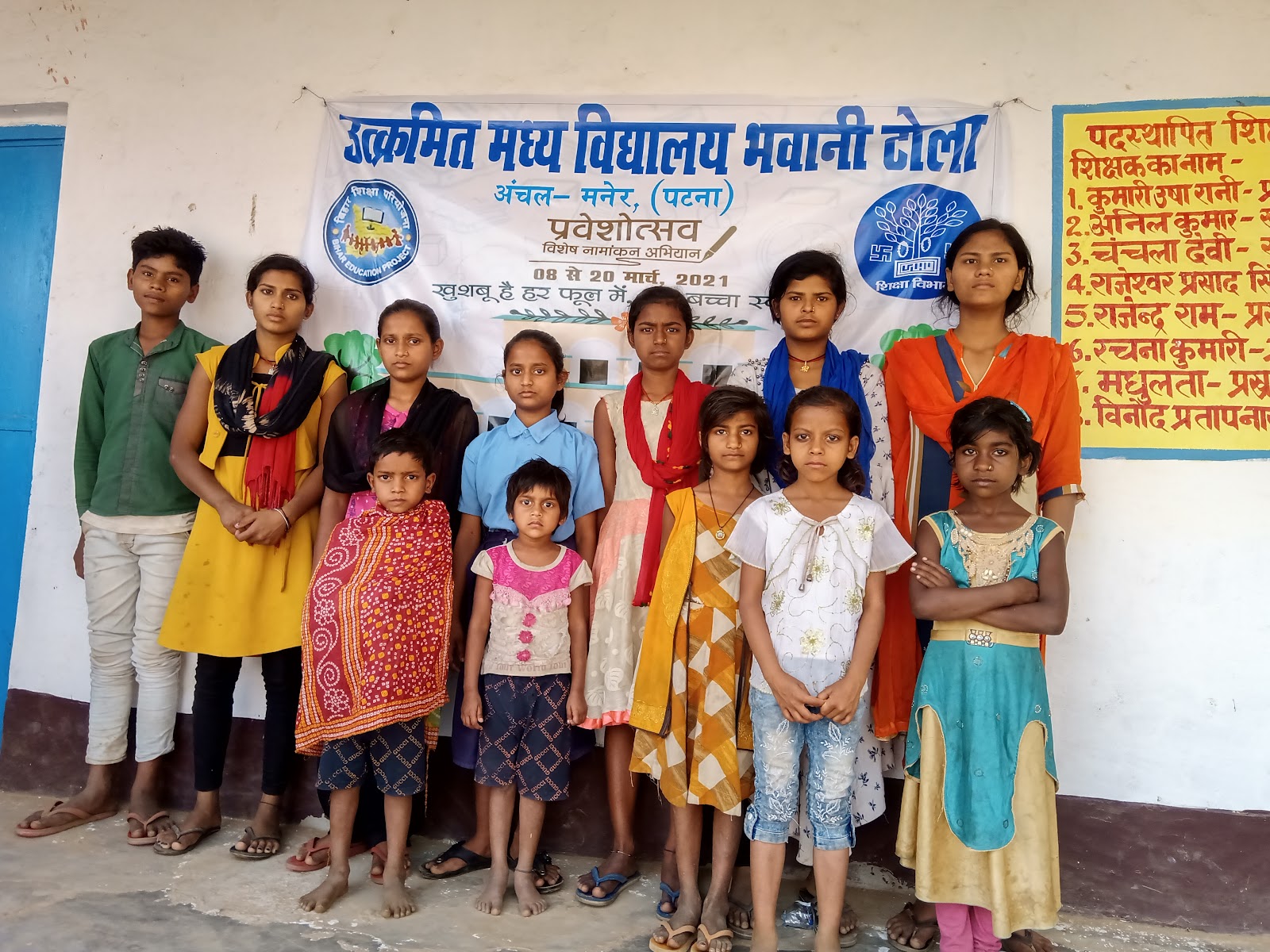
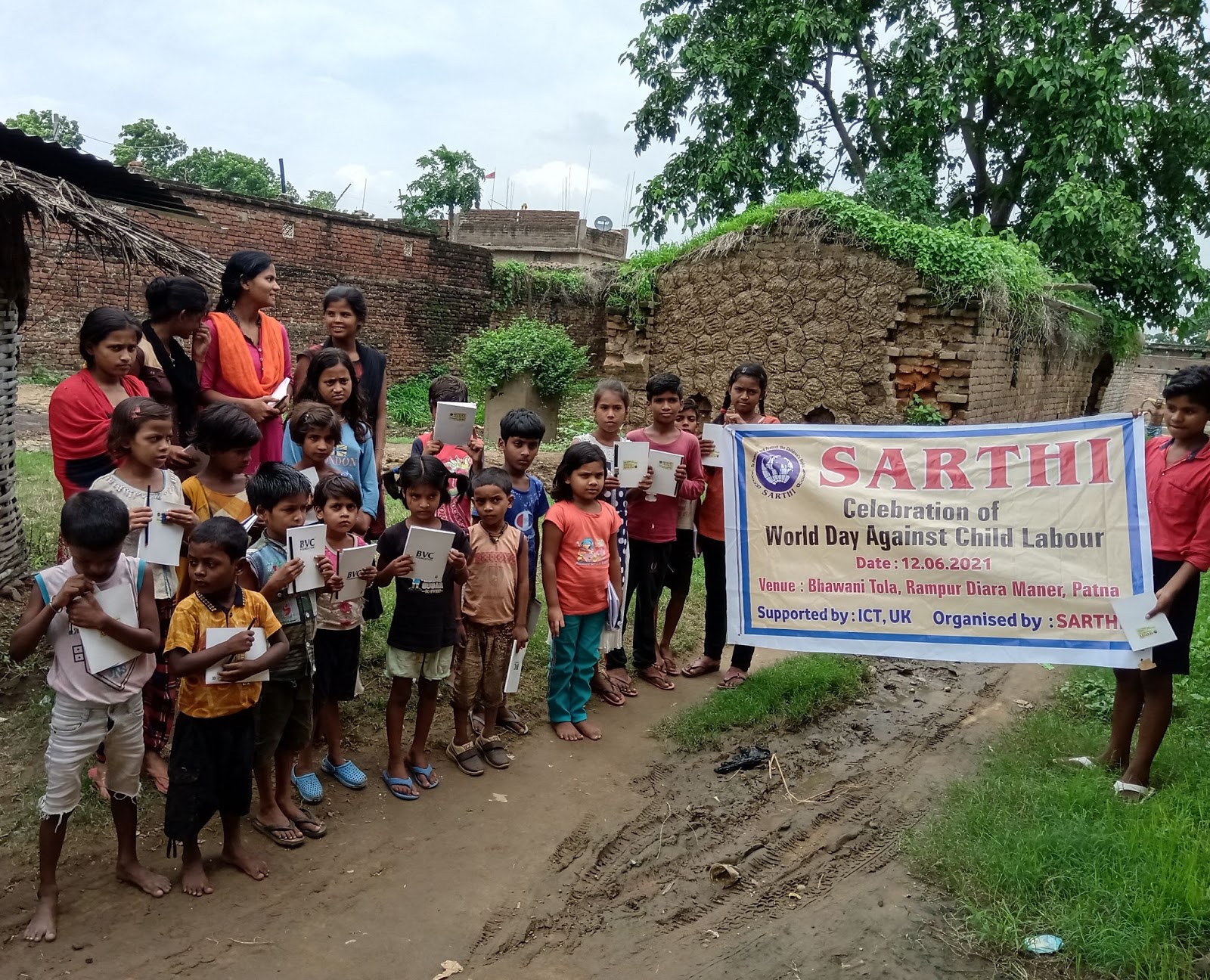
The team at SARTHI has continued to work with the children of migrant workers in Patna. Originally, eleven girls and nine boys aged six to sixteen were targeted for readmission to Bhawani Tola school but eventually thirty-six children were enrolled. Schools are currently closed again but lockdown is easing week by week. Schools may reopen in mid-July but this has yet to be confirmed.

Staff from SARTHI asked the children and their teachers to give feedback about the impact of the project on their life and work.

Puja (16 years of age) says that before Covid-19 she was going to school regularly but due to the pandemic her father lost his job in Delhi and returned to their village. After a while, her family had financial problems and she stopped going to school and had to work to help sustain the family. Later on, Puja’s father was offered the opportunity for her to have an arranged marriage and this is when she came into contact with SARTHI because she was being put under a lot of pressure from her parents to accept the proposal. “I am very thankful to the team at SARTHI because after several meetings with them as well as further counselling and support for our family, my marriage did not go ahead. Family life has improved considerably and I am much happier both at home and at school.”

Sunny (15 years of age) was studying in the 9th Grade at school but due to lockdown, schools had to close and there was a financial crisis in the family. His father suggested that he could help by leaving school and looking for casual work. Sunny felt under pressure and it was during this period that he came into contact with the team from SARTHI, who then assessed the situation on his behalf. “After some family counselling sessions, my father agreed that I could continue my studies as soon as schools reopen.”

Raju K. (Teacher) “SARTHI has helped to protect these children by strengthening family relationships and encouraging parents to send them back to our school.”

Usha K. (Teacher) “Without the support of the team at SARTHI, we could not have got these children readmitted to our school and their parents would have sent them out to work at a young age. Many of the girls would have got married too. I heartily appreciate the work of SARTHI because they have been able to minimise the level of exploitation within families.”

Rotary Club of Madras Boys Town: Phased return to school in Gummidipoondi, India

In  2021, the Government of Tamil Nadu announced the reopening of schools for children in the XIth and XIIth Stds. from the third week of January.  As a result, nineteen students were able to return to Boys Town in Gummidipoondi to attend their normal classes from the 20th January.  Subsequently, the Government also announced the reopening of schools for children in the  IXth and Xth Stds. from the 16th February and so a further group of sixteen students joined the others in Boys Town. 

All students were advised to get a COVID-19 test done before arrival and all of them arrived back at the school with certificates stating that their results were negative. Staff at Boys Town are also following the health and safety guidance set out by local government authorities.

The annual examination dates for the XIIth Std.  have been announced and will run from the 3rd May to the 21st May 2021. Teachers are helping students to be fully prepared for the final examinations by giving them extra tuition and tutorials after school hours. The examination schedules for the IXth, Xth and XIth Stds. have yet to be announced.

Classes for students in the VIIth and  VIIIth Stds. are still not functional, but teachers are in touch with the students and their families and providing them with appropriate guidance and support as needed.

To monitor the students’ return to Boys Town a few club members visited them on the 26th January to celebrate Republic Day. In addition, on the 26th February, the Governor of  Rotary District 3232, visited Boys Town and spent some time with the students.

SARTHI: Community awareness on child’s education and development in Bihar, India

In Bihar, we continue to support the reintegration of twenty children into education. They are the sons and daughters of migrant workers in Maner, Patna. In February the team from SARTHI held a community awareness meeting to take stock of the situation regarding COVID-19 and to assess the parents’ readiness for their children to be admitted to school. All the families present agreed that they were fully prepared to apply for admission and wanted to send their children to school as soon as the situation allowed. 

The team also talked with the parents as a separate group, about the type of family issues that may impact on the future lives of the children if they neglect to send them to school. In addition, families shared their thoughts about the rights of children and the role of parents in a child’s development. It was reassuring to note that the parents are becoming more aware about the rights of their children and their role in supporting their education. Since March, schools have been able to reopen which allow for 50% attendance by children on alternate days. On the 9th March, twelve children out of twenty were admitted to the school and the admission of the other children is currently being processed.

SERVE: School disruption continues in the western province, Sri Lanka

The COVID-19 pandemic has had a bigger impact on the western province and Colombo District where SERVE is operating. For example, when the Government announced that schools and preschools could reopen in February 2021 in all parts of the country except for this province, it meant that Saplings, the preschool in Ratmalana that we support, had to remain closed.

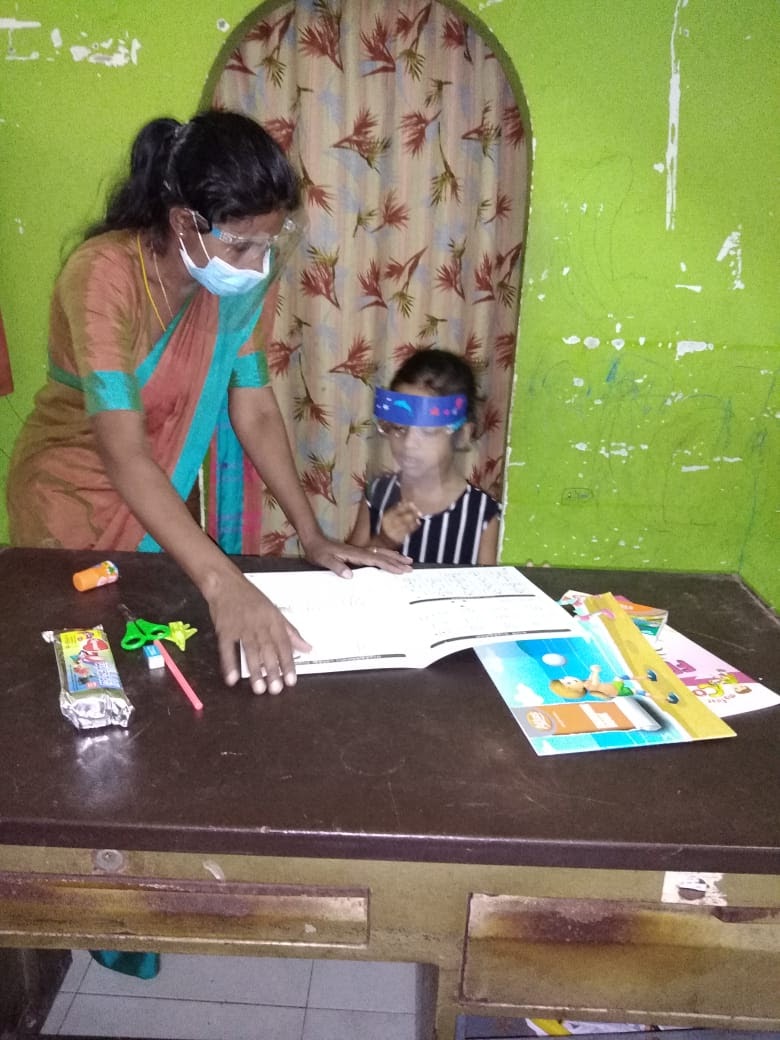
Despite this further setback, SERVE has managed to carry on educating children enrolled at Saplings via home visits by a teacher. Initially, each pupil was given a work-pack that included notebooks and workbooks, colour pencils, drawing books and crayons so that school work could be completed at home. The teacher continues to visit the children twice a month to check their work and to give additional guidance and materials as appropriate. Furthermore, she is in contact with both parents and children on a regular basis by phone.

This month we are pleased to report that seventeen children from Saplings have now obtained permission to progress to the Grade 1 primary school class at the Colombo Hindu College in Ratmalana.

There are currently fifteen students in the second year of Saplings but SERVE has yet to register new comers for 2021. Staff are eagerly awaiting  a return to school as soon as the Government grants permission.

JUCONI Mexico: Reducing violence in the classroom in the city of Puebla

ICT has collaborated with JUCONI Mexico on a new project that has been designed to address the problem of bullying and anti-social behaviour in the classroom. Staff at JUCONI have been running workshops for teachers across three primary schools in the city of Puebla. The workshops, via Zoom, focus on helping teachers to build on their knowledge and skills in order to respond more appropriately to the emotional needs of their students and to develop safer classroom environments in order to minimise poor behaviour and improve the quality of teaching and learning. Three hundred and sixty children aged between 6-12 years old are expected to benefit from this project. To date, thirty-six teachers have attended and a new group of eighteen teachers is about to start. Each workshop consists of seven, two hour sessions. 

As a result of the workshops, JUCONI staff have also been called upon to provide immediate support to teachers who have encountered difficulties with their students during online classes.

JUCONI Ecuador: Adapting community safe spaces for children to play and learn

After full lockdown in 2020, the community intervention work carried out by the team at JUCONI Ecuador, in both Socio Vivienda 2 and San Francisco, has resumed at different times of the day. Initially, groups of ten, then fifteen children, were able to attend meetings outside that gave them the opportunity to express the emotions that they had experienced during the months of confinement. This feedback also helped staff to identify protection strategies in cases where the children felt that they remained in danger due to COVID-19. 

The children were very happy when they returned to their community ‘safe space’ for these meetings, because until then, it was the only place where they had been allowed to go outside their homes. In total, one hundred and eighty-eight boys and girls attended meetings and activities with their peers, as well as thirty two parents at community level and fifty teachers.

In the past, there were no community safe spaces in Socio Vivienda 2 and San Francisco, so JUCONI staff have had to find and adapt available land. In Socio Vivienda 2 for example, a field has gradually been adapted that now includes a roof to protect the children from the sun and wash basins to promote hand washing hygiene. Post lockdown, parents were also committed to helping to clean up this space and to make small changes so that their children could attend the workshops again.

Keoogo: Increasing the capacity of the ‘Beoogo Tienbo’ nursery school in Burkina Faso

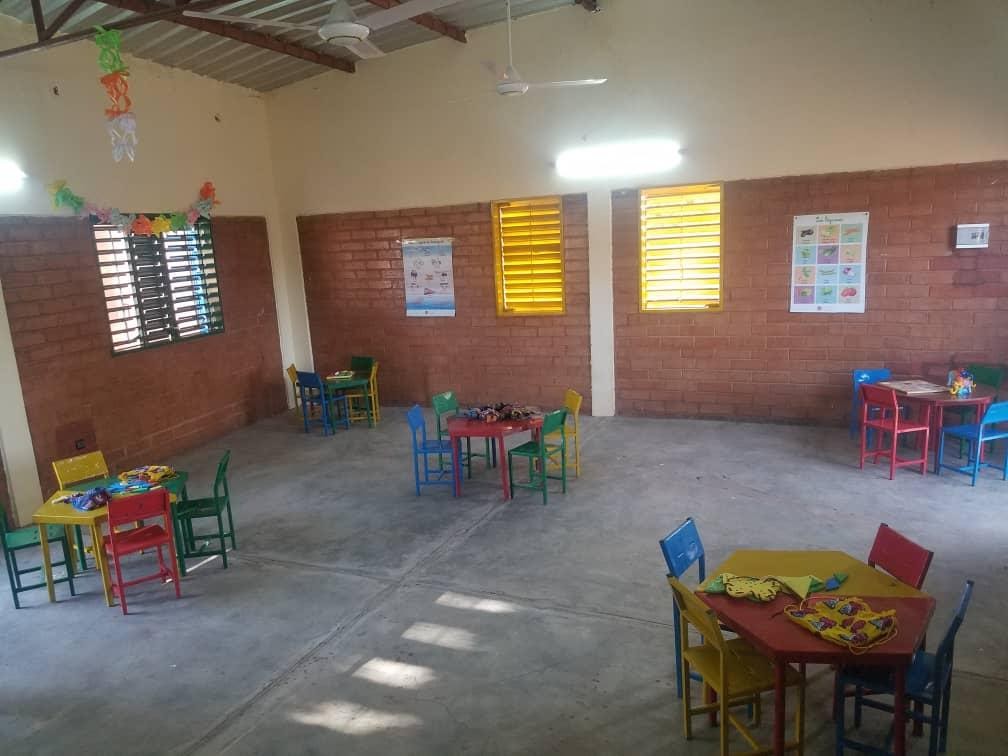
The ‘Beoogo Tienbo’ nursery school in Ouagadougou, Burkina Faso is growing as expected, and ICT and its partner Keoogo are extremely pleased to announce that the ‘Grande Section’ was officially opened on the 5th October 2020. This means that a fully-equipped classroom is now available for a group of twenty-four, five year old children. The classroom forms part of  the nursery that provides learning opportunities to seventy-two children living either in the village-shelter with their mothers or in the surrounding community. 

Thanks to the generosity and kindness of Bournemouth North Rotary Club, Keoogo has been able to acquire the necessary educational materials, equipment and furniture for the classroom and an instructor has been recruited to teach the children in Year 1. In addition, a roof has been added to an area of the playground so that all the children in the village can play safely in the shade. 

Chiedza Child Care Centre: Success story from the out-of-school programme in Zimbabwe

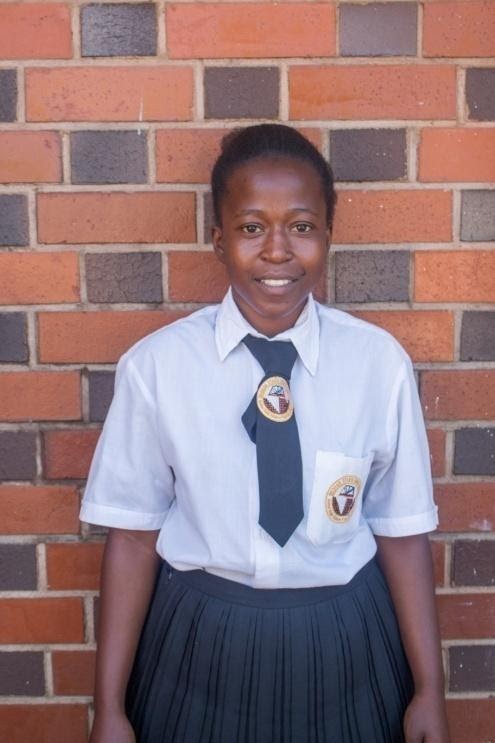
Danai is currently studying for a degree in Peace and Governance at Bindura University of Science Education in Zimbabwe. In the future she hopes to attain a first-class degree because it will enable her to become a policy analyst for an international non-government organisation. This is her story.

In 2015, Danai had to drop out of school due to health issues and because her parents were  unable to support her financially. In 2016, a community volunteer approached her mother and told her about the non-formal education programme run by Chiedza, and she agreed that her daughter could enrol on it so that she could return to the education system again. 

Thanks to Chiedza, Danai’s  school fees were paid and this gave her access to computers for her coursework. She was also helped with hygiene products, clothes, stationery and even food. In 2017, she sat her ‘O’ level exams and passed in six subjects. This enabled her to progress to higher level courses and with the continued support of Chiedza, she sat her ‘A’ level exams in Mbare in 2019 and was successful. Danai also benefited from Chiedza’s special ‘English Access Micro-Scholarship Programme’ where she attended classes in ‘life skills’. The motivational speakers that came to Chiedza inspired her to think about a more positive future and today Danai concludes that “the Chiedza Child Care Centre transformed my life from being very hard to something special.”

SARTHI: Education for poor households of migrant workers in Bihar, India

In Bihar, we support twenty families of migrant workers and are taking measures to help to get their school-age children back into education. 

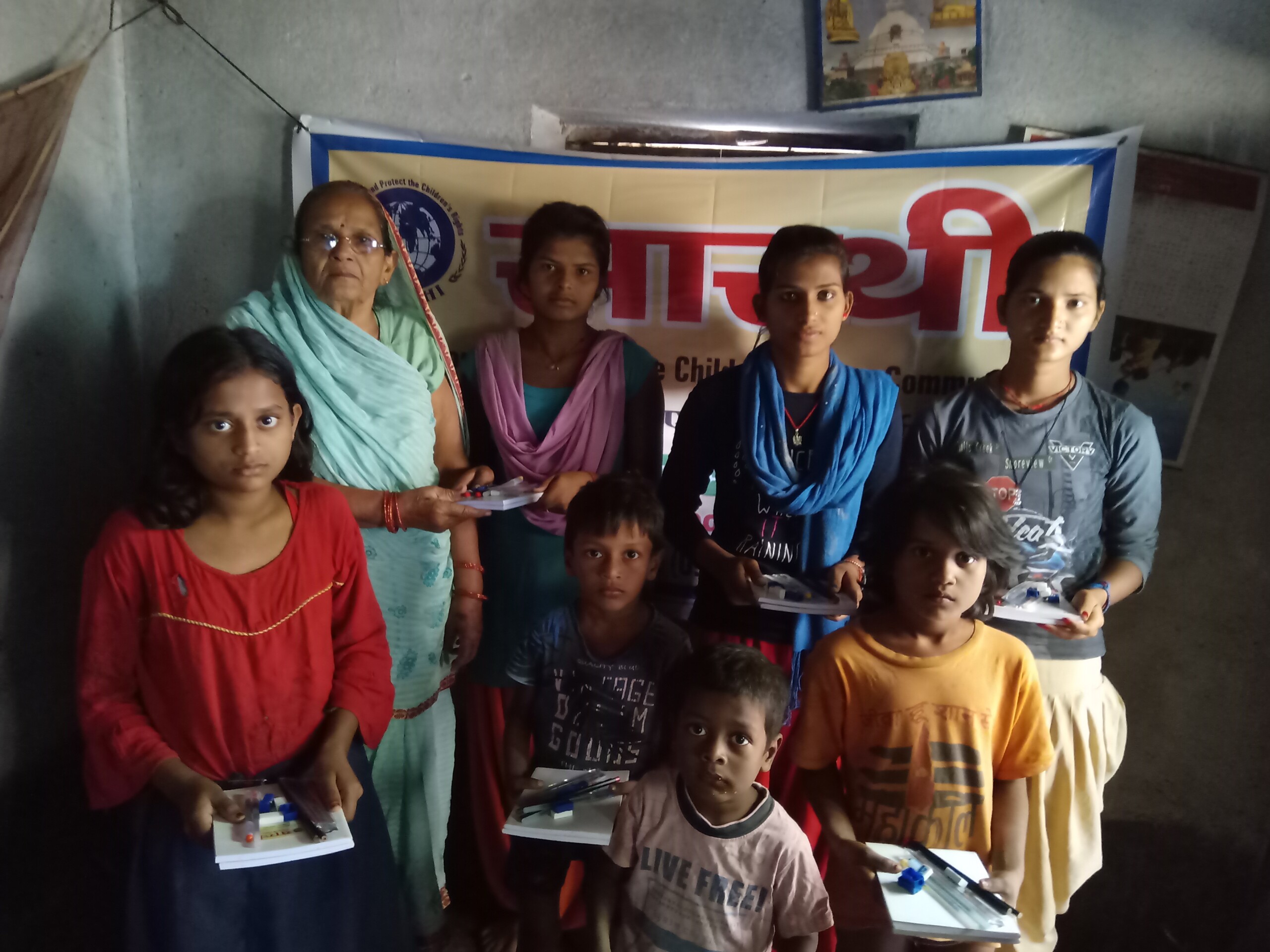
In October 2020, we visited a village in Maner, Patna and met with teachers, families and members of the Panchayati Raj Institution, a rural local governing council, since schools were still closed. An orientation workshop was later delivered to the families of the children whose reintegration into education is sponsored by ICT. During the session, we talked to parents about children’s rights and the benefits of continued education to help break the intergenerational cycle of poverty. In rural areas, girls often finish their education early in order to do domestic work, care for their siblings or get married; and boys are more likely to become involved in child labour and encouraged to migrate from their villages for work. On this occasion, we distributed educational materials such as notebooks, pens, pencils, rubbers and pencil sharpeners to thirty-two children to motivate them to do some work at home and to prepare for their return to school. 

In mid-November we held a teacher training programme at the Bhawani Tola Middle School in Maner, one of our partner schools in this programme. This was led by two members of staff from our partner SARTHI, and attended by the headteacher and six teachers from the school. The theme of this programme was ‘Children’s Rights and the Education of Marginalised Children, Especially those of Migrant Workers During the Covid-19 Pandemic’.

We began with a discussion around different articles from the ‘UN Convention on the Rights of the Child’ and the ‘Right to Education Act in India’. Staff from the school agreed that the education of the children had been severely disrupted and were keen to identify ways in which we could work together to readmit and reintegrate the children to ensure their continuing education during the pandemic.