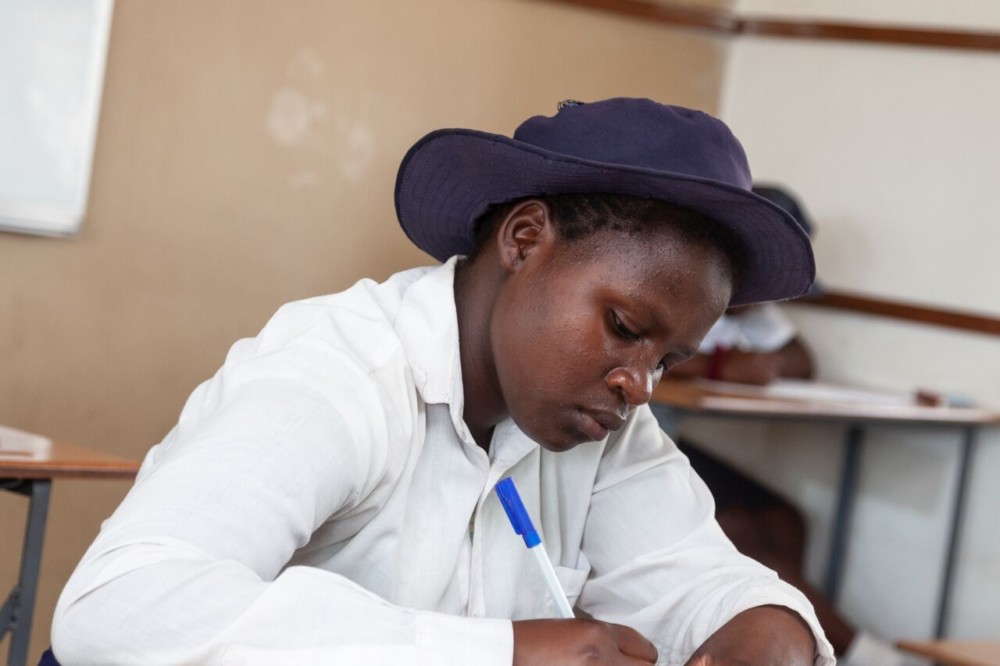
Chiedza Child Care Centre Income Saving and Lending Schemes Project (ISALS) in Harare South District, Zimbabwe.

The aim of this project is to increase the level of income and security of 1,800 poor and vulnerable households in Harare, particularly those headed by widows, or single parents, those with orphaned or vulnerable children at risk of dropping out of school, those with a disability and those with one or more members living with HIV. Each targeted household has to have at least one child under the age of 18 years.

In general, participating households undergo training on ISALS and how to run viable income-generating activities. The main expected outcome of the project is to increase income and financial resilience for vulnerable households in Harare South District  and to improve the health, school enrolment, attendance, retention and achievement of the orphaned and vulnerable children from these households. The project provides training in income saving and lending, project planning, financial planning, business management and micro-enterprise.

Since April 2015, the project has created 150 saving and lending groups and provides income benefits to participants (estimated as 1,800 of whom 10% are men and 90% are women). In addition, it supports 300 participants to jointly or individually establish an income-generating activity. Chiedza also aim to ensure that all wards with participating households are able to sustain and further develop the programme with the support of a community support structure and/or alternative government sources.

Two Success Stories from Harare.

Tammy’s mother attended the Chiedza project and Tammy says  “I live with my mother and my younger sister. My mother works on a Chiedza project and now has a market stall at home where she sells her goods. Before she started this business, she had no income and I did not have school shoes, a school bag or books. Things changed when she started working with Chiedza and she has managed to buy me all these things for school. My primary school fees are also fully paid up and my mother recently bought some household furniture, including a wardrobe, a kitchen table and matching chairs.”

Jenny has just finished her exams and is waiting for her results. She says “throughout my schooling my mother was struggling to pay my fees but last year things improved after she started participating in the Chiedza project. I can tell you that mum’s business is running well. We used to go hungry for long periods but now we always have enough food in the house and we eat three meals a day. My father is not permanently employed so my mother’s business is certainly helping the family. I look forward to doing further exams in the future and then going to university to get a degree. The sky is the limit to my education, thanks to my mum.”

A Success Story from SERVE in Sri Lanka.

Lakshan is from Moratuwa in Sri Lanka. He lost his mother when he was seven years old and he and his four siblings were brought up by his father and grandmother. His father was an unskilled, casual worker and the family faced many economic difficulties.

Lakshan attended a small village school but also joined the local SERVE Angulana centre when he was 8 years old. He enjoyed reading newspapers and using the library there and with the help of the centre co-ordinator and social worker, Lakshan did his school homework plus studied independently. He also attended computing classes and took part in children’s rights training programmes, leadership training programmes and child abuse prevention programmes carried out by SERVE.

When he was 10 years old, Lakshan was entered for the sponsorship programme on the recommendation of a SERVE social worker. After successfully passing school examinations he entered Prince of Wales College, Moratuwa. In 2017 he sat his GCE Advanced level examinations in the Commerce stream and did well in Accounting, Business Studies and Economics. Lakshan mainly used his sponsorship money to pay for additional educational coaching classes and to buy educational equipment and school clothing.

After leaving school Lakshan attended a two month spoken English course at Cambridge College in Kandy. Since 2018 Lakshan has been working in a private bank as a Marketing Officer, and in order to further his career, he is currently following a certificate course in Marketing at the Sri Lanka Institute of Marketing. In the future, Lakshan hopes to complete his Marketing course and also follow additional courses in Banking.

Lakshan is very grateful that he has been able to overcome many challenges with the assistance of ICT and his sponsor through SERVE. He is proud of his academic achievements and the progression of his career until now.

27 Years on at JUCONI Mexico

A photo of a mother reading with her son at JUCONI House

In 1989, Fundaciόn JUCONI was founded in Puebla, Mexico with the support of the International Children’s Trust. Working with homeless children, this new professional organisation started operating a small centre that was both a day and residential centre.

Fast forward 27 years and JUCONI is a very different organisation, but one that has remained rooted in addressing the needs to vulnerable children and continues to be supported by the International Children’s Trust.  Over 27 years, JUCONI have recognised the importance of working with marginalised children subject to family violence. By working with the entire family, JUCONI are breaking the cycle of physical violence, reintegrating children and families into their communities, and developing a family’s ability access to education, health care and employment.

And it is clear that this vision works. Each year, JUCONI is working with 350 children and 120 families. Working through 3 different programmes, JUCONI are improving the lives of children by tackling the family violence that heavily influence children living on the streets, working on the streets, or working in the street-markets often with their families.

In 2016, we are beginning to see new exciting steps forward for JUCONI as they take their approach beyond the borders of Mexico.  JUCONI have been working with 160 organisations, primarily in 9 of the 31 states in Mexico. But the JUCONI model and their understanding of family violence, is also influencing organisations in Ghana, Guyana, India, Kenya, Tanzania, Rwanda, Guatemala and El Salvador. They do not look to replicate JUCONI in countries throughout the world, but they look to strengthen work with children by imparting the principles guiding their work on other organisations. By focusing on the principles instead of the tools, organisations can focus on appropriate solutions that are suitable for their own local context.

While JUCONI have now worked directly with over 3,000 children, your support is allowing JUCONI to reach children globally. As they move forward with a new General Director, we look forward to being a part of their continued progress.

Through Joe’s Eyes: JUCONI Ecuador

Photo of Joe playing football with some boys at JUCONI Ecuador

In December, Nicola (one of our team members) was visiting our project with JUCONI Ecuador in Guayaquil.  Supporting street children and their families, she had the opportunity to witness therapeutic sessions with parents and children in their homes, visit the schools that JUCONI works with, and to share in the fun and games of the children’s Christmas party. At the party, she had a chance to catch up with Joe Amiri who is currently working with JUCONI and ask him a few questions…


What inspired you to work with children?

I am a volunteer with the Peace Corps who send volunteers to various organisations around Ecuador to serve for two years. My time with JUCONI has been one of the most incredible experiences for any volunteer. I wanted to work with disadvantaged children and their families to help those who need it most but to also establish a good support system for them in the future.

What is so unique about JUCONI is that the work we do is sustainable. One of my first friends in Guayaquil was a kid in the community. While many of the adolescents were timid and shy around the bearded gringo, he always wanted to talk to me and was curious about my life. Months later I discovered that he had actually been part of the JUCONI therapy process with his family when he was four. That early intervention by JUCONI brought him through college and he is a role model in the community.

What aspects of your work do you enjoy most?

The work JUCONI does is so different from many organisations that I have come across in my life. Many have a centre for people to receive services, but JUCONI actually visits each family in their homes to provide therapy each week. Going to each family and getting to know their community shows us more about the reality these families live in. I joke with a co-worker that we are unofficial mayors of Socio Vivienda, one of the communities we work in, because we cannot walk one block without hearing our names.

What do you enjoy least?

The hardest part of my work is saying goodbye at the end of each day. As a member of the community development team, we are spread thin so we only visit each of the four communities once per week. It is hard giving that last high-five to a child in Socio Vivienda and having to wait seven days to see them again.

What have you learnt during your time with JUCONI so far?

I have grown so much professionally and personally. When working in the communities, I can see what a bright future the world has.  Seeing how much positive change can come from small actions like youth groups, art clubs or sports club, I am looking forward to seeing what is next for these kids. Each kid really needs a space where they can be themselves and grow as individuals.

When I am not in the communities, I help with the development side of the organisation by promoting corporate social responsibility. It is wonderful to see how much people, such as those who donate through the International Children’s Trust, really care about the world and want to make it a better place. People love to help, they just sometimes don´t know how.

Different Reality, Different Approach

Photo of 3 girls at New Life, South Africa colouring pictures

Uitsig sits in the Cape Flats, a short drive from Stellenbosch – South Africa’s premier wine region and home to a world-renowned university.  And yet life is very different for the children growing up in this community.  HIV has taken a terrible toll over the last 30 years in South Africa – still holding the unenviable record of the most number of people living with HIV in the world.  Poverty is rife with people finding any way possible to survive.  This leads to sex work and high rates of theft.  Drugs and alcohol are frequently abused – in fact, the drug dealers make no secret of their trade and the availability of drugs. The frustrations of daily living often manifests itself into domestic violence against partners but also the abuse of children.

Faced with these problems, many children lack the positive family environment and will often not have the opportunity to receive a good education.  For many children, solace has been found in a different ‘family’.  Gangs have offered the children a sense of belonging and given many of them a purpose.  Uitsig is notorious for its gang crime and violence and children who are not provided an education and end up hanging around the streets becomes the perfect recruit.  Ultimately, a nurturing and caring environment that we would expect from family and school, does not exist.

Working with the International Children’s Trust, New Life Community Projects is offering a different reality. It is a reality where a child has their education kick-started by providing them with a strong base of learning and warm encouragement.  It is a reality where the factors that damage a child’s development (whether it be abuse, neglect or illness) is identified and steps taken to end it.  It is a reality where the family are encouraged to be part of the child’s development.  Perhaps more importantly, it is a reality where parenting skills are taught and not just assumed to exist.  While it can often be easier just to work with a child, this can be worthless if they are simply returning home to the same old problems.

But what is it that really makes New Life different?  Their approach is informed by a strong understanding of a child’s psychology and the importance of early childhood development.  It is an understanding that all staff learn how to apply to their work. It is an approach that goes beyond the child’s immediate needs and looks to their long term development.  While recognising the importance of education for a child (after all, the children are attending an informal school), the project takes (what we call in the development sector) a holistic approach – reflecting the fact that a child’s development is built on physical, social, educational and emotional needs.

But there is also something much simpler that sets New Life apart.  Over the years, I have walked into many schools in sub-Saharan Africa and been saddened.  Children may want to learn, but with 60 students in a class, no resources and poor teaching methods, the incredible potential of EVERY child is often lost. Walking into the compound that is home to New Life’s container school, you enter a completely different environment.  Suddenly you have teachers who actually want to be there.  They bring passion, love and dedication to the children.  They genuinely care – not only for their children but for the community that they live and work in.

Each year, around 45 children between 4 and 5 years old begin their journey with New Life.  For the first year, they will arrive each morning at the ‘Container School’ (old shipping containers that have become a community hub) for their breakfast and some group fun, before walking to their teacher’s home.  Within each home, the teacher has created a space for a group of around 7 children who she will work and play with every weekday morning for the next year.  Returning to the Container School at lunchtime, the children have the opportunity to have a hot, nutritional meal.  Beyond this daily activity, the teachers and key staff will work with family members during visits to family homes and workshop sessions.  Families are encouraged to participate in community events, to spend quality time with their children at family outings and events, and to work together as a family to cultivate part of the New Life garden where their efforts are rewarded with produce to take home.

At the end of that year, the intention is for all 45 children to be able to enter into a mainstream school (something that we cannot assume would happen otherwise), while the relationships between the children and their caregivers (whether parents, grandparents, extended family or siblings) will have improved. New Life are achieving these results.  But achieving this success does not mean that support can end there.  This is still just the start of a child’s journey.

Working with children at an early age provides for a key intervention at a crucial stage of their development, but that needs to be backed up with continual support structures and reinforcement of needs.  To that end, the Out of School Club operates in the afternoons at the Container School.  This provides a safe environment for children who have previously been through the project to do their homework, learn and play – an inspiring and supportive environment that they often cannot find in their own home.  Ultimately, this keeps the child from finding an alternative on the streets and in the gangs. It is this long term approach that is vital in ensuring that the short term gains when a child is 5 years old can be sustained.

Without the International Children’s Trust and New Life, the alternative is disheartening.  Today’s children need the opportunity to escape the cycle of poverty that their families and community have found themselves in.  There is no quick fix and we cannot guarantee a solution.  Ensuring the child can enter into school will mean that they will have better opportunities in the future for employment.  They will have the ability to support themselves.  Working with the child on their health and general well-being will help to prevent them from dropping out of school in the future and to avoid becoming involved in the gangs and street life that many in their community participate in.  By working with families, we are looking to ensure that we are all encouraging the child in the same direction so that all of the children are provided with opportunities that their parents did not receive.

Every child has so much potential within them.  It is easy for this potential never to be realised.  In Uitsig, you can sense that we are giving them a fighting chance.

Field Report: Hearing Stories in Ghana

Photo of children with Youth Alive, Ghana writing in the classroom

I have just returned from the North West region of Ghana, where I have seen first-hand how wonderful supporters like you are changing the lives of some of the most vulnerable children in West Africa.

As always, I return from my field visit with mixed feelings.  The work undertaken by our partner Youth Alive is really making a difference in the lives of children.  These children continue to be an inspiration to me and reminds us all at the International Children’s Trust why we feel so passionately about our work.  Sadly, this inspiration is married with feelings of dismay at the poverty I witnessed, and the heart-breaking stories that many people shared with me on my journey.  My hope does remain knowing that our loyal supporters will continue to feel passionately about helping us to change the lives of impoverished families, and give thousands of innocent children the chance to go to school, stay in school, and enjoy their childhood for as long as possible.

Your Support of Youth Alive

Our close partnership with Youth Alive has allowed them to work across 4 districts and 22 communities of Northern Ghana. They are working to remove obstacles to primary and junior high school attendance. Due to high levels of poverty and hardship in these areas, many parents are simply unaware of the importance of supporting their children in their education.

In this region, one of the main obstacles to attending and performing well at school is a high level of violence at home, in the community and in schools.  Children are regularly subjected to beatings, verbal abuse and forced marriage. They are expected to stay away from school to perform tasks at home or to earn income for the family. This is not deliberate cruelty, but a symptom of the lack of education amongst families and the community. You can help us to change that.

Mary’s Story

Amongst all of the stories that I heard in Ghana, one that I will not forget was told by Mary*.  She was in the first years of junior school when, tragically, her mother died. When her father married again, Mary’s new stepmother put her to work running the house, fetching the family’s water and looking after the small crop of vegetables that supported the family. Mary told me how hard her chores were every day. She was unable to manage them as well as going to school – but she desperately wanted an education.

Eventually, the situation came to a head. Mary and her stepmother argued and her stepmother punished her by refusing to give her any food. Eventually, unable to cope, Mary ran away. Like so many children, she became extremely vulnerable and at serious risk of ending up permanently on the streets, with nothing to call her own and nobody to turn to.

Fortunately, one of Mary’s friends was working with Youth Alive as a peer educator. Mary confided in her friend, who immediately turned to Youth Alive to help. Their staff visited the family, spending time and care negotiating with her parents. They explained the importance of education to them and ensured that Mary could return to a safe and encouraging home.

The result of the work of Youth Alive with this family has been profound. Mary’s father and stepmother have become part of the project. They are learning about good parenting and how important it is for Mary to be supported in school. She now attends school every day. Thanks to the intervention of Youth Alive, Mary has the prospect of a bright future, and her parents now understand why education is so crucial for their daughter, and fully support her in pursuing her goals.

Mary’s story demonstrates what makes the approach of International Children’s Trust and all of our partners so unique. When we work with children in desperate situations of domestic violence, we address the root causes of the problem. In so many cases, parents resort to violence and abuse because they simply do not know any better. We support them and show them that there is another way. We highlight the importance of educating their children to break the poverty cycle, and give them practical help to overcome the barriers to achieve that.

We Need Your Support

This Easter, children throughout the UK enjoyed holidays, treats, gifts and celebrations. There are so many children out there, like Mary, who have nothing to look forward to except for another day of grinding poverty, achingly hard work and the threat of violence and abuse. Mary’s story shows us that it does not have to be this way. Every day, we are making a lasting change to the lives of children across the developing world.