Youth Alive: Bringing COVID Relief to Rural Children/Youth Communities in Northern Ghana.

In 2019, Youth Alive established two adolescent reproductive health centres in the Kassena-Nankana Municipality of the Upper East region. The purpose of these centres was to strengthen adolescent sexual and reproductive health education by offering easy access to staff, equipment and a welcoming environment for young people seeking such services. A third centre was established in Domwine, in the Lawra district of the Upper West region in 2021.

During the COVID-19 pandemic, there were calls from communities and health workers, particularly in Domwine, to turn the adolescent centres into clinics because apart from sexual and reproductive health services it meant that other medical problems could be treated. This became even more necessary as a preventative measure as there was a need to reduce overcrowding at the main health centres/hospitals due to COVID infections. The Domwine community is quite a distance away from the main health centre. 

The problem remained that although the three centres contributed to a reduction in crowds at the main health facilities, they either lacked or did not have adequate Personal Protective Equipment (PPE) to effectively reduce the risk of infection. This was relevant to both health workers and visitors because they became reluctant to go to the centres. 

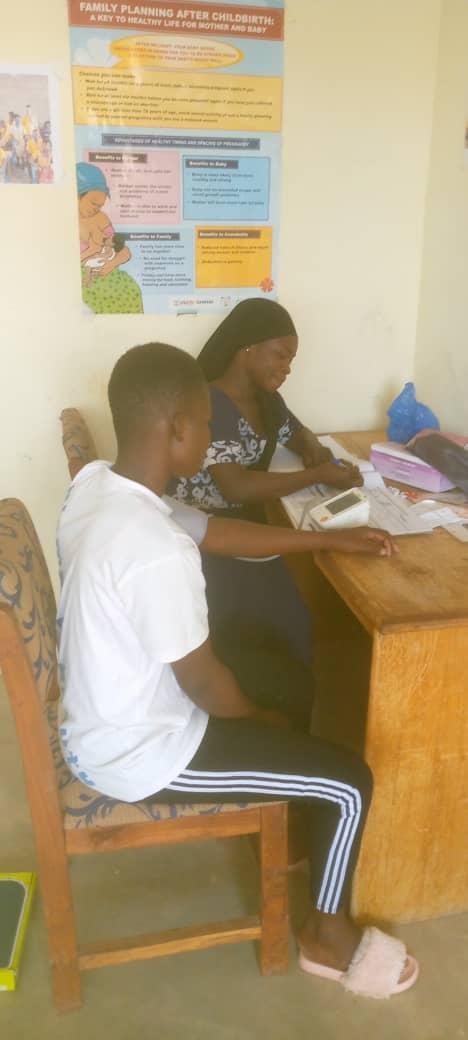
In order to facilitate the protection and safety of young people visiting the reproductive health centres, all three clinics received PPE and other items including; hand sanitisers, liquid soap, face masks, face shields, an infrared thermometer, a blood pressure machine, weighing scales, disposable gloves, rolls of paper hand towels, a Veronica bucket, a Veronica bucket stand, a receptacle for dirty water, a dustbin and dustbin lining.

Thanks to support from the ICT COVID Relief Fund and the Rotary Club of Coventry the provision of PPE and other medical equipment enhanced the service provided by the centres. A community health nurse in one of the centres said, “we have become more efficient since receiving the items. I no longer juggle between the main facility and the adolescent centre for some basic items such as the blood pressure machine and scales.” 
At the same time, there has been a reduction in the spread of COVID-19 and many other diseases due to an improvement in both personal and environmental hygiene. There is now no litter from waste material at the centres because of the availability of dustbins. Previously, waste material used to be dumped on the ground and burnt once in a while. The dustbins are now emptied by a waste management company and taken to approved dumping sites. Frequent hand washing with soap and water is practised at the centres and local school children and communities have been encouraged to do the same at home. 

This practice will be sustained with the aim of inculcating young people and communities to carry out a much improved standard of personal and environmental hygiene beyond COVID-19.
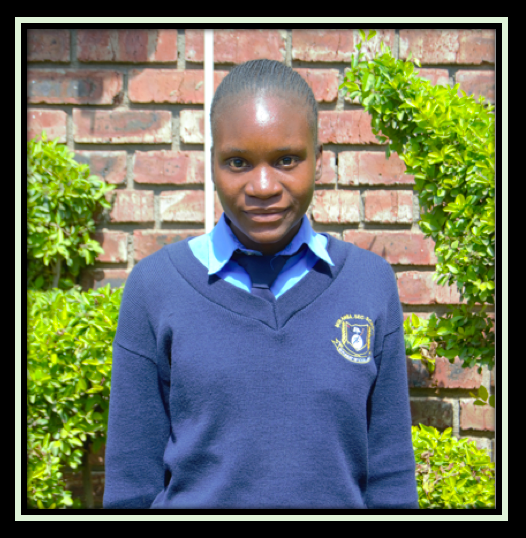
Chiedza: Supporting Seven Vulnerable Children to Continue in School in Zimbabwe.

Chiedza continues to support vulnerable families by helping children to access free basic education at their centre and to strengthen the economic capacity of their main caregivers, through support with income-generating activities. Due in part to the pandemic, the caregivers of seven children who have been integrated into secondary school are struggling to earn their income through their micro-enterprises and their children are in danger of dropping out. It is against this backdrop that the organisation has decided to support these children for one year, while their caregivers are reviving their businesses. This has been made possible with support from the ICT COVID Relief Fund and the Rotary Club of Coventry.

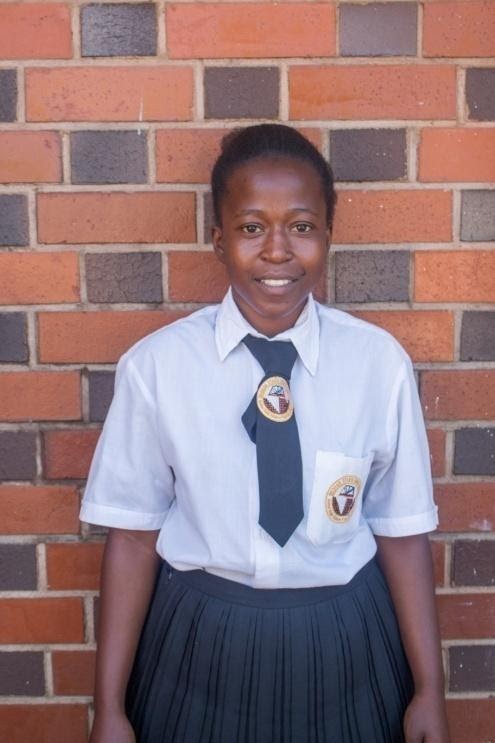
Below are two of the children who are benefitting from this bursary.

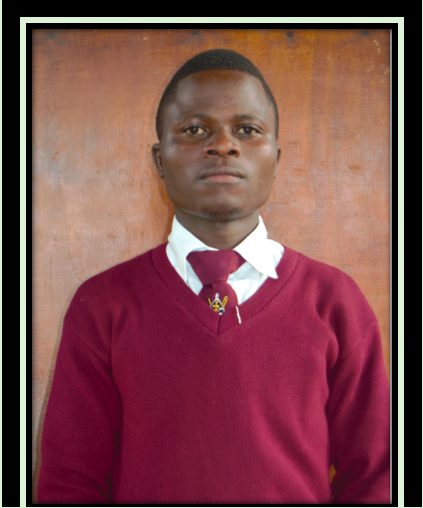
Tinotenda is a nineteen year old maternal orphan who is studying for his ‘A’ level examinations. He is currently living with his father and stepmother. There are five children in the family and all are attending primary and secondary schools. Chiedza has decided to give financial support to Tinotenda so that he can complete all his ‘A’ level courses.

Chipo is sixteen years of age and studying for GCSE ‘O’ level examinations in November of this year. Chipo’s mother is the head of the household of a family of nine children. When Chipo and her twin sister completed their exams in 2018, their mother could not collect their results due to unpaid school fees but was subsequently helped with this. Chipo is academically gifted and particularly wanted to complete her exam courses and Chiedza is supporting her to do this. Her twin sister is also continuing her studies and has been given a place in our out-of-school continuing education programme.

Keoogo: Progress by Young Mothers in Market Gardening and Poultry Farming in Burkina Faso.

With funding from the Rotary Club of Bournemouth North and its partner in France, the Rotary Club of Château-Gontier, new training opportunities in agro-ecological market gardening and poultry farming are continuing. After the acquisition of equipment, theoretical and practical training in both market gardening and poultry farming classes began. 

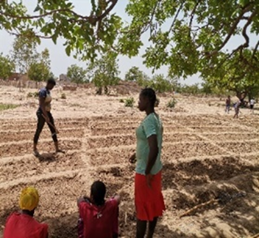
In January, Phase 3 of the training in market gardening taught the girls how to set out the beds, the nursery and associated crops in order to observe the rotation system and the different methods of sowing and transplanting. The girls were also shown how to make compost.

Phase 4 was devoted to weeding, hoeing, staking and composting. To facilitate monitoring, a plot was allocated to every girl to enable the trainer to assess the level of knowledge acquired by each one. This practice also improved the accountability of the girls and better maintenance of the plants.

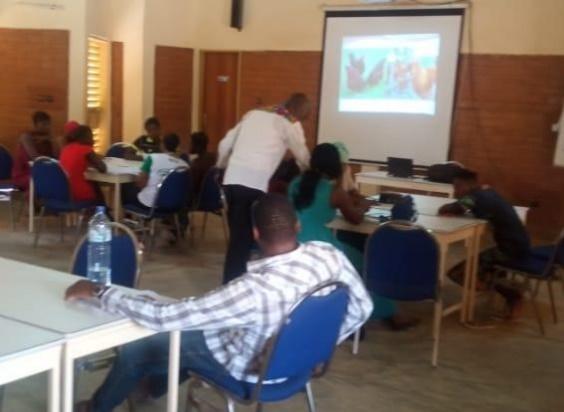
The training in poultry farming was deliberately limited to a maximum of twelve girls per session in order to allow for effective and personalised supervision while at the same time encouraging group cohesion. Given that the composition of the group was made up of literate and non-literate girls, and in order to maximise participation, each module was covered through projected images of texts and accompanied by illustrations. 

The literate girls read the texts and the non-literate girls interpreted the illustrations. Afterwards, a debriefing session was held to check the girls’ understanding of the projected images. These sessions were followed by reframing and further explanations by the trainer.

With the chicken house ready and the practical training well underway, the next step will be to order the chicks and put them in the house. This will enable the girls to understand the importance of hygiene and vaccination in this phase.

Chiedza Child Care Centre: Term 3 Achievements for the Out of School Programme

Chiedza Child Care Centre continues to implement the ‘Out of School Programme’ in the third and final term for 2021. A total of 160 children are currently attending. 

Both primary and secondary students have carried on utilising the resource centre where they can access the learning materials that they require for the Continuous Assessment Learning Activities (CALA). They are helped to do this by a learning assistant. The students also continue to get support from their teachers and their parents. In addition, Chieza also provides two hot meals for the children for six days a week. This has improved concentration, attendance and retention as the children come from families that struggle to provide more than one meal a day. Girls are also able to access health services linked to personal hygiene.

We are very pleased to share the news that seven learners have successfully progressed to  university. They are now studying for degrees in the following subjects: Development Studies, Community Development and Social Innovation, Zimbabwean History and International Affairs (2), Population Science and Applied Demography, Peace and Governance, and Medical Analytics and Informatics.

Keoogo: Vocational Training for Young Mothers in the Beoogo Tienbo Village

The Beoogo Tienbo Village for young mothers has continued to build on the number of vocational training activities available to them. Since July, two important new courses have been introduced. These are training in market gardening using an agro-ecological approach and training in baking skills.

After a geophysical study, Keoogo started to prepare the land for planting. In addition, an analysis of the food needs of the young mothers and their children was carried out. This assessment allowed us to collect data around the varieties of vegetables consumed by the families over a two-week period. This will then be used to select the vegetables to be grown in the market garden. 

The agro-ecological training took place in several phases. Phase 1 involved meetings between the agro-ecological consultant and the young mothers to discuss the ecosystem. Phase 2 involved the girls setting up a site for the agro-ecology garden under the guidance of a trainer and a number of the women teachers who have experience in market gardening. Other phases will be carried out from December 2021 onwards.

The training in baking involved 36 young mothers learning to prepare several types of pastries including Christmas logs, milk cake, shortbread biscuits, pancakes and churros. 

This created a new dynamic within the groups and helped the young mothers to get to know each other better and to strengthen their trust in each other. It has also encouraged them to develop their self-esteem, self-confidence and sense of purpose. For this course, the acquisition of baking kits will enable the girls to continue baking as an income-generating activity when they have reintegrated back into their communities. On completing the course, a young mother shared her feedback with us “This course has been a chance for me to learn how to make cakes and biscuits myself and it is as if a door to something brighter has opened for me.”

Keoogo: Increasing the capacity of the ‘Beoogo Tienbo’ nursery school in Burkina Faso

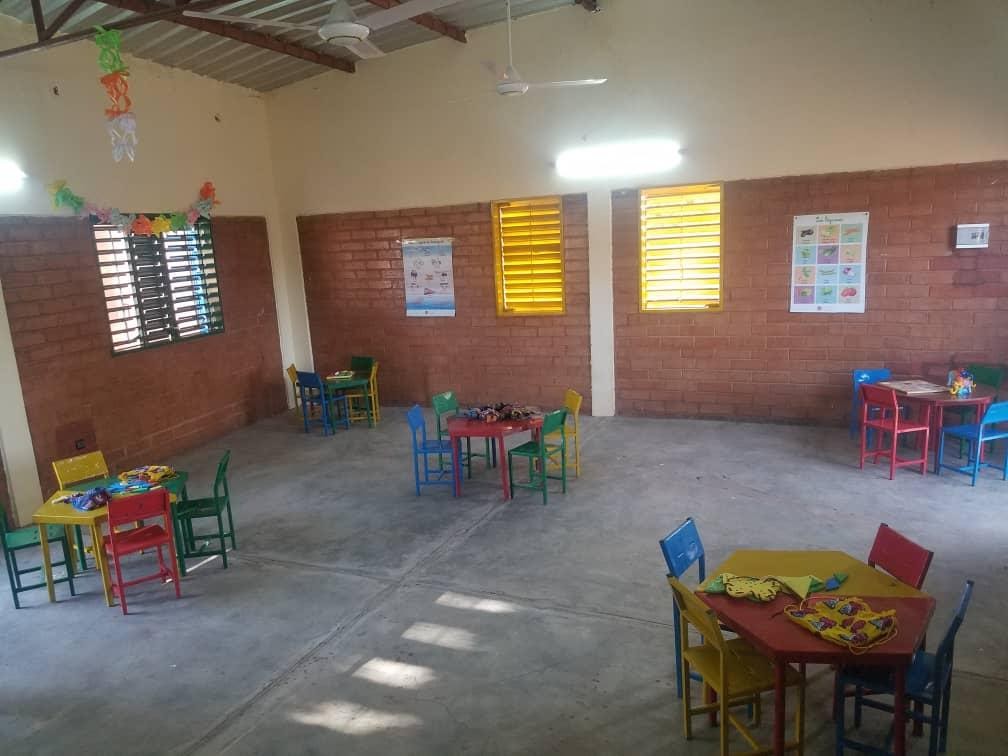
The ‘Beoogo Tienbo’ nursery school in Ouagadougou, Burkina Faso is growing as expected, and ICT and its partner Keoogo are extremely pleased to announce that the ‘Grande Section’ was officially opened on the 5th October 2020. This means that a fully-equipped classroom is now available for a group of twenty-four, five year old children. The classroom forms part of  the nursery that provides learning opportunities to seventy-two children living either in the village-shelter with their mothers or in the surrounding community. 

Thanks to the generosity and kindness of Bournemouth North Rotary Club, Keoogo has been able to acquire the necessary educational materials, equipment and furniture for the classroom and an instructor has been recruited to teach the children in Year 1. In addition, a roof has been added to an area of the playground so that all the children in the village can play safely in the shade. 

Chiedza Child Care Centre: Success story from the out-of-school programme in Zimbabwe

Danai is currently studying for a degree in Peace and Governance at Bindura University of Science Education in Zimbabwe. In the future she hopes to attain a first-class degree because it will enable her to become a policy analyst for an international non-government organisation. This is her story.

In 2015, Danai had to drop out of school due to health issues and because her parents were  unable to support her financially. In 2016, a community volunteer approached her mother and told her about the non-formal education programme run by Chiedza, and she agreed that her daughter could enrol on it so that she could return to the education system again. 

Thanks to Chiedza, Danai’s  school fees were paid and this gave her access to computers for her coursework. She was also helped with hygiene products, clothes, stationery and even food. In 2017, she sat her ‘O’ level exams and passed in six subjects. This enabled her to progress to higher level courses and with the continued support of Chiedza, she sat her ‘A’ level exams in Mbare in 2019 and was successful. Danai also benefited from Chiedza’s special ‘English Access Micro-Scholarship Programme’ where she attended classes in ‘life skills’. The motivational speakers that came to Chiedza inspired her to think about a more positive future and today Danai concludes that “the Chiedza Child Care Centre transformed my life from being very hard to something special.”

Chiedza Child Care Centre: National plans for reopening schools in Zimbabwe

Like many other educational organisations, Chiedza Out-of-School programme has been disrupted by the Covid-19 pandemic and children have been unable to attend school for seven months. This has been particularly hard for the children as most primary learners, for example, live with caregivers who do not have phones so contact with them was impossible.

When some lockdown restrictions were lifted in July, the Ministry of Primary and Secondary Education gave permission for examination classes to run from the 28th July. Chiedza therefore reopened its doors to examination level students for two days per week to allow face-to-face interaction between students and teachers. Secondary learners were given a series of home-study packs to work on, which were later marked and returned to them for revision purposes. 

This timetable helped the children to stay in touch with their teachers and to focus on their studies. Twelve students will be sitting their ‘O’ level exams from the 1st of December and four students for their ‘A’ level exams from the 3rd of December.

During September, Chiedza developed its own standard operating procedure in order to remain compliant with the new regulations set out by the Ministry of Primary and Secondary Education. Training also took place for staff, learners and parents; and this was run by Medecins Sans Frontières and Harare City Health Department. In addition, the team acquired Personal Protective Equipment for use by everyone on the school premises. As a result of the Ministry’s school reopening plan, Chiedza has been able to readmit children in different phases for the last three months. The first group of learners allowed to return were the fourteen secondary level students sitting national exams in December. Level 3 students, Grades 6 and 7, returned on the 26th of October and the remainder returned on the 9th of November. The school day for primary aged children has been adjusted to ending at 1pm rather than 4pm in order to minimise contact during playtime and informal socialising at the school gates.

Keoogo: Adapting to new measures at the Keoogo village during the Covid-19 pandemic

In March, as part of the special measures introduced to reduce the spread of Covid-19, the Government of Burkina Faso issued a temporary law that restricted public freedom. These restrictions hindered the continuity of several of Keoogo’s activities and in order to overcome these barriers the team drew up a plan to adapt to the new regulations. Prevention measures have been implemented for the children and young mothers living in the village that include the use of hand wash, gel and soap and the wearing of masks for all visitors. Other measures have resulted in the reorganisation of work via staff rotas, a new teleworking system, modification of working hours and the provision of additional water points.

Before the reopening of the ‘Beoogo Tienbo’ nursery school in October, the school was equipped with protective equipment. Furthermore, all parents were briefed on the health measures to follow to ensure the safety of their children if a child or family member falls ill,  as well as maintaining social distancing when dropping off and picking up children from the school.

Basic needs support for street children in the prevention of Covid-19.

Burkina Faso 

The number of people with Covid-19 in Burkina Faso has evolved since the first cases were registered on the 9th of March. On the 6th of June, the last assessment highlighted that eight hundred and ninety people had tested positive, seven hundred and seventy five people had recovered and fifty three had passed away. Despite these figures, the Government has eased the preventive measures taken against the spread of the virus by allowing the re-opening of markets, places of worship, bars and restaurants, the lifting of the quarantine and the authorisation of the use of public transport.

At the start of the pandemic, Keoogo put in place a number of preventative measures such as cancelling group activities, banning visitors from going to the Keoogo shelter in Ouagadougou and telling the young mothers and children living there not to go out. The mothers also attended health awareness programmes on how to protect themselves and others from Covid-19. The organisation arranged for the provision of  hydro-alcoholic hand sanitiser at the entrance to its offices as well as masks for the field team and medical staff at the Keoogo Medical Centre. 

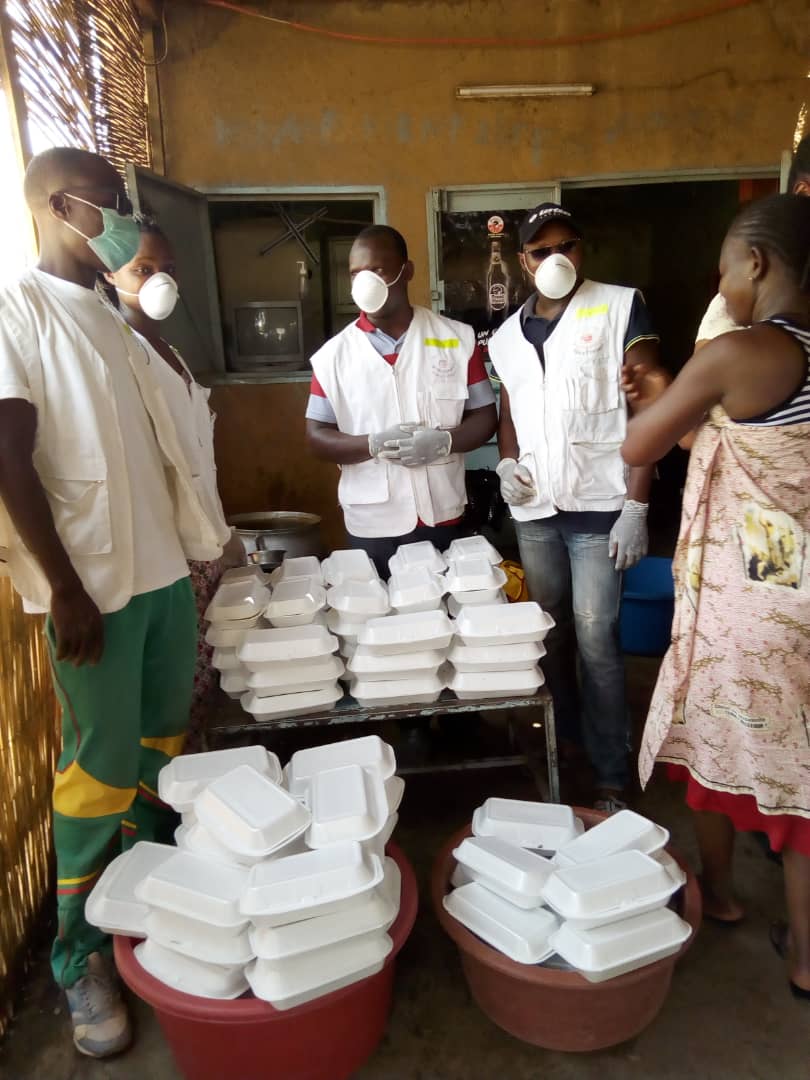
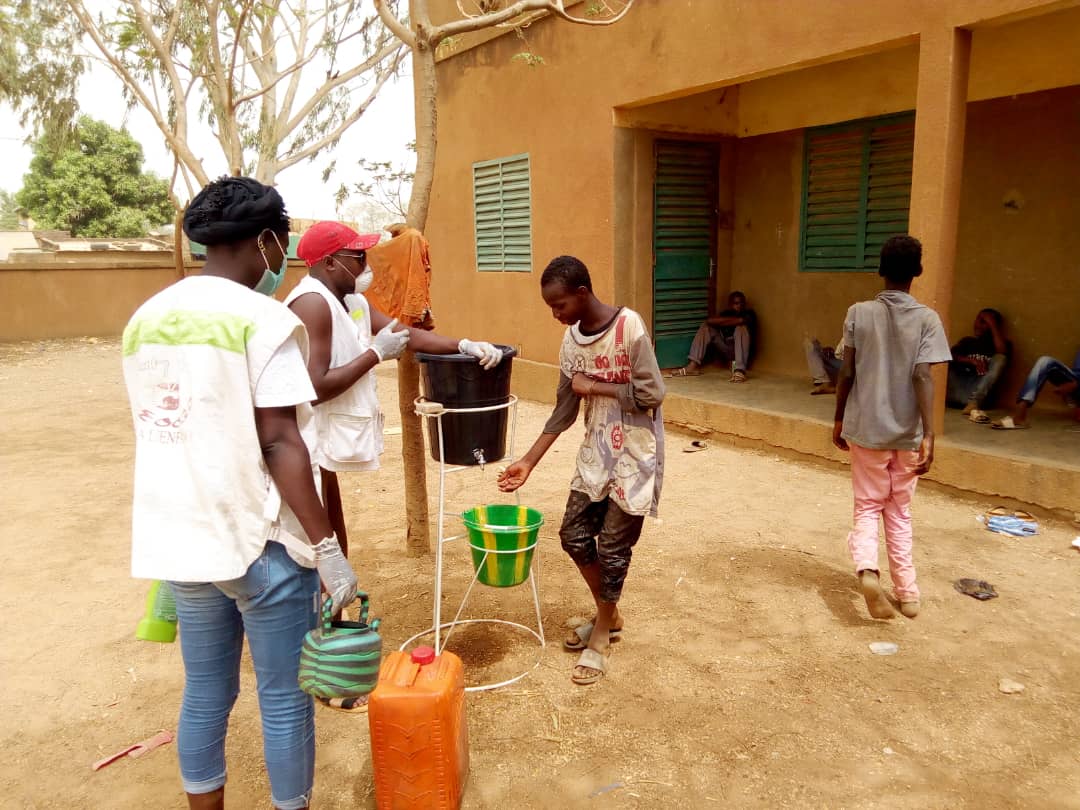
The prevention of Covid-19 is particularly challenging for children and young people who live on the streets and rely on the informal economy for their livelihoods. Since the spread of the virus, some of them have decided to join community drop-in centres, and this has put more pressure on these facilities in terms of availability of basic supplies. Keoogo is aware that three hundred and seventy four children are living on the streets in our area and they are currently taking action to protect these children. They have strengthened the capacity of the drop-in centres by providing food, water, medicines, masks and hygiene kits that include hand sanitiser, soap and gloves for the street children and the community.