Leading the efforts to improve learning outcomes for orphans.

Zimbabwe

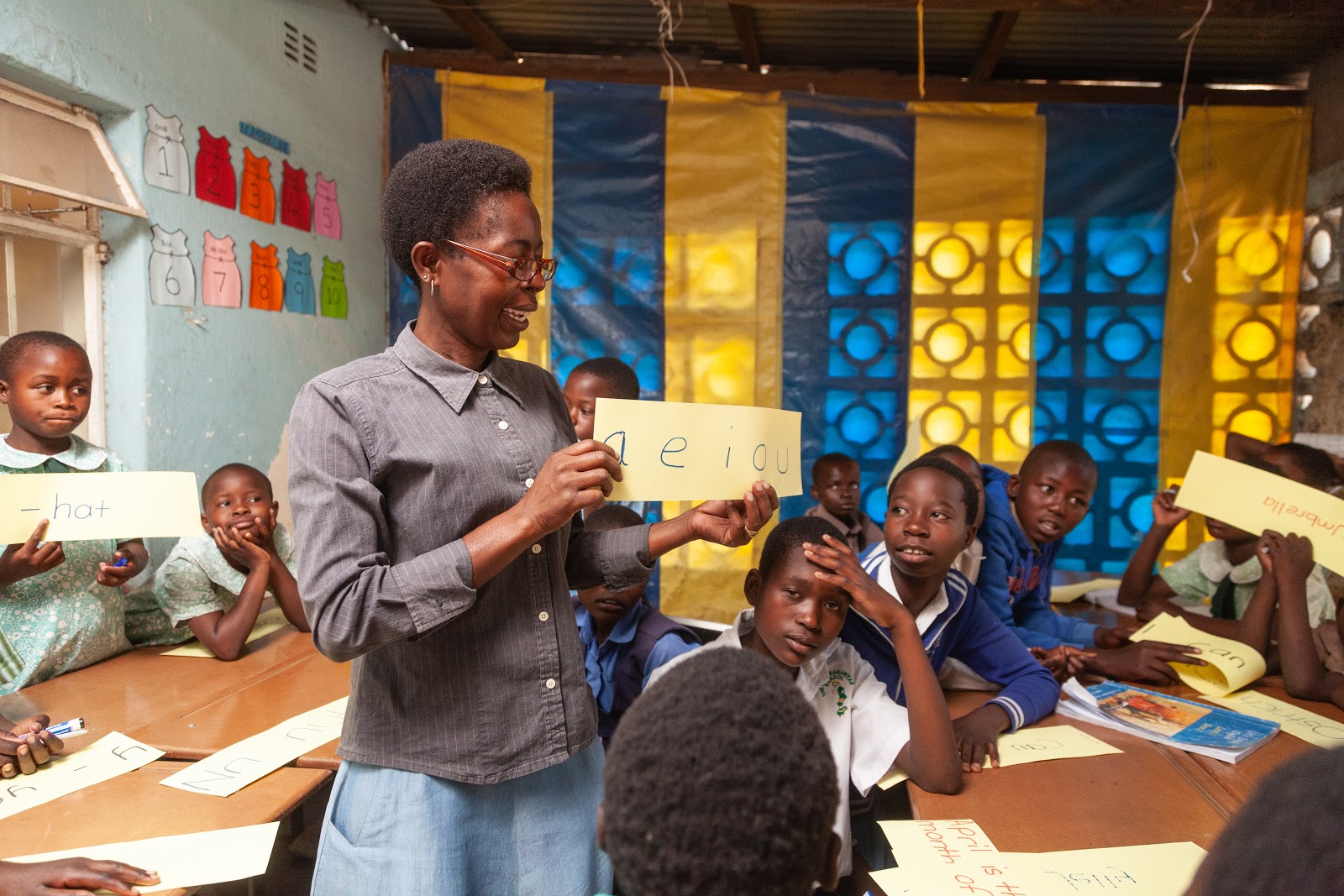
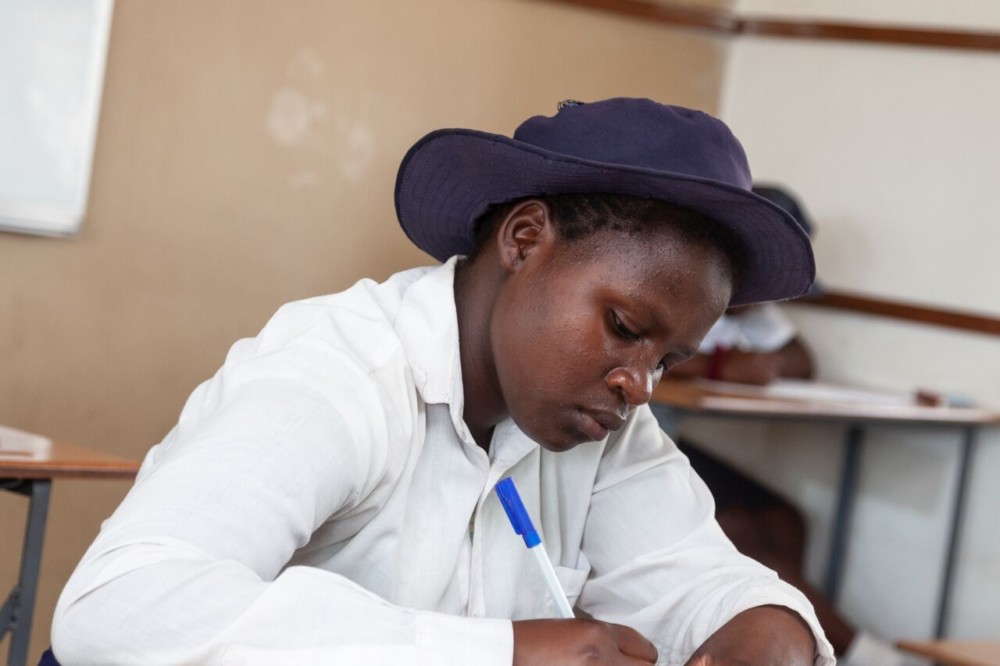
This out-of-school programme in South Harare, offers accelerated learning for primary school children who have not attended school by the age of nine or who have dropped out before completing primary education. The centre also welcomes secondary school aged children that have failed to progress from primary to secondary school and those that dropped out before completing their secondary education.

In March and prior to the Covid-19 lockdown, one hundred and five primary learners (48 girls – 57 boys) and sixty eight secondary learners (37 girls – 31 boys) were enrolled on the programme. The school was initially designed to take between fifteen to thirty pupils per year but due to the current economic hardships in Zimbabwe, more and more children are in need of support. This year, fifteen pupils are expected to sit for the National Ordinary Level examinations and four for the National Advanced Level examinations, giving the children the opportunity to re-integrate into mainstream education. 

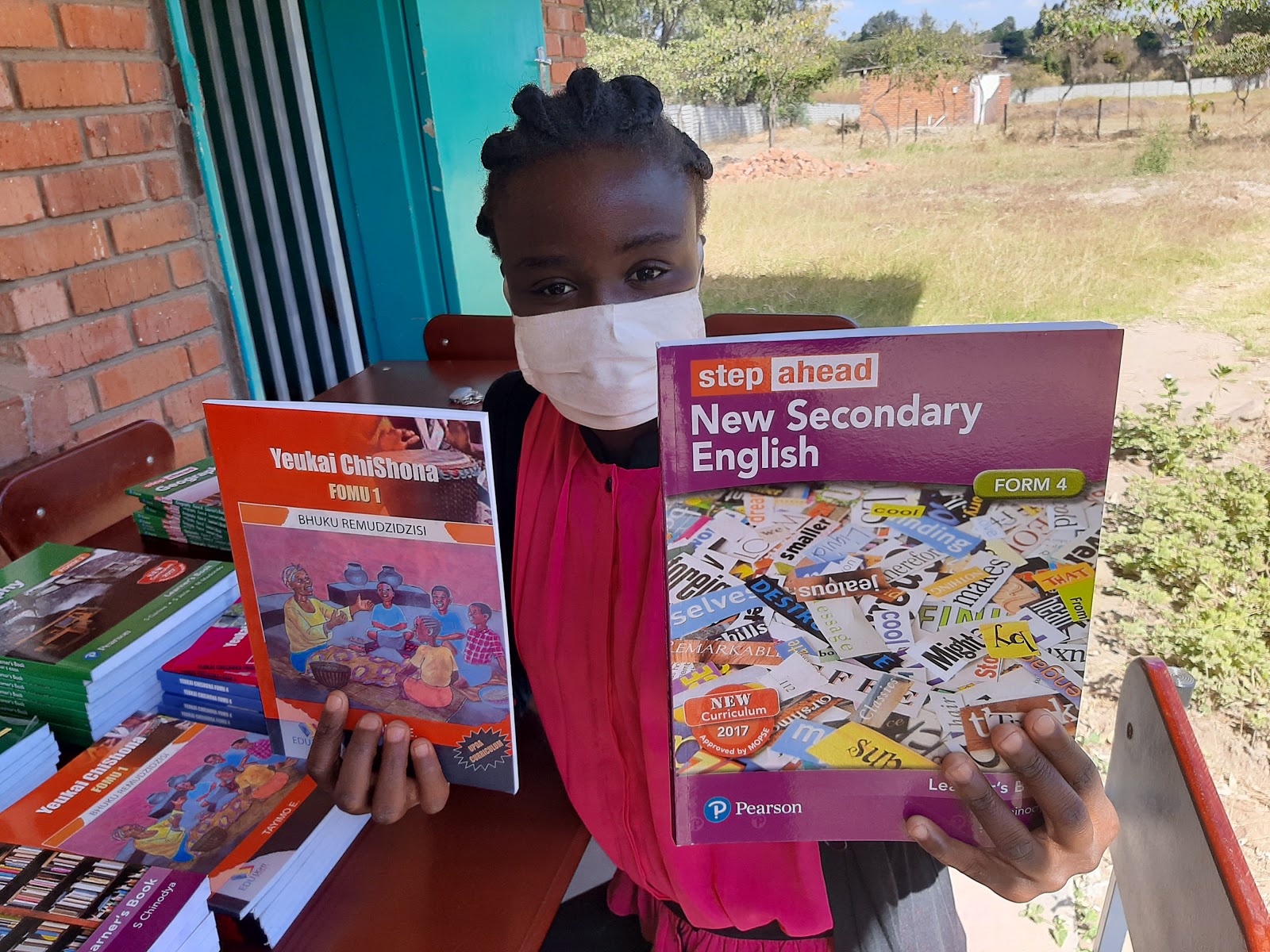
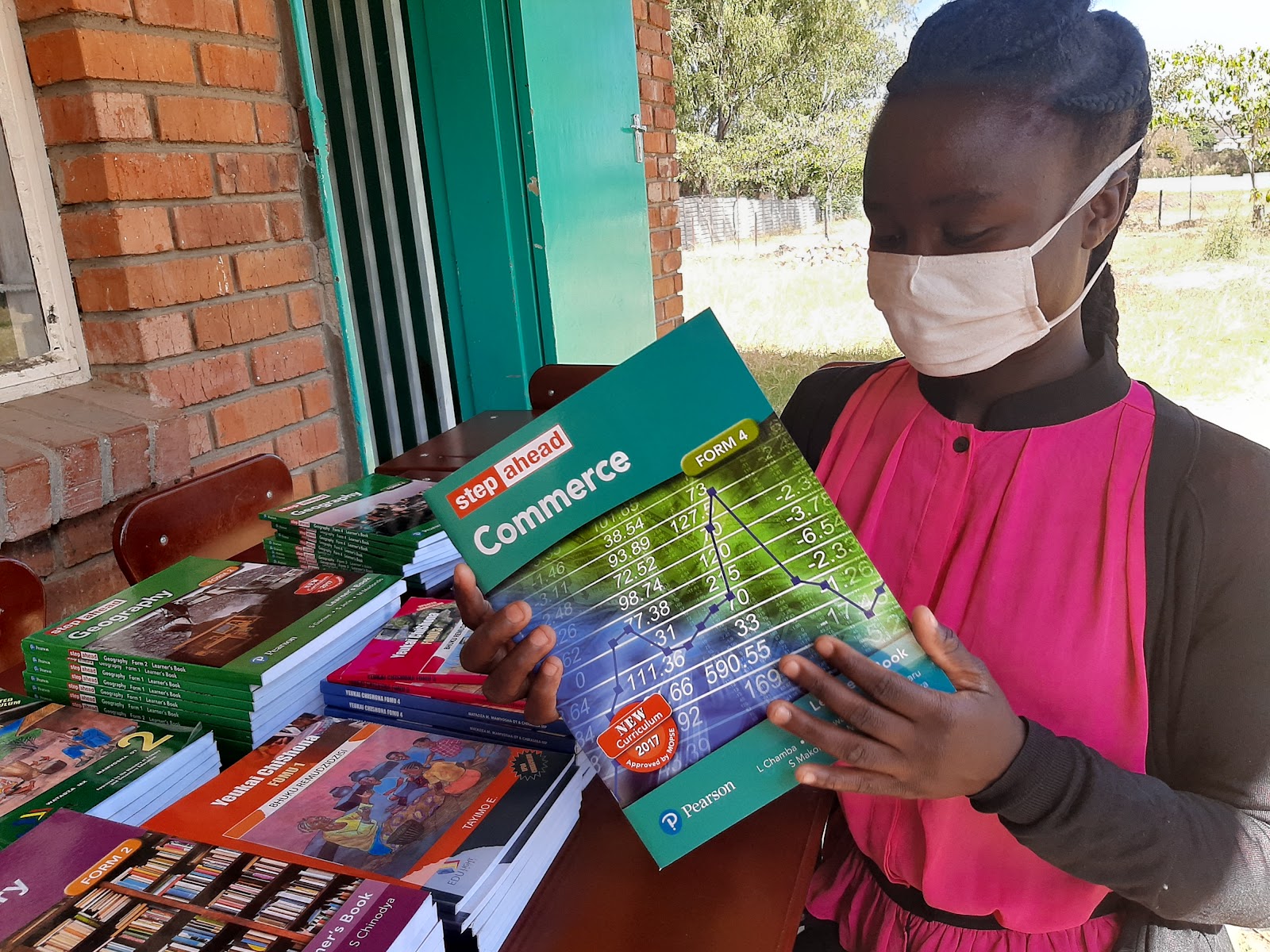
To comply with the new curriculum introduced by the Ministry of Primary and Secondary Education in 2017, the school urgently needs to improve educational outcomes for these children. This is being done through increasing the number of staff and providing training for them, supplying new teaching/learning materials  and improving the quality of classroom furniture. Thanks to the kind support of the Rotary Club of Coventry, we have purchased materials and furniture for the school which include single desks and chairs for the classroom and textbooks for both learners and teachers.

Under lockdown guidelines, teachers have continued to follow and prepare home assignments for pupils who will sit for public examinations in November. They were encouraged to go to the centre twice a week to meet up with their teachers and submit or collect their assignments. Pupils have also continued to have access to the school resource centre for reading materials. 

By promoting learning opportunities and offering access to quality and inclusive education, the school is expected to go a long way in improving learning outcomes for orphans and poor children.

A Success Story from the Chiedza Out of School Programme in Zimbabwe

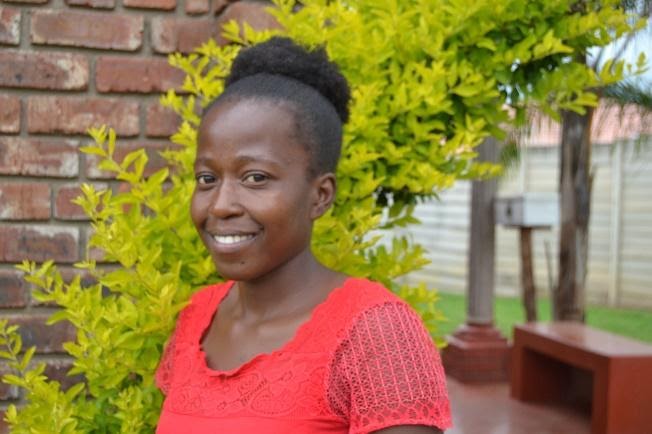
Nina’s parents separated when she was still a child. She continued living with her mother who struggled to pay for her school fees. When she was in Year 6 her mother remarried and her stepfather forbade her from working. Sending Nina to school became more and more difficult as her mother had to keep her work a secret when she did several part-time jobs. She could only afford to pay for her to attend school for two days a week so Nina spent the other days helping her mother at work. In 2015, the financial struggles became too burdensome for her mother and when she was in Year 11 at school, Nina dropped out before she could sit for her final examinations. After a year of no schooling, she was identified by a Chiedza Community Volunteer in her area, who referred her to the organisation. Their volunteers and officers made home visits to assess Nina’s level of need and she was given the chance to return to school through the Chiedza Out of School Programme.

Nina describes how Chiedza helped her:

“The organisation supported my studies and I sat for the Ordinary Level examinations and did well. I was then helped to progress to Advanced Level studies at a High School. Chiedza continued to pay for my examination fees and school fees and I was provided with free stationery. Via the Resource Centre, I was able to access  school text books and had free internet access, which helped me to do a lot of research for my studies. I also had access to a digital learning platform from which I was able to practise exercises, tests and notes. At the same time, I gained basic computer skills through the structured computer lessons offered by the Resource Centre Intern. In addition, I benefited from free counselling services from the Child Protection Department, as well as career guidance, which helped me to think about my future career interests and to build goals and set targets for myself. Every weekday, I received two nutritious meals from the food programme. I also received clothes donated by well-wishers. 

The English Access Programme run by the American Embassy at Chiedza Child Care Centre boosted my English communication skills as well as my leadership skills, which Chiedza had nurtured through the Child Advisory Board in 2016. Recreational activities organised by the Centre also helped me to develop my social skills. Having passed my Advanced level exams with 8 points in History, Sociology and Shona, I am waiting to go to university in August of this year. It is my desire to be a social worker and to help other children access basic services that they may not be able to access without the assistance of other people. I want to be able to help other children in the way that Chiedza has helped me and to contribute towards the happiness of less privileged children and to create a prosperous Zimbabwe. I envisage a Zimbabwe where all children are happy, empowered and can fully enjoy their rights without the limitations of being less privileged.”

Update on the ‘Beoogo Tienbo’ Nursery School in Burkina Faso

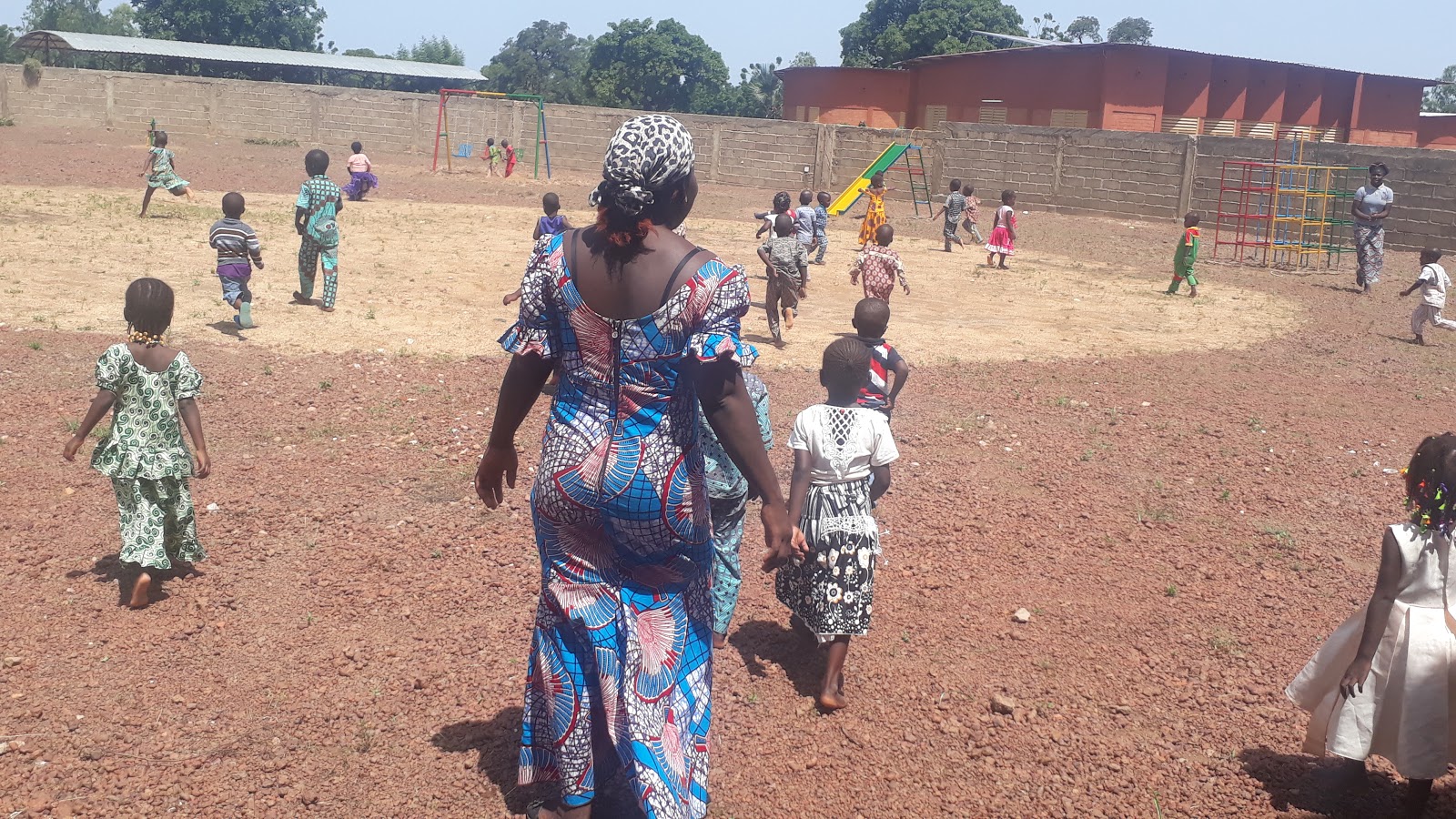
Beoogo Tienbo is a walled village developed as a shelter for young women and children by our partner Keoogo. It is situated in an area 17km north of the capital Ouagadougou in District 9. The project offers a nursery school which is open to children living in the shelter with their mothers, as well as to children from the surrounding community.

The school is equipped with three large classrooms, a hall for afternoon snacks, a toilet block, a sports field, a sand pit, two swings, a slide, a climbing frame and two climbing horses. The kitchen of the shelter provides afternoon snacks for the children. The school is currently run by a trained nursery nurse and a nursery assistant.

The school welcomes children from 3 to 6 years of age and follows the French education system. The children are divided into ‘petite section’ (PS: 3-year-olds), ‘moyenne section’ (MS: 4-year-olds) and ‘grande section’ (GS: 5-year-olds). For the academic year 2019-2020, two levels are functioning: The ‘petite section’ and the ‘moyenne section’. The ‘grande section’ will open for the academic year 2020-2021. 

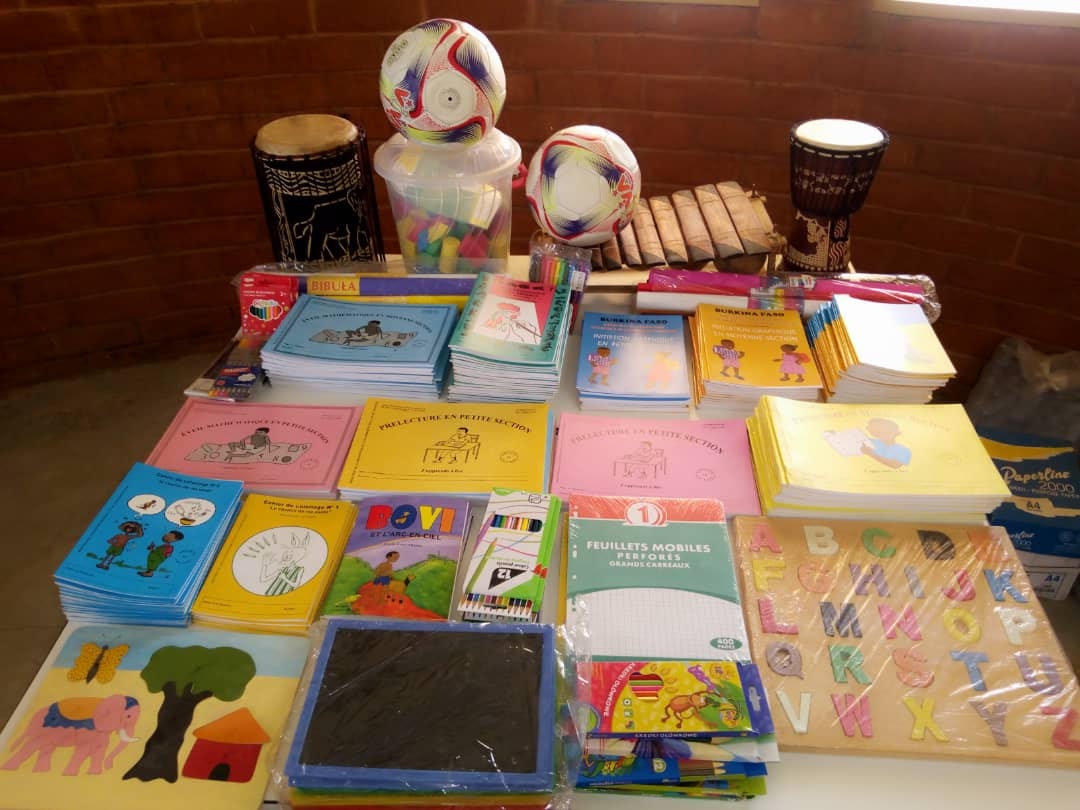
Thanks to the kind support of the Austin Bailey Foundation and other donors, we have purchased materials for the ‘petite section’ and the ‘moyenne section’ – which include 305 educational booklets for reading, maths, handwriting, drawing and painting; sixteen art kits and games, three musical instruments and two footballs.

The school has now been officially authorised by the Burkinabe Governor of the Centre Region. In addition, in January 2020, it was examined and approved by the Basic Education School Board of Ouagadougou.

Of the 52 children currently attending the school, 30 of them are street children now living in the shelter with their mothers. 

Three testimonies from parents of children enrolled at the nursery school

“My two boys are enrolled at the Keoogo nursery school in the ‘petite’ and ‘moyenne’ sections and I am very happy that they are there. In this school the teachers are friendly and professional. They are very attentive to the children and provide a family-friendly and warm welcome every day. It has met my expectations and since my boys have been going to this school, I have noticed changes in their behaviour. For example, they are more careful about the rules of personal hygiene and are more polite in their speech- saying “please dad” and “please mum” more often. I’m very proud of them.”

“Our daughter joined the nursery school in October 2019. To be honest, we have never seen her so motivated to go to school. She runs there every morning and is happy to see her friends and teachers. We have noticed that our daughter enjoys making things through play and learning to read. We really appreciate the teachers at the school as they are very good with all the children. We are truly very happy to have enrolled our daughter at the Keoogo nursery.”

“Following the closure of failing schools by the Burkinabè government, our daughter’s school was closed down. However, we were fortunate enough to find her a place at the Keoogo nursery school. Our daughter had spent a whole academic year at her previous school and having had that experience, we can clearly see that the Keoogo nursery school is very good and has exceeded our expectations. Everything that is done in this school contributes to the development of the child. The teachers are professional and in tune with the needs of each child. I also like the fact that the school has a place for singing and my daughter happily hums the songs she has learned at school, at home. She is well integrated and expresses herself well. She loves drawing and colouring and even questions people about the hygiene rules she has learned at school. I think that  Keoogo should open a primary school.”

Keoogo Village for Street Girls and their Children in Burkina Faso.

In Burkina Faso we partner with a local organisation called Keoogo, which offers protection and rehabilitation services to children living on the streets. In Burkina Faso, poverty, intrafamily violence and early pregnancy can force girls aged between 12 to 18 years old to run away from home and end up living on the streets, where they can be exposed to further exploitation and violence.

Keoogo has recently built a community-led, walled village 17 km north of the capital Ouagadougou, to provide food, protection, health care, education and vocational training for girls living on the streets with their children. The village’s name is ‘Beoogo Tienbo’, which means ‘Hope for the Future’ in Moore, the main spoken language of Burkina Faso. 

The main objectives of the project are as follows: to improve the well-being and life-prospects of these girls and their children; to provide a 12 month programme of vocational training and skills development to increase the girls’ chances of integration into the local labour market; to introduce income-generating ‘micro-activities’ to ensure a reliable source of income for the girls and their children in the long-term. 

The village will also offer access to a nursery school, a playground, a food bank and other facilities to 6000 members of the surrounding community. To ensure post-funding sustainability and viability of the village, the project aims to develop agro-ecological activities through vocational training such as market gardening, bee-keeping and small-sized breeding as well as food service activities such as a bakery and a restaurant.

Providing an opportunity for these girls has already had an impact.

Quote from an 18 year old girl living in the village: “The Keoogo village allows me to live a family life. It gives meaning to my life.”

Quote from the mother of a 5 year old boy “Since we came to the village, my son has become more and more fulfilled. He has fun with others, eats well and has toys at his disposal. I am looking forward to seeing him go to the village nursery school in September.”

Due to the urgent need to provide these girls with the means to provide for themselves, the village has been open for a few months providing psychosocial counselling to the young mothers. However there is still a need for additional staff and more equipment to deliver the training component, as the current challenges for the project are in acquiring the equipment for the bakery, catering, weaving and sewing workshops. Increasing the food budget for the girls and their children is also another priority.

A Success Story from Youth Alive in Ghana.

Milli is fourteen years old and a third year student at junior high school in the rural Upper East Region of Northern Ghana. She is the fifth of six siblings and the only girl in the family. Milli is a bright girl who started school at the age of three. The fact that her older brothers did not perform well at school and dropped out before completing their studies did not motivate Milli’s father to invest time and resources in her education. As he explained, “her older siblings were sent to school and did not prove that formal education was the best way to go” and so he was going to take her out of the education system once she finished primary school. He was also considering arranging an early marriage for her.

While she was at primary school, Milli’s family became reluctant to pay for school books and supplies and this started to have an impact on her performance. However, when she was nine years old, Youth Alive initiated a programme to improve enrolment, retention and performance in local schools and Milli’s community and school both benefitted from this project. The project also provided books and other learning materials to participating schools and to under-resourced children like Milli. Through this project, she was encouraged to join her school club and was selected to become a peer educator benefitting from attending a series of workshops which included ‘Assertiveness Training’, ‘Persuasive Communication Skills’, ‘Rights and Responsibilities of the Child’, ‘Responsibilities of Parents’ and ‘Child Protection and Safeguarding Procedures’. 

This period marked a turning point in Milli’s life. She started to feel more confident, increased her participation in class and her academic performance began to improve. Milli was made the leader of her school club; sharing her learning with her peers during school assemblies. She was also made head girl of her school. During this time her academic performance improved remarkably and she became one of the five best students in her class.

Milli continued to perform well and progress with the same level of confidence during her years at junior high school and represented the school during inter-school debates and quiz competitions. She is currently considered a model student in her school and is studying hard to sit for her Basic Education Certificate exams (BECE) so that she can progress to secondary school.                      

Milli says: “I underrated myself but the training workshops built up my confidence and helped me to realise that I can excel. I want to prove my parents wrong. I am determined to demonstrate to them that I am different from my older brothers and that one day I will change the status of my family. I want to be a nurse in the future so that I can take care of my family’s health needs and also help my community.”

Chiedza Child Care Centre Income Saving and Lending Schemes Project (ISALS) in Harare South District, Zimbabwe.

The aim of this project is to increase the level of income and security of 1,800 poor and vulnerable households in Harare, particularly those headed by widows, or single parents, those with orphaned or vulnerable children at risk of dropping out of school, those with a disability and those with one or more members living with HIV. Each targeted household has to have at least one child under the age of 18 years.

In general, participating households undergo training on ISALS and how to run viable income-generating activities. The main expected outcome of the project is to increase income and financial resilience for vulnerable households in Harare South District  and to improve the health, school enrolment, attendance, retention and achievement of the orphaned and vulnerable children from these households. The project provides training in income saving and lending, project planning, financial planning, business management and micro-enterprise.

Since April 2015, the project has created 150 saving and lending groups and provides income benefits to participants (estimated as 1,800 of whom 10% are men and 90% are women). In addition, it supports 300 participants to jointly or individually establish an income-generating activity. Chiedza also aim to ensure that all wards with participating households are able to sustain and further develop the programme with the support of a community support structure and/or alternative government sources.

Two Success Stories from Harare.

Tammy’s mother attended the Chiedza project and Tammy says  “I live with my mother and my younger sister. My mother works on a Chiedza project and now has a market stall at home where she sells her goods. Before she started this business, she had no income and I did not have school shoes, a school bag or books. Things changed when she started working with Chiedza and she has managed to buy me all these things for school. My primary school fees are also fully paid up and my mother recently bought some household furniture, including a wardrobe, a kitchen table and matching chairs.”

Jenny has just finished her exams and is waiting for her results. She says “throughout my schooling my mother was struggling to pay my fees but last year things improved after she started participating in the Chiedza project. I can tell you that mum’s business is running well. We used to go hungry for long periods but now we always have enough food in the house and we eat three meals a day. My father is not permanently employed so my mother’s business is certainly helping the family. I look forward to doing further exams in the future and then going to university to get a degree. The sky is the limit to my education, thanks to my mum.”

Getting Children Back Into School In Harare

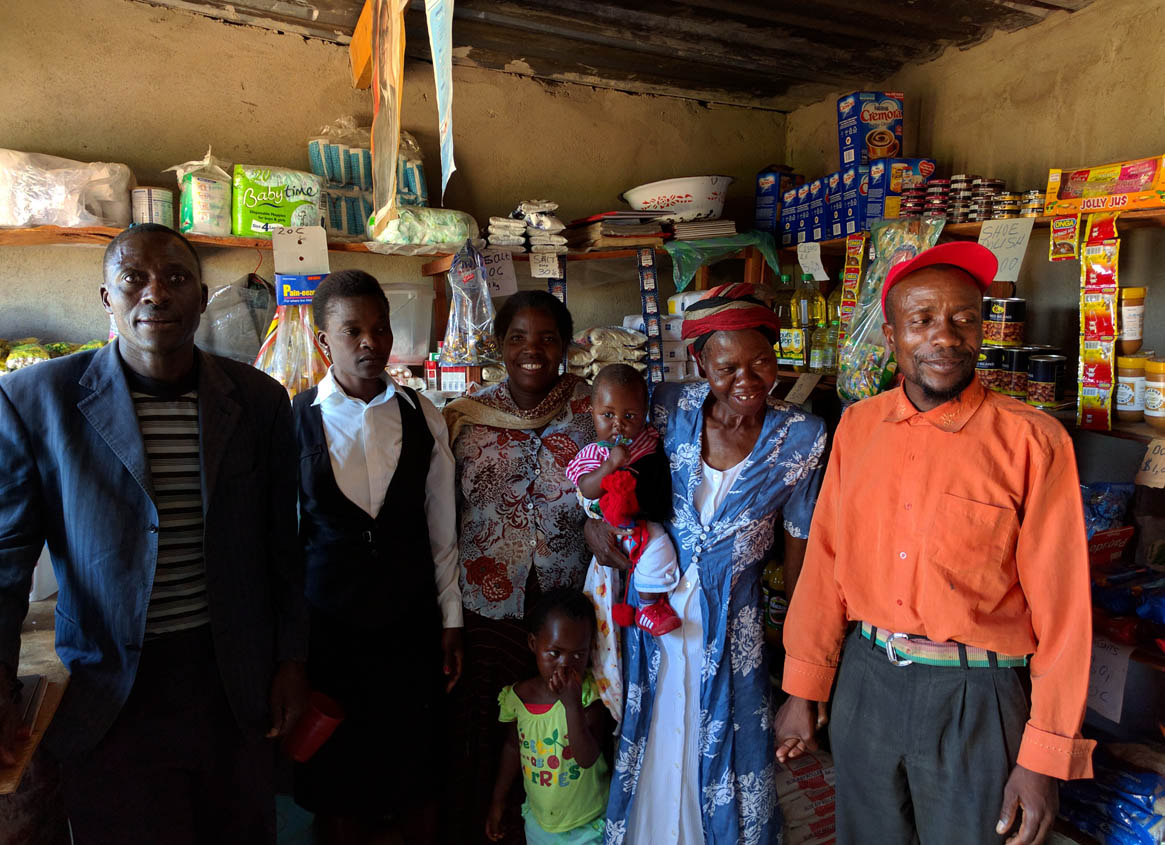
Photo of members of a microloan group in a small shop they have started just outside of Harare, Zimbabwe

School attendance in the poorest areas of Harare is weak, with many children missing out on the education they need to gain even the most basic skills in order to grow into productive, independent adults.  Collaborating with our local partner, the Chiedza Child Care Centre, our research found that money was the biggest single obstacle to a child’s education.  In the areas where we work, the average household income is around US $123 per month, well below the national poverty line.  The same households were spending an average of US $52 on education – an expense representing over 40% of an already hugely stretched budget.  Even by making this huge commitment, many children were still being left uneducated with adults forced to prioritise one child’s schooling over another’s.  Often in these situations girls and orphans are the first to miss out.

The International Children’s Trust and Chiedza developed a pioneering scheme to work in these communities to try and solve the problem at its source.  Funded by the Department for International Development, we have been working for a year now on developing small savings and loan groups for participants to grow their own income.  Most participants are women who are all responsible for the care of particularly vulnerable children.  By tackling the problem this way, we hope to help children back to school. This programme will not simply make funds available in the short term, but will fundamentally transform the homes and communities the children live into more stable environments where children will be supported in the long term by a sustainable income.

Ben, our Senior Programmes Manager, recently visited Harare to monitor the progress of the project and to see for himself the transformative impact it is having on the community.  Already, we have trained 900 caregivers.  They have not simply been taught about how to work together to access small amounts of credit, but also basic skills of business and marketing.  This has come with hugely positive results with small businesses being started covering a range of activities from raising chickens to making shoe polish.  As a result many more children are now able to attend school and we plan to work hard to make sure we keep achieving that kind of progress through the next 3 years of the project and beyond.

Despite these successes, the situation in Zimbabwe remains difficult and this was evident throughout Ben’s trip.  Political turmoil and economic mismanagement hit the headlines, but it’s the poorest who suffer most with rates of unemployment soaring past 85% in recent times.  We continue to work to try and offer the children of Zimbabwe a path out of the poverty that this creates and ensure that this change is positive and long-lasting.

Different Reality, Different Approach

Photo of 3 girls at New Life, South Africa colouring pictures

Uitsig sits in the Cape Flats, a short drive from Stellenbosch – South Africa’s premier wine region and home to a world-renowned university.  And yet life is very different for the children growing up in this community.  HIV has taken a terrible toll over the last 30 years in South Africa – still holding the unenviable record of the most number of people living with HIV in the world.  Poverty is rife with people finding any way possible to survive.  This leads to sex work and high rates of theft.  Drugs and alcohol are frequently abused – in fact, the drug dealers make no secret of their trade and the availability of drugs. The frustrations of daily living often manifests itself into domestic violence against partners but also the abuse of children.

Faced with these problems, many children lack the positive family environment and will often not have the opportunity to receive a good education.  For many children, solace has been found in a different ‘family’.  Gangs have offered the children a sense of belonging and given many of them a purpose.  Uitsig is notorious for its gang crime and violence and children who are not provided an education and end up hanging around the streets becomes the perfect recruit.  Ultimately, a nurturing and caring environment that we would expect from family and school, does not exist.

Working with the International Children’s Trust, New Life Community Projects is offering a different reality. It is a reality where a child has their education kick-started by providing them with a strong base of learning and warm encouragement.  It is a reality where the factors that damage a child’s development (whether it be abuse, neglect or illness) is identified and steps taken to end it.  It is a reality where the family are encouraged to be part of the child’s development.  Perhaps more importantly, it is a reality where parenting skills are taught and not just assumed to exist.  While it can often be easier just to work with a child, this can be worthless if they are simply returning home to the same old problems.

But what is it that really makes New Life different?  Their approach is informed by a strong understanding of a child’s psychology and the importance of early childhood development.  It is an understanding that all staff learn how to apply to their work. It is an approach that goes beyond the child’s immediate needs and looks to their long term development.  While recognising the importance of education for a child (after all, the children are attending an informal school), the project takes (what we call in the development sector) a holistic approach – reflecting the fact that a child’s development is built on physical, social, educational and emotional needs.

But there is also something much simpler that sets New Life apart.  Over the years, I have walked into many schools in sub-Saharan Africa and been saddened.  Children may want to learn, but with 60 students in a class, no resources and poor teaching methods, the incredible potential of EVERY child is often lost. Walking into the compound that is home to New Life’s container school, you enter a completely different environment.  Suddenly you have teachers who actually want to be there.  They bring passion, love and dedication to the children.  They genuinely care – not only for their children but for the community that they live and work in.

Each year, around 45 children between 4 and 5 years old begin their journey with New Life.  For the first year, they will arrive each morning at the ‘Container School’ (old shipping containers that have become a community hub) for their breakfast and some group fun, before walking to their teacher’s home.  Within each home, the teacher has created a space for a group of around 7 children who she will work and play with every weekday morning for the next year.  Returning to the Container School at lunchtime, the children have the opportunity to have a hot, nutritional meal.  Beyond this daily activity, the teachers and key staff will work with family members during visits to family homes and workshop sessions.  Families are encouraged to participate in community events, to spend quality time with their children at family outings and events, and to work together as a family to cultivate part of the New Life garden where their efforts are rewarded with produce to take home.

At the end of that year, the intention is for all 45 children to be able to enter into a mainstream school (something that we cannot assume would happen otherwise), while the relationships between the children and their caregivers (whether parents, grandparents, extended family or siblings) will have improved. New Life are achieving these results.  But achieving this success does not mean that support can end there.  This is still just the start of a child’s journey.

Working with children at an early age provides for a key intervention at a crucial stage of their development, but that needs to be backed up with continual support structures and reinforcement of needs.  To that end, the Out of School Club operates in the afternoons at the Container School.  This provides a safe environment for children who have previously been through the project to do their homework, learn and play – an inspiring and supportive environment that they often cannot find in their own home.  Ultimately, this keeps the child from finding an alternative on the streets and in the gangs. It is this long term approach that is vital in ensuring that the short term gains when a child is 5 years old can be sustained.

Without the International Children’s Trust and New Life, the alternative is disheartening.  Today’s children need the opportunity to escape the cycle of poverty that their families and community have found themselves in.  There is no quick fix and we cannot guarantee a solution.  Ensuring the child can enter into school will mean that they will have better opportunities in the future for employment.  They will have the ability to support themselves.  Working with the child on their health and general well-being will help to prevent them from dropping out of school in the future and to avoid becoming involved in the gangs and street life that many in their community participate in.  By working with families, we are looking to ensure that we are all encouraging the child in the same direction so that all of the children are provided with opportunities that their parents did not receive.

Every child has so much potential within them.  It is easy for this potential never to be realised.  In Uitsig, you can sense that we are giving them a fighting chance.