A Success Story from the Chiedza Out of School Programme in Zimbabwe

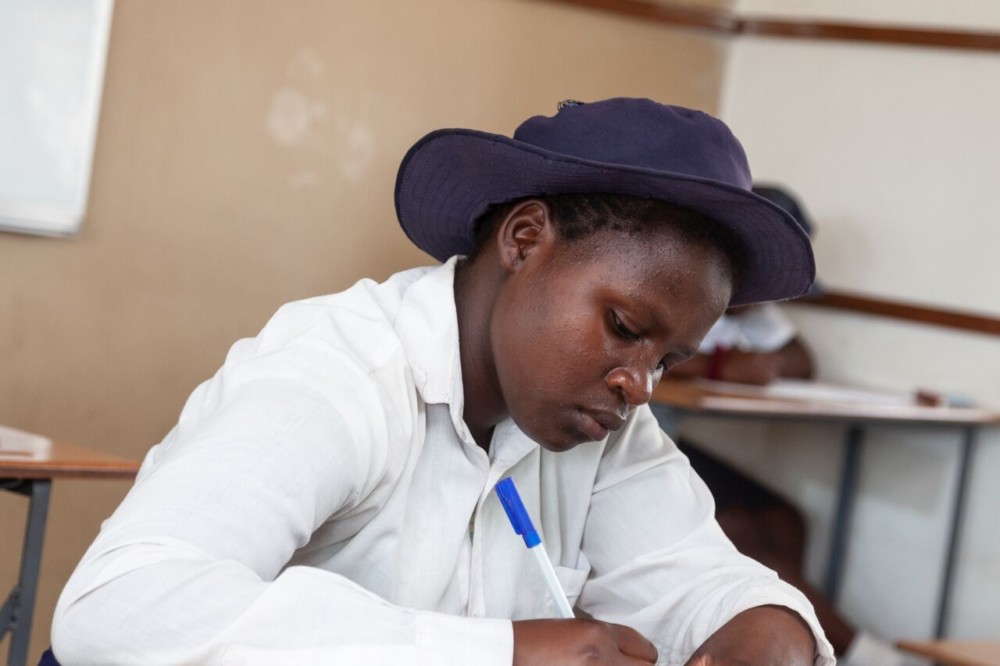
Nina’s parents separated when she was still a child. She continued living with her mother who struggled to pay for her school fees. When she was in Year 6 her mother remarried and her stepfather forbade her from working. Sending Nina to school became more and more difficult as her mother had to keep her work a secret when she did several part-time jobs. She could only afford to pay for her to attend school for two days a week so Nina spent the other days helping her mother at work. In 2015, the financial struggles became too burdensome for her mother and when she was in Year 11 at school, Nina dropped out before she could sit for her final examinations. After a year of no schooling, she was identified by a Chiedza Community Volunteer in her area, who referred her to the organisation. Their volunteers and officers made home visits to assess Nina’s level of need and she was given the chance to return to school through the Chiedza Out of School Programme.
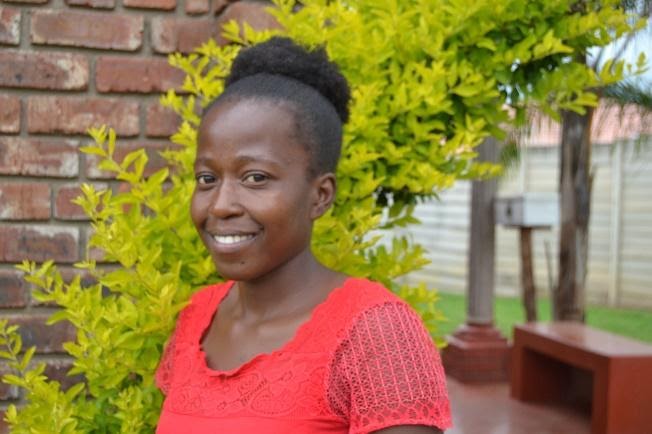
Nina describes how Chiedza helped her:

“The organisation supported my studies and I sat for the Ordinary Level examinations and did well. I was then helped to progress to Advanced Level studies at a High School. Chiedza continued to pay for my examination fees and school fees and I was provided with free stationery. Via the Resource Centre, I was able to access  school text books and had free internet access, which helped me to do a lot of research for my studies. I also had access to a digital learning platform from which I was able to practise exercises, tests and notes. At the same time, I gained basic computer skills through the structured computer lessons offered by the Resource Centre Intern. In addition, I benefited from free counselling services from the Child Protection Department, as well as career guidance, which helped me to think about my future career interests and to build goals and set targets for myself. Every weekday, I received two nutritious meals from the food programme. I also received clothes donated by well-wishers. 

The English Access Programme run by the American Embassy at Chiedza Child Care Centre boosted my English communication skills as well as my leadership skills, which Chiedza had nurtured through the Child Advisory Board in 2016. Recreational activities organised by the Centre also helped me to develop my social skills. Having passed my Advanced level exams with 8 points in History, Sociology and Shona, I am waiting to go to university in August of this year. It is my desire to be a social worker and to help other children access basic services that they may not be able to access without the assistance of other people. I want to be able to help other children in the way that Chiedza has helped me and to contribute towards the happiness of less privileged children and to create a prosperous Zimbabwe. I envisage a Zimbabwe where all children are happy, empowered and can fully enjoy their rights without the limitations of being less privileged.”

A warm-hearted gift from King Henry VIII School

A huge thank you to the sixth formers of King Henry VIII School in Coventry for their warm-hearted donation.

Milla and Daya presented our CEO, Wahiba Kiared, with an unexpected gift during a lunch hosted by the Rotary Club of Coventry. They both explained how with their fellow students they came together and organised an especially successful bake sale. In just one day these young people have raised an impressive £1,400. Thanks to their generosity £700 of the money raised has been donated to ICT to support the education of orphaned children living in Harare, Zimbabwe.

We love hearing about what young people do to support causes that matter to them. Milla and Daya’s initiative was inspired and praised by their assistant head of sixth form and cooking teacher Anna Heathcote. Fundraising is a great opportunity to get creative and do good but also to develop social awareness and emotional skills. Thank you Anna, Milla and Daya for your gift. This will go a long way to support the out-of-school programme in Zimbabwe.

You can join King Henry VIII School today and start raising money for children living in the most challenging environments in the world. Please get in contact if you need resources or if you want to know how your donation can make a difference.

THANK YOU

A Generous Gift from the Rotary Club of Coventry

On the 23rd of September the CEO of the International Children’s Trust, Wahiba Kiared, received a generous contribution of £2000 from Rotarian Kenneth Holmes of the Rotary Club of Coventry. This gift will be used by the Chiedza Charity in Harare, Zimbabwe, to give educational opportunities to children aged between nine and fifteen years of age, who are not in education. 

We are very grateful to members of the club for their long-term support of ICT and for nominating this partner as their chosen charity of the year. Chiedza is also our ‘champion’ charity of this year, as it has made a significant impact on the community of 1,800 households in Harare, through a joint ‘Saving and Lending’ programme.

Link to the Rotary Club of Coventry:  www.coventryrotary.org

Chiedza Child Care Centre Income Saving and Lending Schemes Project (ISALS) in Harare South District, Zimbabwe.

The aim of this project is to increase the level of income and security of 1,800 poor and vulnerable households in Harare, particularly those headed by widows, or single parents, those with orphaned or vulnerable children at risk of dropping out of school, those with a disability and those with one or more members living with HIV. Each targeted household has to have at least one child under the age of 18 years.

In general, participating households undergo training on ISALS and how to run viable income-generating activities. The main expected outcome of the project is to increase income and financial resilience for vulnerable households in Harare South District  and to improve the health, school enrolment, attendance, retention and achievement of the orphaned and vulnerable children from these households. The project provides training in income saving and lending, project planning, financial planning, business management and micro-enterprise.

Since April 2015, the project has created 150 saving and lending groups and provides income benefits to participants (estimated as 1,800 of whom 10% are men and 90% are women). In addition, it supports 300 participants to jointly or individually establish an income-generating activity. Chiedza also aim to ensure that all wards with participating households are able to sustain and further develop the programme with the support of a community support structure and/or alternative government sources.

Two Success Stories from Harare.

Tammy’s mother attended the Chiedza project and Tammy says  “I live with my mother and my younger sister. My mother works on a Chiedza project and now has a market stall at home where she sells her goods. Before she started this business, she had no income and I did not have school shoes, a school bag or books. Things changed when she started working with Chiedza and she has managed to buy me all these things for school. My primary school fees are also fully paid up and my mother recently bought some household furniture, including a wardrobe, a kitchen table and matching chairs.”

Jenny has just finished her exams and is waiting for her results. She says “throughout my schooling my mother was struggling to pay my fees but last year things improved after she started participating in the Chiedza project. I can tell you that mum’s business is running well. We used to go hungry for long periods but now we always have enough food in the house and we eat three meals a day. My father is not permanently employed so my mother’s business is certainly helping the family. I look forward to doing further exams in the future and then going to university to get a degree. The sky is the limit to my education, thanks to my mum.”

Getting Children Back Into School In Harare

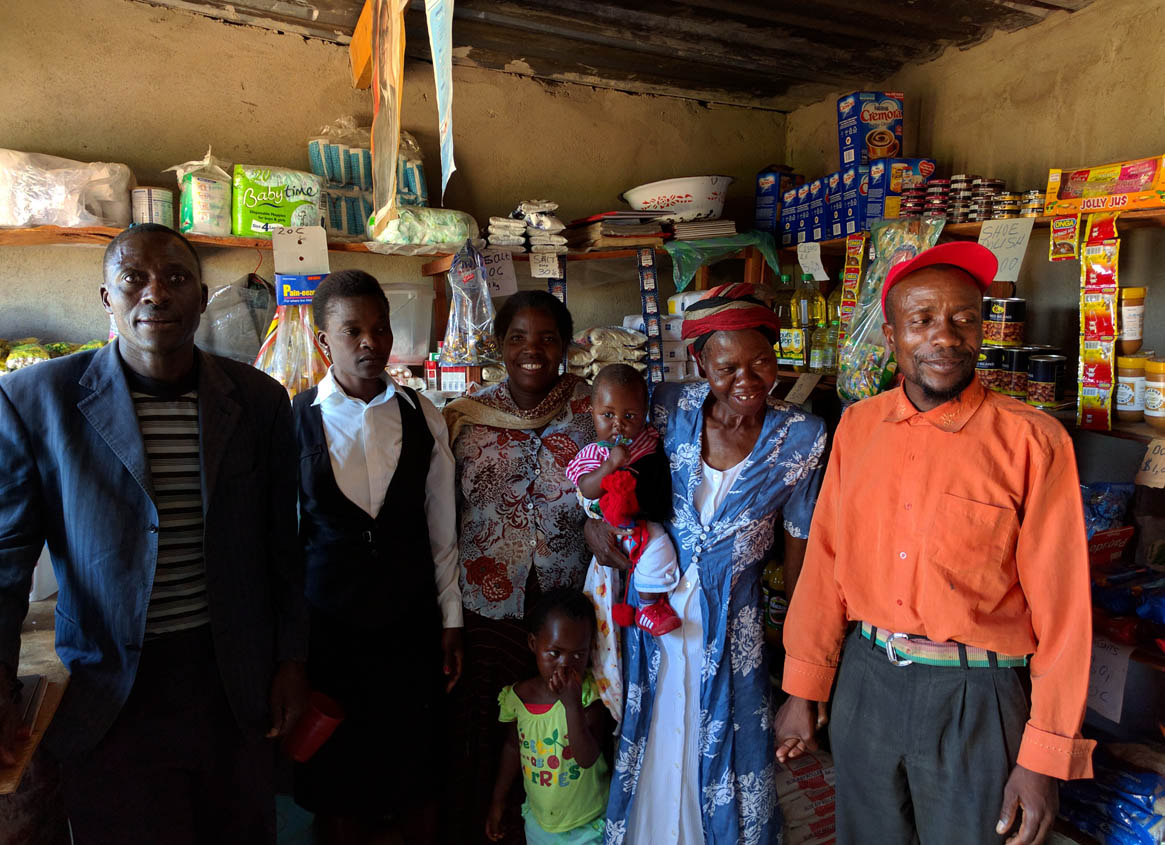
Photo of members of a microloan group in a small shop they have started just outside of Harare, Zimbabwe

School attendance in the poorest areas of Harare is weak, with many children missing out on the education they need to gain even the most basic skills in order to grow into productive, independent adults.  Collaborating with our local partner, the Chiedza Child Care Centre, our research found that money was the biggest single obstacle to a child’s education.  In the areas where we work, the average household income is around US $123 per month, well below the national poverty line.  The same households were spending an average of US $52 on education – an expense representing over 40% of an already hugely stretched budget.  Even by making this huge commitment, many children were still being left uneducated with adults forced to prioritise one child’s schooling over another’s.  Often in these situations girls and orphans are the first to miss out.

The International Children’s Trust and Chiedza developed a pioneering scheme to work in these communities to try and solve the problem at its source.  Funded by the Department for International Development, we have been working for a year now on developing small savings and loan groups for participants to grow their own income.  Most participants are women who are all responsible for the care of particularly vulnerable children.  By tackling the problem this way, we hope to help children back to school. This programme will not simply make funds available in the short term, but will fundamentally transform the homes and communities the children live into more stable environments where children will be supported in the long term by a sustainable income.

Ben, our Senior Programmes Manager, recently visited Harare to monitor the progress of the project and to see for himself the transformative impact it is having on the community.  Already, we have trained 900 caregivers.  They have not simply been taught about how to work together to access small amounts of credit, but also basic skills of business and marketing.  This has come with hugely positive results with small businesses being started covering a range of activities from raising chickens to making shoe polish.  As a result many more children are now able to attend school and we plan to work hard to make sure we keep achieving that kind of progress through the next 3 years of the project and beyond.

Despite these successes, the situation in Zimbabwe remains difficult and this was evident throughout Ben’s trip.  Political turmoil and economic mismanagement hit the headlines, but it’s the poorest who suffer most with rates of unemployment soaring past 85% in recent times.  We continue to work to try and offer the children of Zimbabwe a path out of the poverty that this creates and ensure that this change is positive and long-lasting.