SERVE: Disruption of education in Sri Lanka

‘Saplings’ pre-school was closed from mid-March to mid-August to keep in line with new rules and regulations set out by the Government of Sri Lanka due to the first wave of the Covid-19 pandemic. During this period, pupils were given workbooks and notebooks by their teachers so that under the guidance of their parents, they could get involved in some activities at home.  In addition, their teachers kept in touch with parents in order to monitor the children’s development and safety.

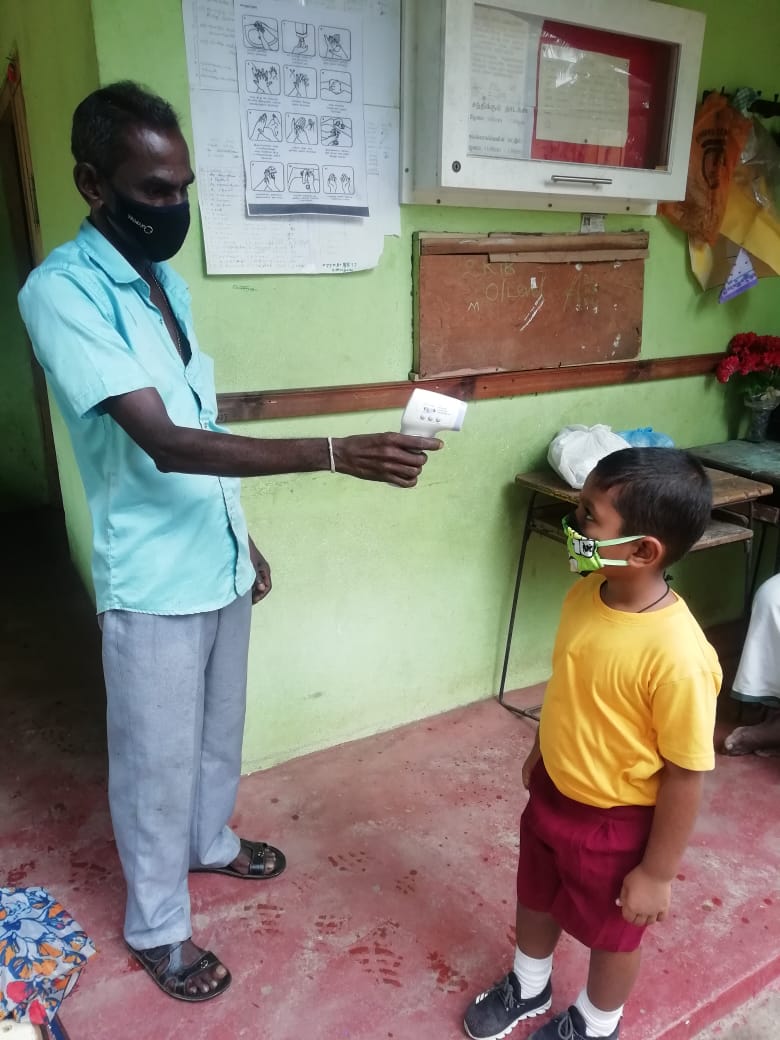
In mid-August, ‘Saplings’ was able to reopen as permitted by Government regulations. This meant that the body temperature of each pupil was checked before he or she could enter the school and rules around regular hand washing, wearing a mask and social distancing were adhered to. During this time pupils engaged in writing, drawing, painting, singing, dancing and playing indoor/outdoor games. The children truly enjoyed meeting their friends again and playing together. The school continued to function in this way until 2nd October, when once more, the Government decided to close all pre-schools and schools to reduce the effects of the second wave of Covid-19.
The school remains closed but a teacher makes visits to the home of each pupil and via one-to-one tuition guides them towards activities that they can complete at home. Story books, paper, colour pencils, clay and other school materials are also supplied. In addition, parents are briefed on the rights of children and the need to remain tolerant and kind during the lockdown period. 

Due to the situation in the country, the annual school concert may not happen this year, but a small graduation ceremony is expected to be held in 2021 for the pupils leaving ‘Saplings’ to start primary school. At the time of writing, the Government is yet to grant permission to reopen pre-schools in this area as they are situated in the high risk Colombo District of the Western Province of Sri Lanka.

Child Sponsorship in India and Covid-19

News: The Rotary Club of Madras Boys Town Project in Gummidipoondi.

All schools in Tamil Nadu have been closed since mid-March due to the Covid-19 pandemic. They are likely to re-open in October or November depending on government guidelines.

All students at Boys Town in Gummidipoondi are safe and well and are currently staying with relatives in their respective homes. Colleagues from Boys Town and the Rotary Club of Madras are in contact with these families on a fortnightly basis in order to enquire about their health and safety and to support them when specific needs arise.

The government of Tamil Nadu has allowed all boys from the VIth to the Xth Standards to progress up a year based on internal assessments and mid-term exam results. All students in the XIth and XIIth Standards passed their exams successfully.

Children’s education ‘on hold’ during the Coronavirus lockdown.

India

No major activities were planned at Boys Town Gummidipoondi during March, due to final examinations taking place. Regrettably, because of the subsequent curfew and lockdown, the examinations for students in the 6th, 9th, 10th and 11th Standards were cancelled and seventy two students had to return home to live with their parents/guardians. The 12th Standard examinations took place on the 24th of March, when the country’s lockdown was announced so ten students had to remain at the village with staff. Food and essential items were made available to them and everyone remained in good health and followed their usual routines. The students were also able to spend time in the grounds engaged in gardening activities and housekeeping tasks took place in the evenings. They have since been able to return home.

In June, the Government of Tamil Nadu announced the cancellation of public examinations for all students in the 10th and 11th Standards and declared that they have “passed” their examinations. The 12th Standard exam results should be out soon.

Sri Lanka

Due to the Covid-19 pandemic, schools and pre-schools have remained closed, including our ‘Saplings’ pre-school in Ratmalana. Before lockdown, teachers managed to visit most of the families and gave workbooks to the children so that their parents could help them at home. Staff remain in regular contact with the families by telephone. Until the lockdown, there were twenty nine children attending the project – sixteen girls and thirteen boys aged between three and five years.

The Government has made a decision to reopen pre-schools on July 1st.

SERVE Safeguarding and Eye-care Programmes.

SERVE is a Sri Lankan non-profit organisation working for the empowerment of the disadvantaged, especially children. SERVE has been in partnership with ICT for more than ten years. The project continues to support and empower children from poor, marginalised communities living in shanty towns and low-income housing schemes. 

At our children’s community centres we help children to complete their education successfully through bursarial support. In addition, our social workers also provide these children with guidance and counselling for the day to day psychosocial problems/abuse they may face at home, in the community and at school. We have also educated our community facilitators to create awareness among mothers about safeguarding their children from all forms of abuse, including sexual abuse. Two hundred families have taken part in this project so far.

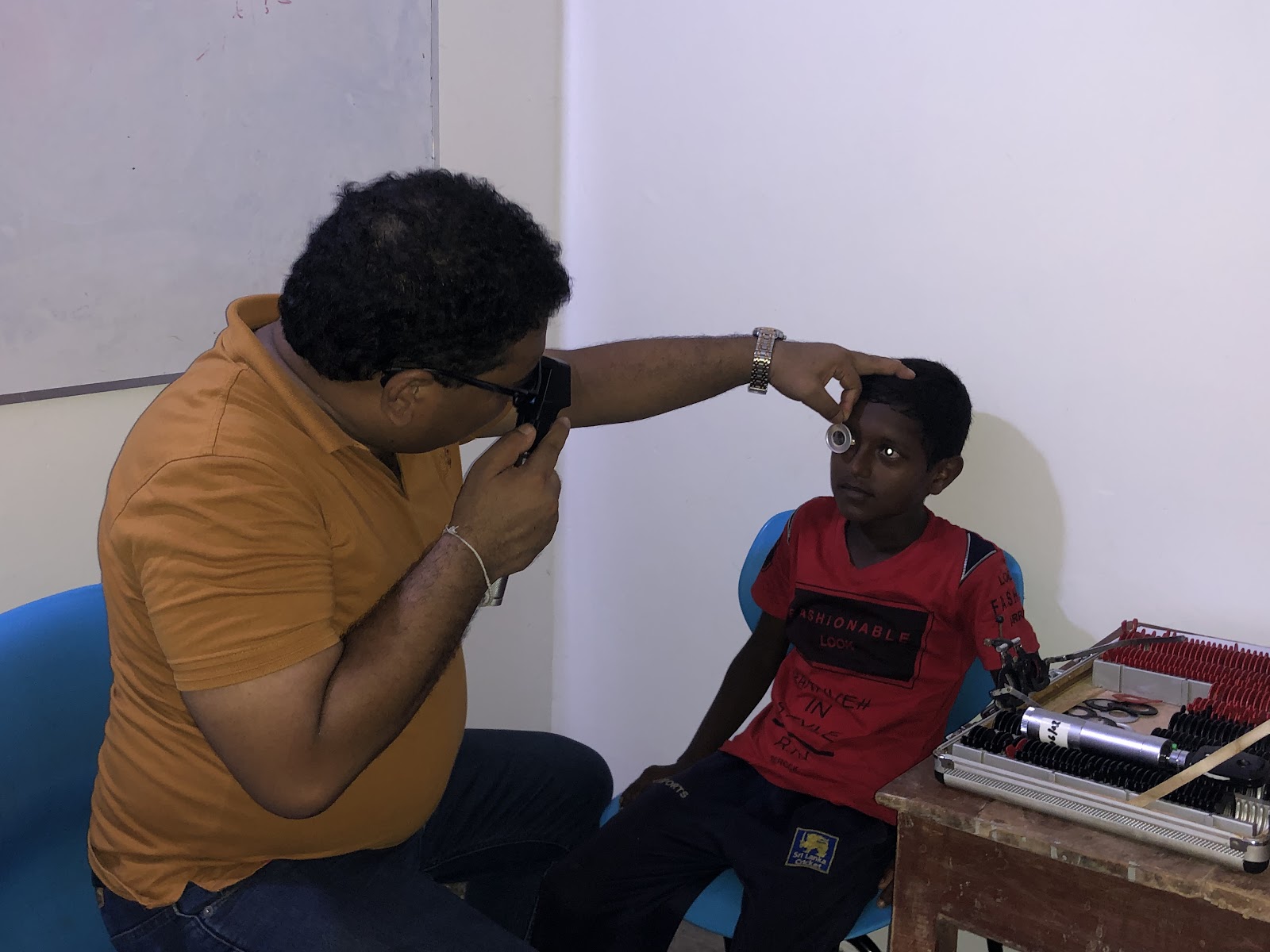
In May 2019 our community eye care centre was opened in Moratuwa and can be accessed on Tuesdays and Saturdays from 9am – 4pm by the public. The project aims to help 500 children to receive free eye tests and spectacles in the coming year.

Sustaining School in Tamil Nadu, India

Photo of young boy working making metal plates in Tamil Nadu

Staff of the Social Development Education Trust support many children in school in the poor communities in the Taluk of Srivilliputhur where they work. Child Labour is one of the biggest, and most insidious, hurdles for them to overcome; families are so poor they cannot see their way to providing the next meal for the whole family. Children as young as 5 and 6 often find themselves having to stop school to go out into the fields for a day’s work, or to serve in a gas station or spend a week cleaning tables in a restaurant to help the family, only to find they can’t keep up when they go back to class, and the slippery slope to child labour is established. The social workers that form the SDET Child Labour Prevention team can relate many stories of situations in which they have intervened – almost always successfully in ensuring children go to school and families find ways of supporting their regular attendance. But child labour is not a simple problem and kidnapping children for transporting to other states for work is common.

This is Gopal’s story: 

Gopal’s parents were approached by a broker who said that if Gopal came with him he would get him a good job in a nearby town and he would be able to earn money for the family. The broker offered an advance on Gopal’s earnings which convinced Gopal’s parents that this was genuine, and as they were desperate for money they allowed Gopal to be taken away. However soon after the parents lost contact with Gopal and became distraught. They contacted SDET and staff immediately informed the police who traced Gopal to Andhra Pradesh – one of many children taken to work in the cotton plantations and successfully returned Gopal to his parents. Now the family liaise regularly with SDET staff who make sure that they have learned of the predatory adults who seek children to exploit them, and that naivety will make their children doubly vulnerable. Gopal now is back in school and his parents are being helped to raise income through the SDET small income generation scheme.