Improving Health Services for Street Children and their Families in Mexico

JUCONI Mexico is refurbishing two rooms to improve the services delivered by their health clinic located at the JUCONI Youth House. Children of  between 6-18 years of age and their families will benefit from access to better medical care, including those from the Street-Children Sub-Programme in Puebla. From January to June 2019, the programme took care of approx. 140 people, including children, teenagers and their families. 

The refurbishment is expected to be completed by the end of May 2020.

JUCONI Mexico Early Childhood Development and Parent Attunement Programme.

JUCONI Mexico is located in the state of Puebla, two hours away from Mexico City. For more than 30 years, JUCONI Mexico has been working with children who drop out of, or who are not spotted by, existing government and NGO service provision. Our experience shows that a violent family environment contributes to children being on the streets and if it continues, is transferred from one generation to another.

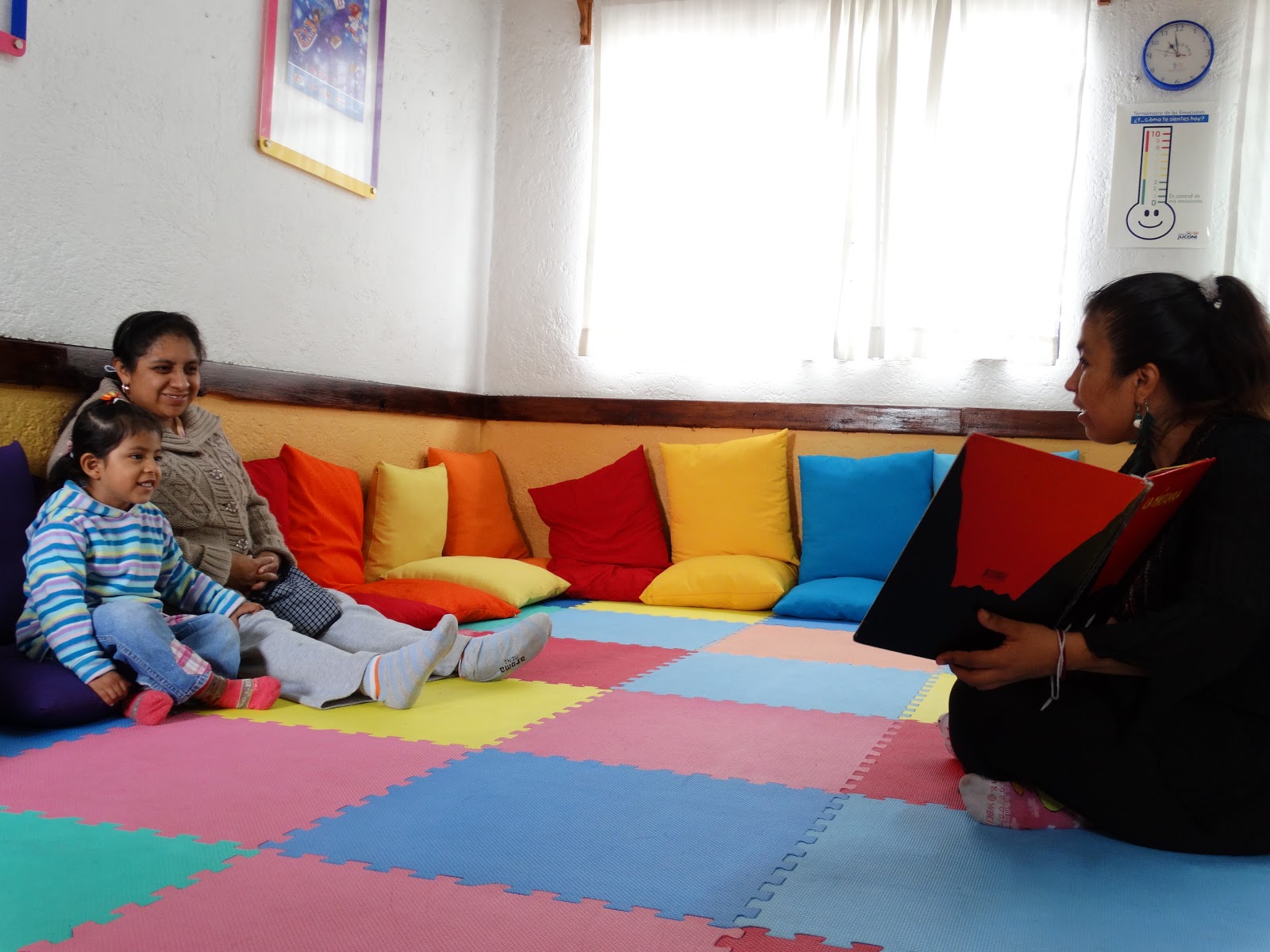
In order to address this situation, JUCONI Mexico delivers a 12 month ‘Early Childhood Development and Parent Attunement Programme’, for 170 street market children aged between 0 to 5 years old. These children spend a lot of time alone, with no supervision, in the markets where their parents work, and this also puts them at risk of abuse and exploitation. The programme uses innovative therapeutic techniques to strengthen parents and care-givers skills by getting them to observe and reflect on their child’s early stage of development through the use of free play and video sessions. 

ICT started to give additional support to this programme in April 2019 and it now involves older siblings, family visits to museums and the use of  a ‘HOME’ inventory by JUCONI family educators to help them to assess the family life of the children and parenting. This is done through a series of interviews with the families in their homes. 

Ana and her daughter María have benefitted from the free play and video sessions and Ana says, “Video changed my life (…) I saw how María looked at me and how important I was to her and that she wanted to be with me. I saw that I can be a good mum.” Ana is now part of a mother’s group and María attends a day centre on a regular basis.

Ana’s husband Luis was also encouraged to participate in some of  the sessions, in order to address and prevent the use of violence within the home. Recently Ana told us that when her in-laws disapprove of the way in which she is bringing up María, Luis now supports her. This is the first time that Ana has had the courage to stand up for what she thinks is right. “I used to think that it was all down to JUCONI, but now I know that it is me. I have changed.”

The Importance of a Biscuit

Photo of boys making biscuits in the JUCONI workshop

What impact can a small shortbread or an oat biscuit have on a child? He does not eat it. He does not sell it. But, in these biscuits, he is receiving skills that will help him forge a career for himself in the future.

In a small workshop a short walk away from the JUCONI Youth House in Puebla, Mexico, the youth have the opportunity to make biscuits that are sold to a local company. Vocational and skills training has become an important part of many international development initiatives, but JUCONI continues to set itself apart.

The boys are not part of a new generation of bakers. In fact, the baked biscuit is barely important. It is the process that is important, not the product.  The boys are being encouraged to develop strong work ethics, to understand employee-employer relationships, to have the ability to create a CV, and to have a strong attention to detail in all of their work.  The boys’ participation is not automatic, but must be earned through good behaviour and positive development.

In this environment, the boys are setting their own paths in careers that they are interested in and passionate about. They are developing the tools that will set them apart for employers.

27 Years on at JUCONI Mexico

A photo of a mother reading with her son at JUCONI House

In 1989, Fundaciόn JUCONI was founded in Puebla, Mexico with the support of the International Children’s Trust. Working with homeless children, this new professional organisation started operating a small centre that was both a day and residential centre.

Fast forward 27 years and JUCONI is a very different organisation, but one that has remained rooted in addressing the needs to vulnerable children and continues to be supported by the International Children’s Trust.  Over 27 years, JUCONI have recognised the importance of working with marginalised children subject to family violence. By working with the entire family, JUCONI are breaking the cycle of physical violence, reintegrating children and families into their communities, and developing a family’s ability access to education, health care and employment.

And it is clear that this vision works. Each year, JUCONI is working with 350 children and 120 families. Working through 3 different programmes, JUCONI are improving the lives of children by tackling the family violence that heavily influence children living on the streets, working on the streets, or working in the street-markets often with their families.

In 2016, we are beginning to see new exciting steps forward for JUCONI as they take their approach beyond the borders of Mexico.  JUCONI have been working with 160 organisations, primarily in 9 of the 31 states in Mexico. But the JUCONI model and their understanding of family violence, is also influencing organisations in Ghana, Guyana, India, Kenya, Tanzania, Rwanda, Guatemala and El Salvador. They do not look to replicate JUCONI in countries throughout the world, but they look to strengthen work with children by imparting the principles guiding their work on other organisations. By focusing on the principles instead of the tools, organisations can focus on appropriate solutions that are suitable for their own local context.

While JUCONI have now worked directly with over 3,000 children, your support is allowing JUCONI to reach children globally. As they move forward with a new General Director, we look forward to being a part of their continued progress.

Passing of Alison Lane

Photo of Alison Lane OBE, former Director of JUCONI Mexico

It is with a great deal of sadness that we learnt of the passing of Alison Lane on the 11th July.  Alison was the director of our partner organisation JUCONI in Mexico.  JUCONI have been dedicated to rehabilitating street and working children in Puebla and Alison was instrumental in pioneering the techniques established there by Gabriel and Sarah Thomas De Benitez. Having led JUCONI for 25 years, she will always be remembered for her strength in championing the rights of vulnerable children.

Alison’s sudden death shocked many people who had known or met her over the last 25 years.  Having previously been awarded an OBE for her work, her death as a result of a spider bite generated attention in the national press back here in the UK.

While her death was sudden and untimely, her family, friends, and colleagues had the opportunity to also celebrate her life on the 20th August at a memorial service held in Puebla (where she had worked and lived for many years).  While we were unable to attend the memorial service, we were given a chance to send a video message on behalf of all at the ICT.  It is special to think of how many people throughout the world that Alison Lane was able to touch with her work.

Please keep Alison’s children and family and, of course, the staff and trustees of JUCONI in your thoughts over the coming months.