SARTHI Health and Menstruation Programme for Adolescent Girls in Schools in Patna, India.

The aim of this project is to provide education and support for adolescent girls as many are missing school every month or dropping out, due to menstruation and associated health problems. These topics are often seen as a social taboo in communities and there is a lack of information and little access to sanitary products.

Middle School Maner Block, Patna District of Bihar State, India.

A young peer mentor and college student facilitated the first SARTHI pilot programme and the session provided a safe, friendly space for 28 adolescent girls to discuss the topic and related challenges. Based on the success of this first session and the positive feedback, the SARTHI programme has been replicated in four schools, benefitting 144 girls.

The girls reported that their main challenges were inadequate toilet and washing facilities so that they either stayed at home or went home early from school; the cost of sanitary pads; the problem of not having a healthy diet. Other subjects discussed included sex and gender discrimination and child marriage.

In the four schools, girls’ consortiums are now running composed of eighteen girls between the ages of 12 and 15 years of age, who act as peer mentors and receive training to become school health advisors. These girls talk not only to other girls in the same school, but also to their teachers, about the importance of maintaining good personal hygiene habits and eating healthier, affordable food by including seasonal fruit and vegetables in their diets.
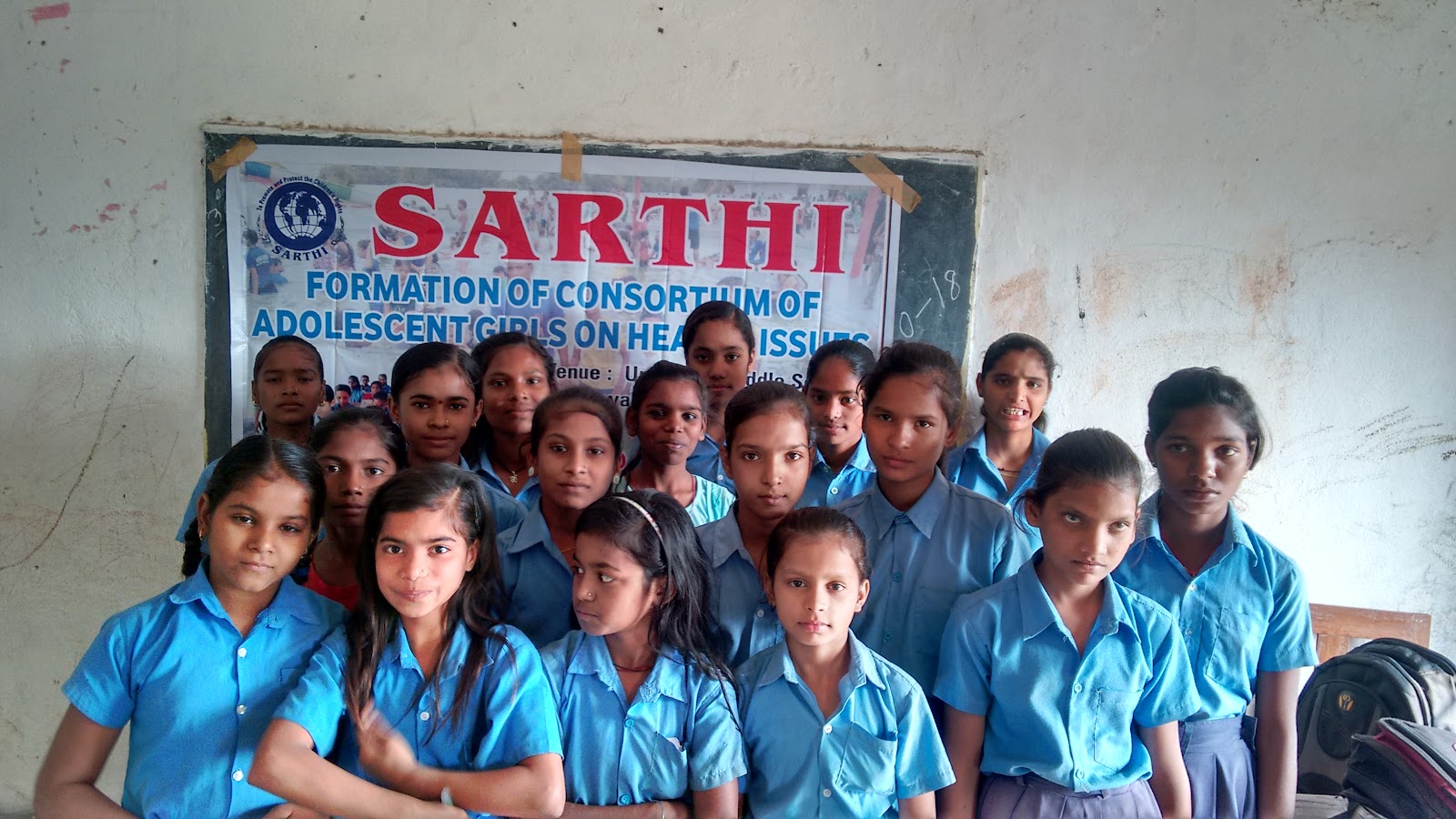
At policy level, the SARTHI project is working with head teachers and school representatives in local Panchayat to advocate for comprehensive programmes on ‘Health and Hygiene’ for girls and also improving toilet and washing facilities and providing free sanitary pads with corresponding budgetary allocations.
Home and Education for Underprivileged Children Living in Rural Areas in India.

The Rotary Club of Madras Boys Town Project in Gummidipoondi.

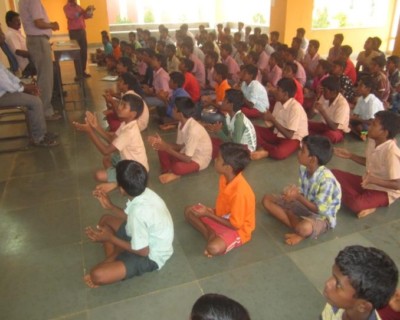
The aim of this project is to provide a home, food, education and health care to 100 boys from low income rural households. This involves secondary education from 6th to 12th Grade (12 – 18 years of age) and includes boarding during term time, eating nutritious food, receiving regular tuition from qualified teachers in general subjects, plus access to music classes, yoga and physical education.

The boys also receive careers guidance to help them to make choices about academic, technical and vocational courses as they progress through the school. The success rate of the children for the academic year 2017-2018 was a remarkable 97%.

In order to ensure the long term sustainability of the home and to ensure that healthy food is provided for the children, the home works with local providers and receives wheat flour, rice and soap on a monthly basis.

In 2018, the home was satisfactorily audited by the National Commission of Child Rights and District Child Protection Team.

A Success Story from Boys Town.

A former pupil at Boys Town now works in a private software company in Chennai and earns a good salary. In between his work schedule, he finds time to return to Boys Town and give tuition classes to some of the students.

The Rotary Club of Madras. New Initiative.

In 2018 we adopted three villages, namely  Amarambedu, Panjalai and Kannankottai, and offer space for education in each village. Currently we provide classes to 28 out of 32 children – boys and girls – living in these villages.  Classes take place in centres situated in teachers’ homes and these centres are visited twice a month to collect feedback from the children and then adjust the content of the programme as necessary. The visits are also useful to address any issues and to ensure the compliance by teachers to the safeguarding and operational policies of the Rotary Club of Madras.

D:\VANAKKAM AYYA\Camara\IMG_20180815_124010.jpg

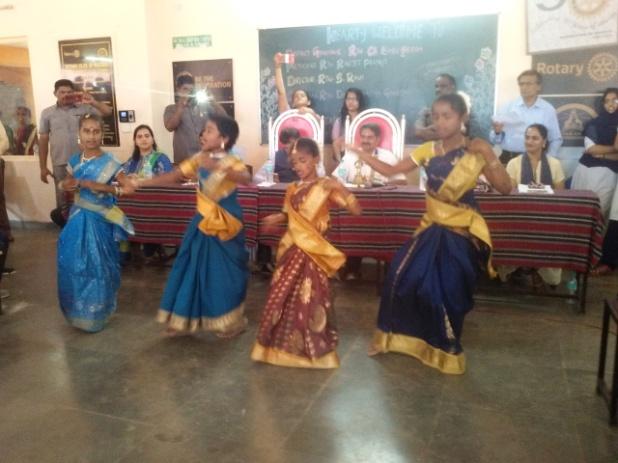
Last year the Rotary Club of Madras Boys Town Project invited children from the three villages to join them in celebrating the 72nd ‘Independence Day of India’ and this was accepted with great enthusiasm. A group of girls performed a traditional dance and gave a speech in English about the meaning of the celebration and a group of boys did a yoga demonstration. All those participating received a certificate of appreciation as a reward for their performances.

Sustaining School in Tamil Nadu, India

Photo of young boy working making metal plates in Tamil Nadu

Staff of the Social Development Education Trust support many children in school in the poor communities in the Taluk of Srivilliputhur where they work. Child Labour is one of the biggest, and most insidious, hurdles for them to overcome; families are so poor they cannot see their way to providing the next meal for the whole family. Children as young as 5 and 6 often find themselves having to stop school to go out into the fields for a day’s work, or to serve in a gas station or spend a week cleaning tables in a restaurant to help the family, only to find they can’t keep up when they go back to class, and the slippery slope to child labour is established. The social workers that form the SDET Child Labour Prevention team can relate many stories of situations in which they have intervened – almost always successfully in ensuring children go to school and families find ways of supporting their regular attendance. But child labour is not a simple problem and kidnapping children for transporting to other states for work is common.

This is Gopal’s story: 

Gopal’s parents were approached by a broker who said that if Gopal came with him he would get him a good job in a nearby town and he would be able to earn money for the family. The broker offered an advance on Gopal’s earnings which convinced Gopal’s parents that this was genuine, and as they were desperate for money they allowed Gopal to be taken away. However soon after the parents lost contact with Gopal and became distraught. They contacted SDET and staff immediately informed the police who traced Gopal to Andhra Pradesh – one of many children taken to work in the cotton plantations and successfully returned Gopal to his parents. Now the family liaise regularly with SDET staff who make sure that they have learned of the predatory adults who seek children to exploit them, and that naivety will make their children doubly vulnerable. Gopal now is back in school and his parents are being helped to raise income through the SDET small income generation scheme.